How to Clean Your Dog’s Eyes Safely: A Complete Care Guide
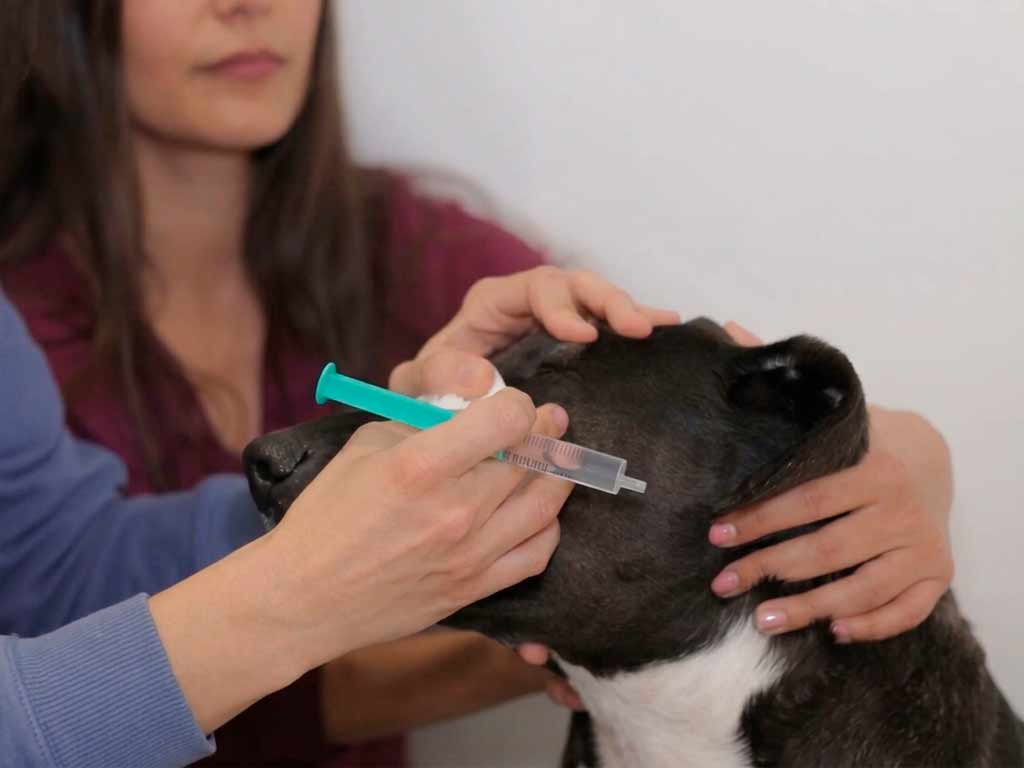
To clean your dog’s eyes, dampen a soft cloth or cotton ball with slightly warm water or sterile saline, hold it over the closed eyelid, and wipe from the nose toward the ear. The dog blinks, the cloth stays on the lids, and the eye itself never gets touched.
Most healthy dogs need this a few times a week. Flat-faced breeds, white-coated dogs with tear staining, and dogs with allergies often need it daily. The technique matters more than the product, and a few common household items do more harm than the discharge they are meant to remove.
This guide covers the full routine: what to use, how to handle crusts and tear stains, which products to avoid, and the signs that mean stop cleaning and call a veterinarian.
How to clean your dog’s eyes in five steps
The sequence below follows the method demonstrated by Dr Vicki Liddle, a veterinary ophthalmologist, in the VSS guide to cleaning your pet’s eyes. It takes under a minute per eye once the supplies are ready.
- Wash your hands and set out a soft cloth, cotton wool balls, or gauze swabs.
- Dampen the material with slightly warm tap water or sterile saline. Wring it out so it does not drip.
- Cup your hand under the dog’s chin, hold the cloth over the closed eyelids, and let the dog blink.
- Wipe gently from the nose toward the ear, following the lie of the hair.
- Use a clean section of cloth for the second eye, then pat the fur dry.
The direction is not cosmetic. Wiping toward the nose pushes discharge into the nasolacrimal duct and drags hair across the cornea. Working outward moves debris away from the eye and follows the natural drainage path.
Small dogs and puppies are easier on a table or a lap at chest height, with the head supported from below rather than held from above. A hand over the top of the muzzle reads as restraint, and most dogs pull away from it.
Most dogs accept the routine once the cloth is warm and the first sessions are short. A dog that panics needs a slower approach, not a firmer grip.
What you need before you start
Learning how to clean your dog’s eyes starts with the cloth, not the bottle. Four items cover almost every situation, and three of them are probably in the kitchen already.
| Item | What it does |
|---|---|
| Round makeup wipes, cotton wool balls, or gauze swabs | Soft enough for the eyelid, textured enough to lift discharge |
| Slightly warm tap water | Softens dried crusts and loosens debris without stinging |
| Sterile saline for contact lens wearers | Flushes grit or plant material, and works for routine wiping |
| A dry tissue or soft towel | Dries the fur so moisture does not feed bacteria |
Keep the saline unopened in your dog first aid kit essentials and replace it at the expiry date. The Animal Medical Center recommends exactly that, because a bottle that has sat open in a hot car is no longer sterile.
Never share one cloth corner between both eyes. A dog with bacterial conjunctivitis in one eye can transfer it to the other with a single wipe.
What normal eye discharge looks like
A small amount of clear fluid and a little brownish sleep in the inner corners after a nap is ordinary. So is a thin tear line running down the face in a dog with shallow eye sockets.
The Animal Medical Center explains where the brown colour comes from. Bacteria grow in the moist fur under the eye and produce pigments that stain the hair, which is why white dogs show it so clearly. The staining itself is not a health problem, even when it looks dramatic in photos.
Volume is harder to judge than colour. A dot of sleep in each corner after a long nap is normal, and so is a wet tear track on a windy day. Discharge that reappears within an hour of cleaning, or that soaks the fur under the eye by mid-morning, is worth a vet’s opinion even when it looks clear.
Colour and texture carry more information than volume. WebMD’s veterinary-reviewed guide to dog eye discharge separates clear or watery discharge, often allergy, dust, or wind, from yellow-green or pus-like discharge that points toward infection. It also flags watery discharge from one eye as a common sign of a foreign body such as an eyelash.
A dog that produces a normal amount of clear discharge and shows no other sign does not need treatment. A dog whose discharge changes character needs a closer look.
How to remove crusts without pulling hair
Dried crusts behave like a scab. Pulling one off takes hair and sometimes a layer of skin with it, and the spot bleeds and re-crusts.
The VSS method is patience rather than force. Soak a cotton wool ball in warm water, hold it against the crust for a minute or two, and let the moisture do the work. Once the crust softens, it lifts away with a gentle wipe.
For a stubborn piece that sits well away from the eye, a cotton bud can lift the softened edge. Work outward, never inward, and stop at the orbital rim. A crust glued directly to the eyelid margin is a job for a veterinarian, not a bathroom. This is the step of how to clean your dog’s eyes that most owners rush, and it is the one that produces the yelp.
A dog that wakes with the eyelids stuck together needs a different approach. Hold a warm, wet cloth over the closed eye for a full two minutes, let the dog blink it open, and never peel the lids apart with fingers. If the eye stays shut after softening, that is an exam, not a cleaning problem.
If the skin under a crust looks red, broken, or wet, stop the routine and book an appointment. Discharge that keeps returning to the same spot after cleaning usually has a source that water cannot reach.
How to clear tear stains on white and light-coated dogs
Tear staining is a moisture problem more than a cleaning problem. The fur stays wet, bacteria multiply, and the pigment sets into the coat. Cleaning removes the pigment on the surface, and drying removes the conditions that create it.
A workable daily routine looks like this.
- Wipe the area with warm water and a soft cloth every morning.
- Pat the fur completely dry, including the hollow under the eye.
- Trim the hair that touches the eye line, either at home with blunt-tipped scissors or with a groomer.
- Wash the face after walks in tall grass or on dusty days, since pollen and dirt both feed the cycle.
- Check the eye itself for redness or squinting before assuming the stain is cosmetic.
The Animal Medical Center suggests a mild option for stubborn staining: one drop of no-more-tears baby shampoo in a cup of warm water, applied with a cloth and rinsed well. That dilution is the key detail. A stronger mix, or shampoo straight from the bottle, irritates the eye and the skin around it.
Treat that mixture as an occasional tool rather than a daily habit, and keep it out of the eye itself. Products marketed specifically for tear stains deserve the same caution, especially imported drops that list antibiotics or steroids. Ask a veterinarian before putting anything medicated near the eye.
Staining that appears suddenly in an adult dog deserves attention, because the cause is often new. Excess tearing can come from an eyelid rolling inward, a blocked tear duct, or an irritated cornea, and none of those improve with more wiping.
Products to avoid around your dog’s eyes
Knowing how to clean your dog’s eyes matters less than knowing what never goes near them. The wrong product can turn a cosmetic problem into a corneal ulcer.
- Human redness-relief drops, which constrict blood vessels and mask a problem that needs treatment.
- Any antibiotic or steroid drop that a veterinarian did not prescribe for this dog.
- Hydrogen peroxide, alcohol, and antiseptic sprays, all of which damage the corneal surface.
- Fragranced baby wipes, hand sanitiser, and makeup remover with oils or perfume.
- Multipurpose contact lens solution, which contains disinfectants. Plain sterile saline is the safe version.
- Cotton buds pressed into the eye, which can scratch the cornea.
- Home remedies such as chamomile tea, milk, or boric acid, none of which are sterile.
WebMD makes the clinical case for caution. Medication that treats one eye condition can aggravate another, and an undiagnosed ulcer treated with a steroid can worsen quickly. Cleaning removes discharge. It does not treat an infection.
The word natural on a label carries no safety guarantee. Botanical extracts, essential oils, and herbal washes can sting, and a product that is fine on skin is not automatically fine on a cornea.
What to do if something gets in the eye
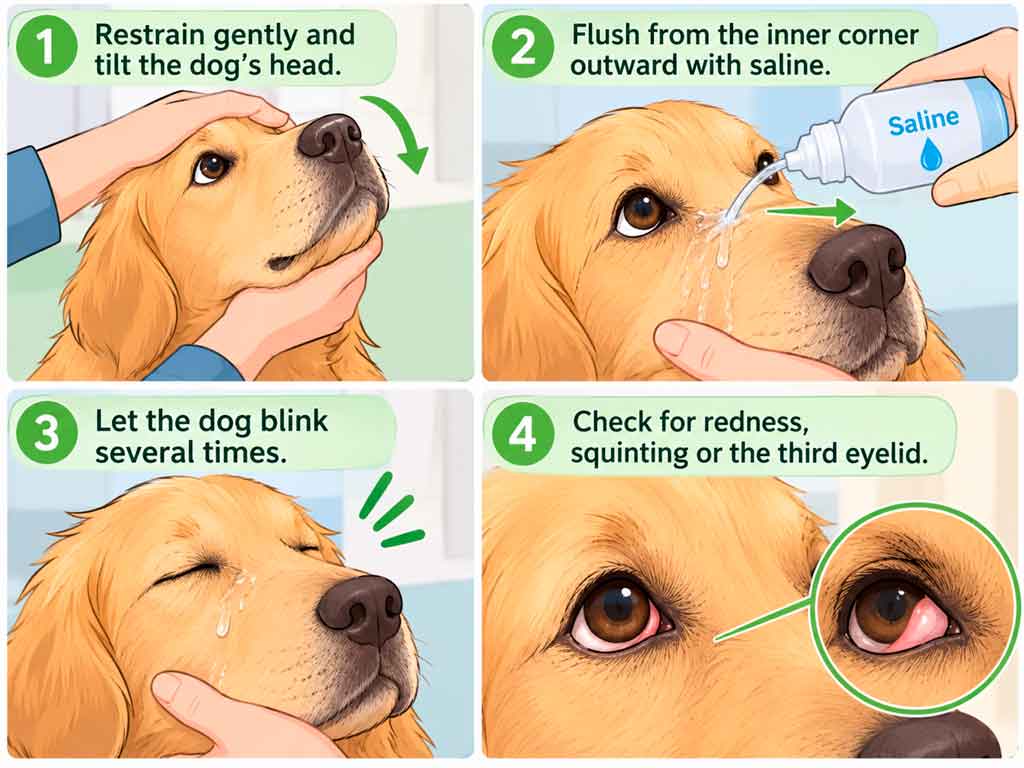
Grit, grass seed, or shampoo in the eye calls for flushing rather than wiping. Flushing is a different skill from how to clean your dog’s eyes day to day, and the goal is volume rather than pressure. The Animal Medical Center keeps sterile saline in its first aid recommendations for exactly this reason, and a fresh bottle is worth the small cost.
- Restrain gently and keep the dog’s head slightly tilted so the fluid runs away from the other eye.
- Open the bottle and flush from the inner corner outward, using enough saline to float the debris off.
- Let the dog blink several times between flushes.
- Check whether the eye is still red, squinting, or holding the third eyelid up.
Do not use tweezers, cotton buds, or fingers to reach for something on the surface. A plant seed that looks loose can be anchored under the eyelid, and pulling it can drag it across the cornea.
A chemical splash needs continuous flushing for several minutes and a call to the veterinarian while you rinse. Household cleaners, bleach, and fertiliser cause damage that continues after the visible product is gone.
How often should you clean a dog’s eyes?
How often to clean depends on the dog, not on a fixed schedule. A healthy dog with tight eyelids and no staining needs a wipe two or three times a week, plus a quick check after dusty walks or car rides with the window down.
Some dogs need more.
- Flat-faced breeds usually need a daily wipe, because their eyes water constantly and the folds trap moisture.
- Dogs with seasonal allergies need daily cleaning during pollen season, which also removes pollen from the face.
- White-coated breeds with visible staining benefit from a daily routine until the fur grows out.
- Senior dogs with reduced tear production need daily care and regular veterinary checks.
Whatever the schedule, the ten-second look matters more than the wipe. Lift the lip of the upper eyelid, compare both eyes, and note any change in colour, size, or discharge. A dog that resists having one eye touched is telling you something.
Weather and travel shift the routine more than most owners expect. A weekend at the beach means sand, salt, and wind, so a rinse with saline at the end of the day prevents a week of irritation. Heating and air conditioning dry the indoor air in winter, and a dog that usually copes well may need daily wipes until spring.
Owners who want the wider picture can browse the dog health guides collection, which covers the conditions that start with a small change in the eye. A monthly photo of each eye, taken in the same light, makes changes easier to spot than memory allows.
Brachycephalic dogs need a different routine
Pugs, French bulldogs, English bulldogs, and shih tzus have shallow eye sockets and prominent eyes. The eyeball sits more exposed than in a collie or a retriever, so the cornea dries faster and collects more debris.
That anatomy explains the breed patterns in the common eye problems in dogs guide, where corneal ulcers and dry eye appear far more often in flat-faced dogs. It also explains why the daily routine matters more for them.
Practical adjustments for a brachycephalic dog:
- Wipe every morning, and again after any walk in wind or dust.
- Use a harness rather than a neck collar, since pressure on the throat increases eye pressure and redness.
- Keep the hair around the face short, and check the skin folds for moisture.
- Avoid dusty bedding, smoking indoors, and car rides with the head out of the window.
- Book an exam at the first sign of squinting, because these dogs ulcerate faster than other breeds.
The pug breed guide covers the wider care routine for flat-faced dogs, including exercise limits and heat sensitivity.
Brachycephalic dogs also collect discharge in the nasal fold and the inner corner at the same time. Clean the eye first, then the fold, with a fresh piece of cloth, so bacteria from the skin do not travel toward the cornea.
Grooming days need their own routine. Shampoo that runs into the eyes during a bath is a common cause of redness the next morning, so tilt the head back, rinse the face with plain water at the end, and check the eyes before the dog shakes.

Lemonade Pet Insurance
Explore customizable pet insurance coverage and learn whether Lemonade is the right fit for your dog or cat.
- Customizable coverage options
- Online policy management
When discharge means something more
Cleaning is maintenance, not diagnosis. The table below pairs what you see with what it can suggest, and none of these rows is a reason to keep cleaning at home.
| What you see | What it can suggest |
|---|---|
| Yellow or green discharge, both eyes | Bacterial infection or a secondary infection |
| Watery discharge from one eye only | Foreign body, scratch, or blocked duct |
| Squinting, pawing, or rubbing the face | Pain, corneal ulcer, or entropion |
| Cloudy or blue-grey cornea | Ulcer, glaucoma, or lens change |
| Red, swollen eyelids with sticky lashes | Conjunctivitis or blepharitis |
| Dull cornea with thick discharge that returns daily | Dry eye, which needs a tear test |
A cloudy cornea and a cloudy lens are different problems with different urgency. The first can mean an ulcer or a pressure spike and needs same-day care. A slow haze behind the pupil in an older dog is more often a cataract, and the guide to natural cataract treatment for dogs explains what those options involve.
Dr Liddle’s guidance is direct: if the eyes stay red, swollen, or keep producing discharge after cleaning, the problem needs a specialist look rather than more home care. The same page names chronic tear staining, corneal ulcers, and dry eye as the conditions that hide behind a persistent discharge.
Call your veterinarian the same day if the eye is closed, the cornea looks cloudy, the dog is in obvious pain, or vision seems to have changed. Those signs move a dog out of the cleaning routine and into an exam room.
Frequently Asked Questions
This article is educational and does not replace veterinary diagnosis or treatment. Eye problems can progress quickly; contact your veterinarian if symptoms appear or worsen.