Best Dog Food for Sensitive Stomach: What Actually Helps
Is your dog throwing up their breakfast, or leaving you a “surprise” on the carpet more mornings than not? You’re not imagining it, and you’re definitely not alone.
I hear this from clients constantly, usually right after they’ve tried three different bags of food with zero improvement.
Here’s the thing the fix is rarely about finding a “miracle” brand. It’s about understanding what a sensitive stomach actually needs, then matching the food to that, not the other way around.
Signs Your Dog Actually Has a Sensitive Stomach
“Sensitive stomach” gets thrown around a lot, so let’s get specific. Watch for these patterns:
- Vomiting or regurgitating within a few hours of eating
- Soft or loose stools that come and go
- Gas that clears the room
- Loud stomach gurgling you can hear from across the couch
- Lip licking or grass eating between meals
- Stool quality that changes every time you switch food
One bad night isn’t a pattern. A dog who does this weekly, though? That’s your cue to look at the bowl.
A quick note before we go further: occasional soft stool is one thing. Blood, black tarry stool, repeated vomiting, lethargy, or a bloated painful belly are not “sensitive stomach” symptoms those need a vet visit first, food change second. Trust me on this one: I’d rather you call your vet and have it turn out to be nothing than wait it out.
Why Some Foods Work Better Than Others
I’m not a vet, so I’m not here to diagnose anything. But after years of walking clients through food trials, four things come up again and again with dogs who settle down.
- A short ingredient list. Every ingredient is a variable. Fewer variables means it’s actually possible to figure out what’s bothering your dog.
- One protein source. A recipe built around a single protein often turkey or fish removes a lot of guesswork if your dog has never reacted to it before.
- Lower fat. Fat slows everything down in the gut. A leaner recipe is simply easier on a touchy stomach.
- No artificial fillers or preservatives. They don’t add nutrition, and a sensitive dog’s system has no room for extras that aren’t earning their place.
None of this replaces your dog’s overall diet plan it’s just the short list of what to check before you buy anything.
A Real Example: What a Gentle Recipe Actually Looks Like
Let’s make this concrete instead of theoretical. Just Food For Dogs makes a recipe literally called Sensitive Stomach, and its ingredient list is a good case study for everything we just covered.
It’s built on ground turkey and turkey liver as the single protein, paired with white and brown rice. Crude fat sits between 1 and 4 percent genuinely low. No wheat, no legumes, no by-products, nothing artificial. Turkey liver and marine microalgae oil round it out for nutrients.
Give it time even a recipe built exactly right for a sensitive stomach needs a proper transition (more on that in a second), not an overnight switch.
If your dog’s sensitive stomach comes with itchy skin or a dull coat too, a fish-based recipe with added omega-3s is worth asking your vet about the overlap between skin issues and gut issues is more common than most owners realize.
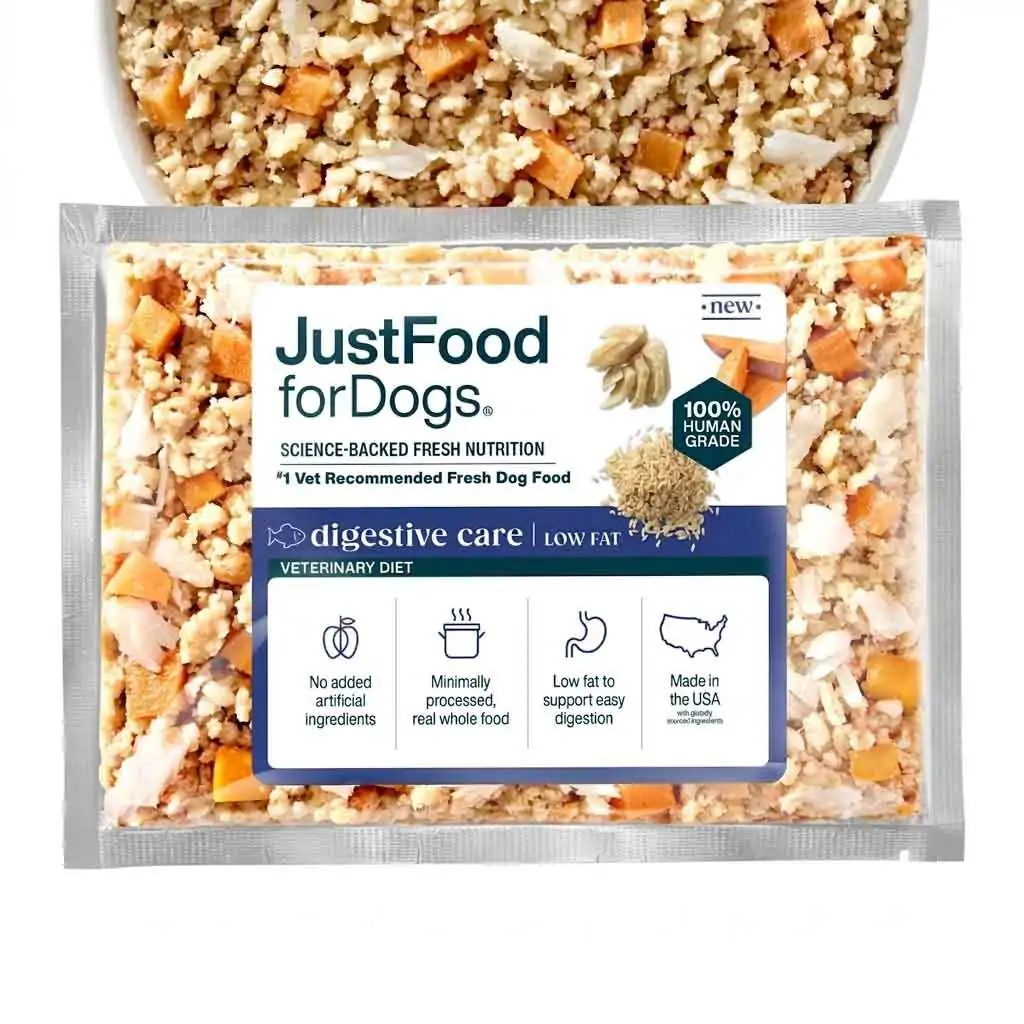
VETERINARY DIET FRESH DOG FOOD
Digestive Care
Designed to support dogs with specific dietary and health requirements, this formula may be suitable for certain veterinary care plans. Consult your veterinarian before purchasing to make sure it meets your dog’s individual needs.
- Human-grade ingredients
- No added preservatives
Happy Pet Zone may earn a commission from qualifying purchases made through affiliate links, at no extra cost to you.
What to Look For, Step by Step
Here’s my actual checklist when a client brings me a sensitive-stomach dog:
- Check the protein count. One named protein source, not a blend of five.
- Check the fat percentage. Lower is generally gentler ask your vet what range fits your specific dog.
- Scan for fillers. Corn syrup, artificial dyes, and “meat by-products” are red flags here.
- Confirm portion guidance exists. A food that doesn’t tell you how much to feed by weight is a food you’ll end up guessing with and guessing is exactly what got you here in the first place.
On that last point, some fresh food brands now offer feeding calculators that take your dog’s weight and activity level and spit out an exact daily amount. Our Puppy and Dog Food Calculator is a good example it’s a small thing, but it removes one more variable from an already sensitive situation.
How to Switch Without Making It Worse
This is where most well-meaning owners undo all their progress. A great food, introduced too fast, causes the exact symptoms you were trying to fix.
Here’s the schedule I give clients:
- Days 1–2: 25% new food, 75% old food
- Days 3–4: 50/50
- Days 5–7: 75% new, 25% old
- Day 8 onward: 100% new food
Keep everything else the same during this window. Same feeding times, same treats, no new snacks to “help” the transition. If stools soften at any point, hold that ratio for a couple extra days before moving on.
For a genuinely sensitive dog, stretch this to two full weeks. There’s no prize for finishing fast, and a setback costs you more days than patience would have.
When to Call Your Vet Instead of Changing Food Again
If you’ve made a clean switch, transitioned slowly, and things still aren’t improving after a few weeks, food probably isn’t the whole story. Parasites, infections, and other medical causes can all look exactly like “just a sensitive stomach” from the outside.
Your vet may suggest a structured food trial one protein, one carb, fed exclusively for several weeks, nothing else. It’s tedious, but it’s the only way to actually isolate what’s going on instead of guessing forever.
A sensitive stomach isn’t something you fix with one lucky bag of food. It’s a short list of things to check, a slow transition, and a vet in the loop when something doesn’t add up. Give it time, watch the signs, and you’ll get there.
![How to Prevent Fleas on Dogs Year-Round [2026 Guide]](https://happypetzone.com/wp-content/uploads/2026/06/How-to-Preven-Fleas-on-Dogs-Year-Round-Guide.jpg)