Heartworm in Dogs: Symptoms, Treatment & Prevention
Does your dog seem completely healthy even though you missed a heartworm preventive dose?
That can be scary, especially because heartworm in dogs can develop quietly for months before obvious symptoms appear. By the time a dog starts coughing or tiring easily, significant damage may already have occurred in the heart and lungs.
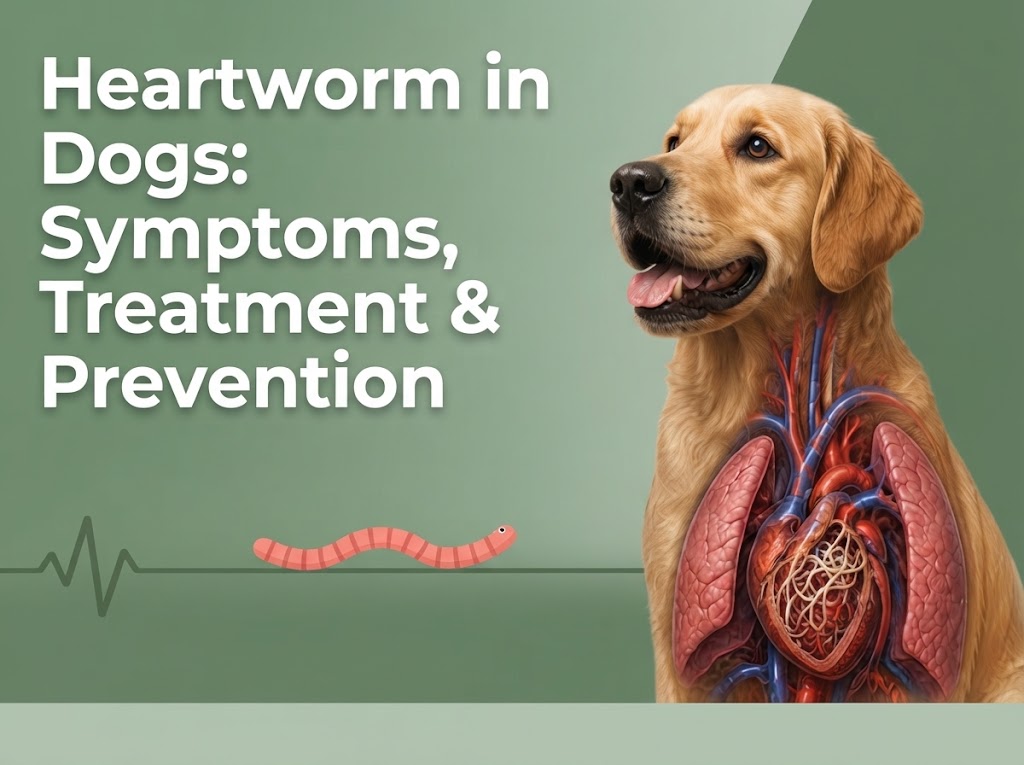
Heartworm disease is caused by Dirofilaria immitis, a parasite spread by mosquitoes. Adult worms live in the heart and pulmonary arteries, where they can cause progressive damage and, in severe cases, heart failure or life-threatening cardiovascular problems.
The encouraging part is that heartworm disease is preventable.
This guide explains how dogs get heartworms, the symptoms to watch for, how testing works, what treatment involves, and why prevention needs to be part of your dog’s routine.
Veterinary note: Heartworm disease is a serious medical condition. This article provides general educational information and does not replace veterinary diagnosis, prescription, or treatment. If your dog has difficulty breathing, collapses, has pale or bluish gums, or suddenly becomes very weak, seek veterinary care immediately.
What Is Heartworm in Dogs?
Heartworm disease is a parasitic infection caused by Dirofilaria immitis.
Adult heartworms live primarily in the heart, pulmonary arteries, and nearby large blood vessels. Adult female worms can reach roughly 6 to 14 inches long. A severely infected dog may harbor hundreds of worms.
The worms damage blood vessels and lung tissue over time.
The heart then has to work harder to move blood through damaged pulmonary arteries. This can lead to pulmonary hypertension, heart strain, and eventually heart failure.
Heartworms can also affect other organs, including the liver and kidneys, particularly when disease becomes advanced.
Here’s the thing: a dog can have heartworms and still look normal from the outside.
That’s one of the biggest reasons prevention and routine testing matter.
How Do Dogs Get Heartworms?
Mosquitoes are essential to the heartworm life cycle.
An infected dog, coyote, fox, or other susceptible animal can carry microscopic baby heartworms called microfilariae in its bloodstream. When a mosquito bites an infected animal, it can pick up these microfilariae.
Inside the mosquito, the larvae develop for roughly 10 to 14 days.
When that mosquito later bites another dog, infective larvae enter through the bite wound.
The larvae then migrate through the dog’s tissues and bloodstream. Over approximately six months, they develop into adult heartworms. Once mature, the worms can live for years inside an infected dog.
Can Heartworms Spread Directly Between Dogs?
No.
Your dog cannot catch heartworms simply by playing with an infected dog.
A mosquito has to transmit the parasite from one susceptible animal to another. That means even dogs that rarely interact with other pets can still be exposed if mosquitoes are present.
Indoor dogs aren’t automatically protected either.
Mosquitoes can get inside homes, which is one reason heartworm prevention is recommended for dogs regardless of whether they spend most of their time indoors or outdoors.
Heartworm Symptoms in Dogs
Early heartworm infections often cause few or no obvious symptoms.
That can continue for months while adult worms develop and begin damaging the pulmonary arteries.
As the disease progresses, symptoms may include:
- Persistent mild cough
- Reduced stamina
- Tiring quickly during exercise
- Reluctance to exercise
- Weakness
- Loss of appetite
- Weight loss
- Difficulty breathing
- Fainting or collapse
- Swollen abdomen from fluid accumulation
The American Heartworm Society notes that active dogs may show signs sooner because their cardiovascular system is working harder. Dogs with heavy infections can also develop more pronounced disease.
A Persistent Cough
A soft, dry cough can be one of the earlier noticeable signs.
Heartworms damage the pulmonary arteries and surrounding lung tissue, which can trigger respiratory problems.
A cough doesn’t mean your dog has heartworms, though.
Kennel cough, allergies, respiratory infections, heart disease, and other conditions can cause similar symptoms. Testing is the only way to determine whether heartworms are involved.
Exercise Intolerance
Maybe your dog used to race around the yard and now stops after a short walk.
Or perhaps they need more breaks than usual.
Reduced stamina can occur as heartworm disease progresses because the heart and lungs are working under increased strain.
Don’t assume your dog is simply getting older without checking.
Swollen Belly
An enlarged or swollen abdomen can occur when advanced heart disease causes fluid to accumulate.
This is a later and more concerning sign.
A dog with a swollen abdomen, breathing difficulty, weakness, or pale or bluish gums needs prompt veterinary attention.
Severe Heartworm Disease and Caval Syndrome
In heavily infected dogs, a large number of adult worms can interfere with blood flow through the heart.
The American Heartworm Society describes caval syndrome as a life-threatening cardiovascular complication involving severe obstruction of blood flow. Signs can include sudden difficulty breathing, pale gums, and dark or bloody urine.
This is an emergency.
A dog with these symptoms should be taken to an emergency veterinary hospital immediately.
How Long Can a Dog Have Heartworms Before Showing Symptoms?
Heartworm disease develops slowly.
It takes roughly six months for newly introduced larvae to mature into adult worms. Adult heartworms can then survive for approximately five to seven years in dogs.
That gives the disease plenty of time to progress silently.
This is why waiting for symptoms isn’t a safe testing strategy.
Your dog may feel perfectly normal while heartworm infection is developing.
How Is Heartworm Disease Diagnosed?
Veterinarians usually begin with a blood test.
Heartworm antigen tests look for proteins associated with adult female heartworms in the dog’s bloodstream. A small blood sample is enough for many routine screening tests.
If the result is positive, your veterinarian may recommend additional tests before treatment begins.
These can include:
- A second or confirmatory blood test
- Microfilaria testing
- Chest X-rays
- Bloodwork
- Echocardiography
- Additional tests to evaluate organ function
VCA notes that these tests help determine how much disease is present and whether the dog can safely undergo treatment.
Can a Young Puppy Test Positive?
Very young puppies cannot immediately test positive after infection because the parasite needs time to mature.
The American Heartworm Society notes that puppies under seven months can generally begin prevention without first requiring a heartworm test, but testing is needed later according to veterinary recommendations.
Your veterinarian will determine the appropriate testing schedule based on your puppy’s age and prevention history.
What Happens If a Dog Tests Positive?
A positive test does not mean you should panic.
It does mean you need veterinary guidance before doing anything else.
Heartworm treatment is different from routine intestinal deworming. The adult worms live inside the cardiovascular system, and killing them creates its own risks.
Your veterinarian will first assess your dog’s overall health and disease severity.
Some dogs need stabilization before adult worms can be treated. Additional bloodwork and imaging may be needed to evaluate the heart, lungs, liver, kidneys, and other affected systems.
Heartworm Treatment for Dogs
Heartworm treatment is a veterinary procedure.
The FDA-approved drug used to kill adult heartworms in dogs is melarsomine, which is administered by injection. The American Heartworm Society identifies melarsomine as the approved adulticide for canine heartworm infection.
Treatment usually involves several stages.
1. Stabilizing the Dog
If a dog has significant heart or lung disease, the veterinarian may first treat the complications of the infection.
The dog may need medications, supportive care, or hospitalization before adulticide treatment is appropriate.
2. Treating Microfilariae
Dogs may also have microscopic heartworm larvae circulating in their blood.
Veterinarians use medication to address these larvae and may monitor the dog closely because rapid death of large numbers of microfilariae can cause reactions.
3. Treating Adult Heartworms
Melarsomine is administered as a series of injections.
VCA describes a commonly used protocol involving an initial injection, a rest period of about 30 days, and then two additional injections given approximately 24 hours apart. Your veterinarian determines the actual schedule for your dog’s condition.
4. Using Additional Medications
Treatment may also include doxycycline and anti-inflammatory medication.
Doxycycline is used because heartworms harbor symbiotic Wolbachia bacteria that contribute to the worms’ biology. Reducing these bacteria can support the overall treatment protocol.
Your veterinarian may also prescribe other medications based on your dog’s individual complications.
Why Exercise Restriction Is So Important During Treatment
This is one of the biggest things owners need to understand.
When adult heartworms die, their remains can travel into the lungs and cause inflammation or obstruction of small blood vessels.
Exercise increases blood flow and puts additional stress on the cardiovascular system during this vulnerable period.
VCA recommends strict exercise restriction following adulticide treatment, including a particularly careful period immediately after the injections.
Your dog may hate being kept quiet.
I know.
But this is one situation where following the boring instructions really matters.
Depending on the treatment stage, your veterinarian may recommend crate rest, leash-only bathroom trips, or very limited activity.
Give it time.
What Is “Slow-Kill” Heartworm Treatment?
You may see the term slow-kill online.
This approach uses a monthly heartworm preventive, often with doxycycline, to gradually eliminate adult heartworms over a much longer period.
The American Heartworm Society and VCA do not recommend relying on this as the routine alternative to approved adulticide treatment because adult worms remain inside the dog longer and can continue causing damage.
There can be unusual situations where a veterinarian considers an alternative approach.
That decision belongs with the treating veterinarian.
Don’t attempt a slow-kill protocol at home because you read about it online.
Heartworm Prevention for Dogs
Prevention is the part of heartworm care where you have the most control.
FDA-approved heartworm preventives are available in several forms, including monthly oral or topical products and longer-acting injectable options. The exact choices depend on your dog’s needs and what is available in your region.
The American Heartworm Society recommends thinking 12 months at a time, with annual testing and year-round prevention.
That approach matters because mosquitoes can remain active outside the classic summer season in many areas.
Why Consistency Matters
Missing doses creates gaps in protection.
Even if your dog seems perfectly healthy, an interruption in prevention can leave them exposed to infection.
If you forget a dose, don’t double up unless your veterinarian or the product instructions specifically tell you to do so.
Call your veterinary clinic if you’re unsure how to restart the schedule.
Do Heartworm Preventives Kill Adult Heartworms?
This distinction is important.
Heartworm preventives are designed primarily to prevent developing infections by targeting immature stages of the parasite.
They are not the same thing as the adulticide used to eliminate established adult heartworms.
The FDA warns that dogs should be tested according to veterinary recommendations before starting prevention in situations where existing infection is possible. Giving a preventive to a dog with established infection can create serious complications, particularly when microfilariae are present.
That is why you should not use leftover heartworm medication as a substitute for veterinary testing and treatment.
Do Indoor Dogs Need Heartworm Prevention?
Yes.
A dog doesn’t need to spend hours outside to encounter a mosquito.
The American Heartworm Society notes that mosquitoes can enter homes, and risk varies with climate, wildlife carriers, and local conditions.
So “my dog is mostly indoors” isn’t enough reason to skip prevention.
The appropriate prevention plan depends on your veterinarian’s assessment of your dog’s risk and local heartworm exposure.
Can Mosquito Control Prevent Heartworms?
Reducing mosquito exposure can lower risk, but it shouldn’t replace heartworm medication.
Useful measures include:
- Removing standing water around the home
- Using only veterinary- or regulatory-approved mosquito products designed for dogs
- Keeping screens in good condition
- Limiting outdoor exposure during periods of heavy mosquito activity
VCA also recommends reducing mosquito breeding sites and limiting outdoor activity during peak mosquito times such as dawn and dusk.
Still, you can’t eliminate every mosquito.
That’s why prevention medication remains central to heartworm protection.
Can a Dog Get Heartworms After Treatment?
Yes.
Successfully treating heartworm disease does not make a dog permanently immune.
A previously infected dog can become infected again after another mosquito bite if they aren’t protected.
VCA specifically notes that dogs successfully treated for heartworms remain vulnerable to reinfection.
That means prevention continues after treatment.
Heartworm vs. Intestinal Worms in Dogs
Heartworms are very different from the intestinal parasites discussed in routine deworming.
Heartworms live in the cardiovascular system and pulmonary arteries. Roundworms, hookworms, whipworms, and tapeworms primarily affect the gastrointestinal tract.
That’s why an ordinary dewormer should never be assumed to protect your dog against heartworm disease.
If you’re looking for a broader guide to intestinal parasites and canine deworming, see our Dog Deworming Guide: Types, Schedule & Best Dewormers Compared.
When Should You Call Your Veterinarian?
Contact your veterinarian if your dog develops a persistent cough, reduced stamina, unexplained weight loss, weakness, or breathing changes.
Routine preventive appointments are equally important.
Seek emergency care if your dog experiences:
- Sudden collapse
- Severe difficulty breathing
- Pale or bluish gums
- Coughing up blood
- Extreme weakness
- Dark or bloody urine
- A rapidly swollen abdomen
These signs can occur with severe cardiovascular or pulmonary disease and should not be watched at home.
Frequently Asked Questions
The Best Heartworm Strategy Is Prevention
Heartworm disease is one of those problems that can feel invisible until it isn’t.
Your dog may be running around the yard normally while immature parasites are developing inside the body. By the time coughing, weakness, or exercise intolerance appears, the infection may already have caused significant damage.
The practical plan is simple:
Keep your dog’s heartworm prevention consistent. Follow your veterinarian’s testing schedule. Reduce mosquito exposure where you reasonably can. And if you miss doses or aren’t sure whether your dog is protected, ask your veterinary clinic rather than guessing.
Trust me on this one: prevention is much easier on your dog than treating established heartworm disease.