Bullmastiff Dog Breed: Everything You Need to Know Before Getting One
The Bullmastiff is one of the most loyal, powerful, and misunderstood dog breeds in the world. If you’ve been searching for the perfect guardian dog that’s also deeply devoted to its family, this breed might be your answer.
In this article, you’ll learn everything about the Bullmastiff — from its fascinating history as a poacher-catching working dog to its health challenges, daily care needs, and what it’s really like to live with one.
Fair warning: this breed isn’t for everyone. But for the right owner, a Bullmastiff is an absolutely extraordinary companion.
History and Origin
The Bullmastiff has a job title that sounds straight out of a Victorian thriller: “The Gamekeeper’s Night Dog.”
Back in 19th-century England, poaching was a serious crime — and a serious problem. Wealthy estate owners needed a dog that could silently track, chase, and pin down poachers without killing them. Biting was not part of the job description.
To create this perfect working dog, breeders crossed the English Mastiff (60%) with the Bulldog (40%). The Mastiff contributed size and steadiness; the Bulldog added tenacity and raw courage. The result was a dog that could cover ground quickly, take down a grown man, and hold him in place until the gamekeeper arrived — all without making a sound.
As poaching declined in the early 20th century, the breed transitioned into sport and show work. Interestingly, one popular “test” involved hiding a person in the bushes and releasing a muzzled Bullmastiff to find them — demonstrating both the breed’s tracking ability and its non-aggressive nature toward humans.
The Bullmastiff was officially recognized by The Kennel Club (UK) and placed in the Working Group, where it remains today.
Physical Characteristics
The Bullmastiff is built like a tank — and that’s not a criticism.
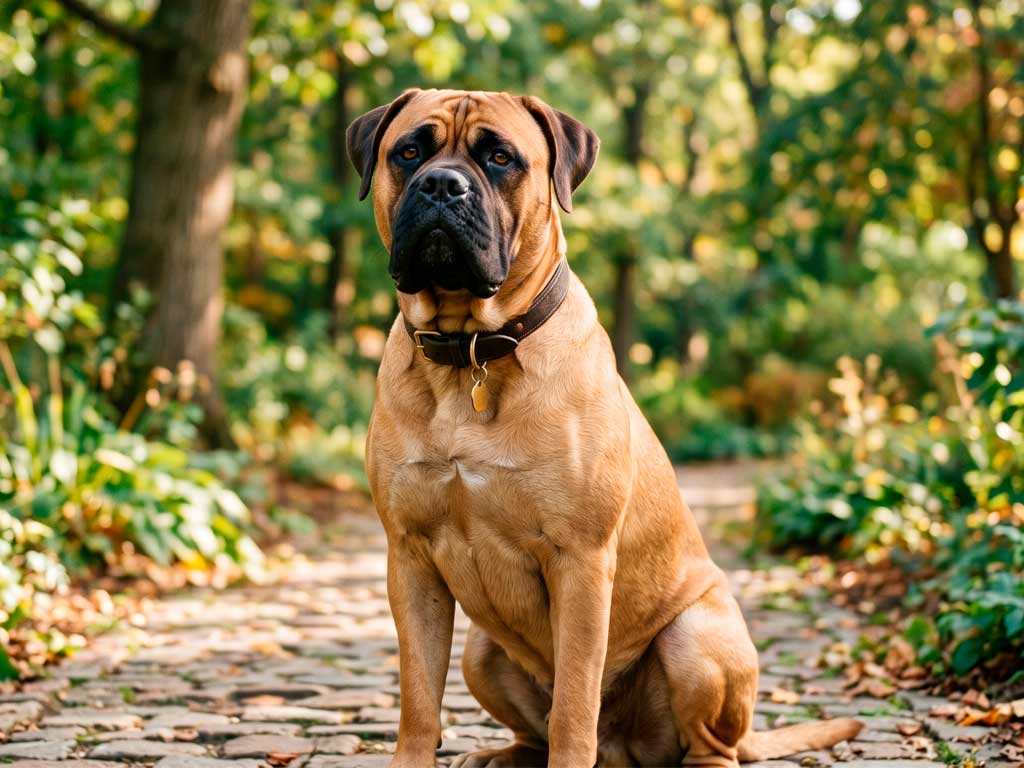
This is a large, compact, and powerfully muscular dog with a broad, square head that immediately commands attention. The muzzle is short and black, the eyes are dark and alert, and the overall expression is one of quiet confidence.
Key physical stats:
- Males: 64–69 cm tall, weighing 50–59 kg
- Females: 61–66 cm tall, weighing 41–50 kg
- Coat: Short, dense, and weather-resistant — built for outdoor work
- Colors: Fawn, red, or brindle, always with a characteristic black muzzle
- Drooling: Minimal for a giant breed — a pleasant surprise for many owners
Despite their imposing appearance, Bullmastiffs move with surprising agility. Their short coat requires very little maintenance, and their compact build means they don’t take up as much space as you might expect — though they’ll still take over your couch given the chance.
Temperament and Personality
Here’s what surprises most people who meet a Bullmastiff for the first time: they’re calm.
Not lazy — calm. There’s a difference. A Bullmastiff is quiet, composed, and deeply loyal. With their family, they’re affectionate and gentle. With strangers, they’re watchful and reserved until properly introduced by someone they trust.
This breed is naturally protective — not aggressive. If an unfamiliar face shows up, don’t expect the Bullmastiff to warm up quickly. They assess situations with a kind of measured intelligence that’s almost uncanny in a dog.
A few key personality traits to know:
- Loyal to a fault — they bond intensely with their family
- Stubborn — yes, genuinely stubborn; they have an independent streak that requires consistent handling
- Quiet watchdog — they alert, they observe, they act if needed, but they don’t bark unnecessarily
- Not recommended for first-time dog owners — their strength, confidence, and protective instincts need an experienced hand
They can live with other pets but may need careful socialization, especially with dogs of the same sex. With children, they can be wonderful — but interactions should always be supervised, simply because of the breed’s sheer size.
Care
Diet and Nutrition
A dog that weighs up to 59 kg needs serious fuel — and the right kind of fuel.
Large breed dogs like the Bullmastiff have different nutritional requirements than smaller dogs, particularly when it comes to calcium, phosphorus, and joint-supporting minerals. Look for a high-quality large breed formula that supports healthy joints and lean muscle mass.
One critical feeding note: the Bullmastiff is prone to bloat (gastric dilatation-volvulus), a potentially life-threatening condition. To reduce risk:
- Feed 2–3 smaller meals per day rather than one large meal
- Avoid vigorous exercise immediately before or after eating
- Use a slow-feeder bowl to prevent gulping
- Elevate the food bowl slightly (though this is debated — ask your vet)
Puppies need specially formulated large breed puppy food to support controlled bone development. Overfeeding a Bullmastiff puppy can actually cause harm by accelerating growth too quickly.
Exercise Requirements
The Bullmastiff is an active dog — but not a hyperactive one.
Adult Bullmastiffs do well with one to two hours of exercise per day, split across multiple walks or play sessions. They enjoy interactive games with their family and short bursts of activity far more than endless jogging.
The crucial caveat: puppies must have their exercise strictly controlled until at least 12 months of age. Their bones and joints are still developing, and excessive exercise during this period can cause lasting damage. Keep puppy sessions short, low-impact, and frequent rather than long and intense.
As adults, a good daily walk plus some backyard play will keep a Bullmastiff physically and mentally satisfied. They’re not built for marathon runs, but they’ll happily join you on a solid hike.
Grooming Needs
Good news for those who dread grooming sessions: the Bullmastiff is one of the easier large breeds to maintain.
Their short, dense coat needs brushing just once a week with a rubber grooming mitt to remove loose and dead hair. They shed moderately, and weekly brushing keeps it manageable.
Additional grooming basics:
- Ears: Check and clean weekly to prevent wax build-up and infection
- Nails: Trim every 3–4 weeks; long nails on a dog this heavy cause joint strain
- Teeth: Brush 2–3 times per week, or use dental chews
- Wrinkles/facial folds: Clean between folds regularly to prevent skin irritation and moisture build-up
- Bathing: Every 6–8 weeks, or as needed
Training and Education
Training a Bullmastiff is rewarding — and challenging.
These dogs are intelligent but independently minded. They were bred to make decisions on their own in the field, and that autonomous thinking doesn’t disappear in a family home. What this means in practice: they’ll understand what you want, but they’ll decide whether to comply.
Start early. Socialization and basic obedience should begin at 8 weeks. The window between 8–16 weeks is especially critical for exposing a Bullmastiff puppy to different people, sounds, environments, and animals. A well-socialized Bullmastiff puppy becomes a confident, stable adult.
Use positive reinforcement — food rewards and calm praise work beautifully. Harsh methods backfire badly with this breed; they’ll shut down or become defensive.
Be consistent. Inconsistency confuses them, and a confused Bullmastiff is a stubborn one. Set rules from day one and stick to them. Yes, that applies to the couch.
Leash training is non-negotiable. A 55 kg dog that pulls is a safety hazard. Invest time in loose-leash walking early, and consider working with a professional trainer who has experience with large, guarding breeds.
Health and Longevity
The Bullmastiff has a life expectancy of 8 to 10 years — typical for a giant breed dog.
Like many large dogs, they’re prone to certain hereditary conditions. Responsible breeding practices significantly reduce these risks, but potential owners should be aware of the following:
- Hip and elbow dysplasia — abnormal joint development that can cause pain and mobility issues; all breeding dogs should be screened
- Hereditary eye disorders — several ocular conditions run in the breed; eye examinations before breeding are essential
- Bloat (GDV) — a life-threatening emergency; know the signs (distended abdomen, unproductive retching, restlessness) and have your vet’s emergency number saved
- Bladder and kidney issues — the breed shows some predisposition to certain urological problems
- Cruciate ligament injuries — the knee ligaments can be under significant stress given the dog’s weight
When buying a Bullmastiff puppy, always ask the breeder for hip scores, elbow grades, and eye test certificates for both parents. A reputable breeder will have these readily available and won’t pressure you to skip due diligence.
Is This the Right Dog for You?
Let’s be direct: the Bullmastiff is not an easy breed, but it is an extraordinary one.
This dog is right for you if:
- You have experience owning and training large or guarding breeds
- You want a calm, loyal companion that takes its job as family protector seriously
- You can commit to consistent early training and socialization
- You have space — a house with a secure garden is ideal
- You’re prepared for the costs and vet care that come with a giant breed
This dog is probably not right for you if:
- You’re a first-time dog owner with no experience handling large dogs
- You live in a small apartment with no outdoor space
- You want a sociable, everybody-is-my-best-friend dog
- You can’t commit to firm, consistent training from puppyhood
- You’re away from home for long hours daily — this breed bonds intensely and doesn’t do well with prolonged isolation
Done well, life with a Bullmastiff is deeply rewarding. This is a dog that will guard your home, protect your family, and curl up at your feet with complete contentment. They don’t need to be the life of the party — they just need to be with you.
Frequently Asked Questions
1. Are Bullmastiffs good family dogs? Yes — with the right family. Bullmastiffs are affectionate and devoted to their people, including children. However, their size means all interactions with young children should be supervised. They also tend to be reserved with strangers, which makes early socialization critical for a well-adjusted family dog.
2. Do Bullmastiffs bark a lot? No. The Bullmastiff is actually a fairly quiet breed. They were originally bred to work silently, and that instinct remains. They’ll alert you to something unusual, but they won’t bark at every car or passerby. This makes them excellent watchdogs without being nuisances.
3. How much exercise does a Bullmastiff need daily? Adult Bullmastiffs need about one to two hours of exercise per day, ideally split into two walks plus some play. Puppies need significantly less, and their exercise should be carefully controlled until 12 months to protect developing joints.
4. Are Bullmastiffs aggressive? No — not inherently. The Bullmastiff is a calm, protective breed, not an aggressive one. However, without proper socialization and training, their natural guardedness toward strangers can develop into problematic behavior. A well-trained, well-socialized Bullmastiff is steady, confident, and reliable.
5. What is the biggest health concern for Bullmastiffs? Bloat (gastric dilatation-volvulus) is the most urgent health risk due to its sudden onset and life-threatening nature. Hip and elbow dysplasia are the most common chronic issues. Choosing a puppy from health-tested parents and maintaining a healthy weight throughout the dog’s life are the two most effective preventive measures.
Ready to learn more about giant working breeds? Explore our in-depth articles on the English Mastiff and Neapolitan Mastiff to compare traits and find your perfect match.