Red Root Floater Care Guide: Light, Red Color & Growth
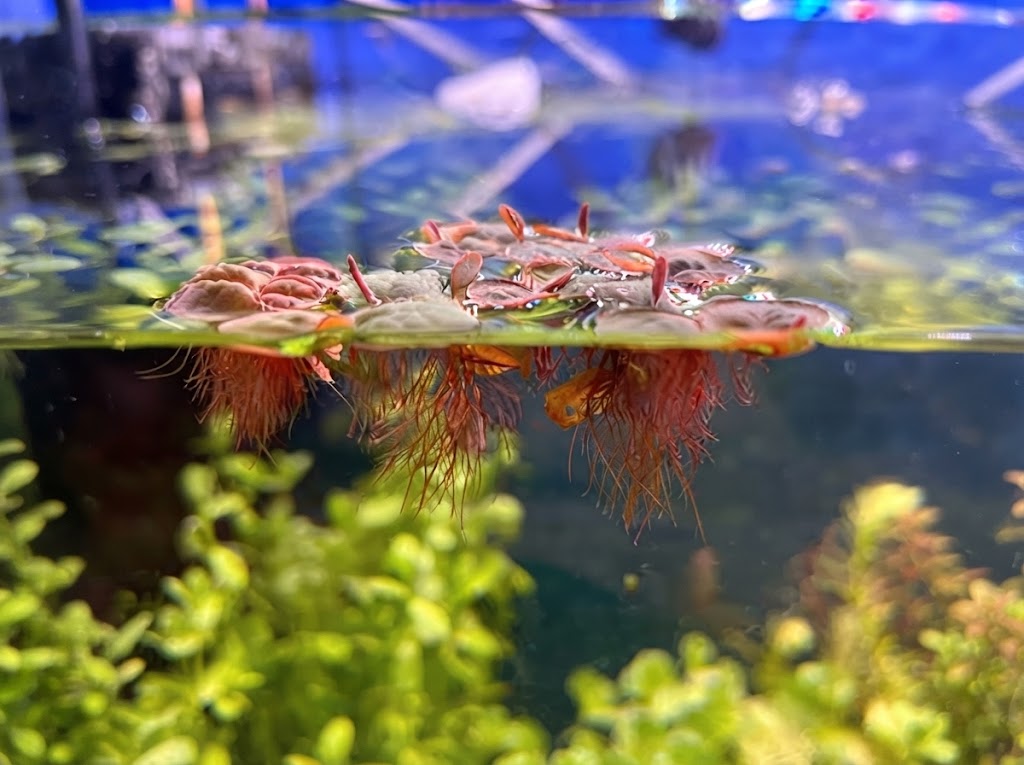
A healthy red root floater can cover part of an aquarium surface surprisingly quickly, but getting those deep red leaves and roots requires the right combination of light, nutrients, and surface conditions. This guide covers Phyllanthus fluitans from introduction through propagation, maintenance, and common problems.
Unlike rooted aquarium plants, Red Root Floater never needs to be planted. It stays at the surface and takes nutrients from the water column, while its roots hang underneath the leaves.
Red Root Floater at a Glance
Scientific name: Phyllanthus fluitans
Growth habit: Free-floating
Difficulty: Beginner to intermediate
Light: Moderate to high
CO₂: Not required
Temperature: About 72–82°F (22–28°C)
pH: About 6.0–7.5
Substrate: None
Fertilization: Water-column nutrients
Growth rate: Moderate to fast
Propagation: Division and branching
Kew currently accepts Phyllanthus fluitans as the species name. It is a free-floating aquatic plant native to tropical regions of the Americas.
What Makes Red Root Floater Different?
Its leaves float at the surface while the roots hang below. That gives the plant direct access to strong light and atmospheric carbon dioxide, but it also makes the leaves vulnerable to water constantly splashing from a filter outlet.
The leaves can range from green to reddish, while the roots often develop red or reddish-purple tones. Color is strongly influenced by lighting, with nutrient availability also affecting plant health and appearance.
How to Get Red Root Floater Red
The most common complaint is simple: the plant stays green. A green plant can still be healthy, so color should be treated as a result of good growing conditions rather than the only measure of success.
Light comes first. Stronger usable light gives Red Root Floater a better chance of developing intense coloration. Once lighting is adequate, make sure nutrients are available in the water column.
Do not starve the aquarium to force red leaves. A colony that is shrinking, yellowing, or losing leaves is not showing successful coloration.
If your red root floater is not red, check: light intensity, shading from other floaters, nutrient availability, plant health, and how long the plants have been in the aquarium.
Lighting for Red Root Floater
Lighting is probably the most important controllable factor. Moderate light can maintain growth, while stronger surface lighting is more useful when deep red coloration is the goal.
Because the plant floats directly beneath the fixture, it receives light differently from plants sitting on the substrate. Increase intensity gradually and watch the plant and algae response instead of chasing a single PAR number.
Around 7–9 hours of consistent daily lighting is a sensible starting point for many planted aquariums. Adjust from there according to growth and algae.
For more on aquarium lighting, see our Aquarium Lighting Guide.
Does Red Root Floater Need CO₂?
No. Red Root Floater does not require injected CO₂. Its leaves remain at the surface and have direct access to atmospheric carbon dioxide.
CO₂ can still improve growth in a high-tech planted aquarium, but it is not a requirement for keeping Phyllanthus fluitans. Check light, nutrients, crowding, and surface agitation before considering a CO₂ system.
How to Fertilize Red Root Floater
This plant is different from Amazon Sword and other heavy root feeders. Its roots hang freely in the water, so water-column fertilization is much more relevant than root tabs.
Seachem Flourish Comprehensive provides micronutrients including calcium, magnesium and iron without adding nitrogen or phosphorus.
FROM AMAZON.COM
Seachem Flourish Freshwater Plant Supplement
A comprehensive plant supplement with minerals, trace elements, and vitamins to support healthy growth in freshwater planted tanks.
Buy on Amazon.comHappy Pet Zone may earn a commission when you click through to Amazon.com, at no extra cost to you. As an Amazon Associate, we earn from qualifying purchases.
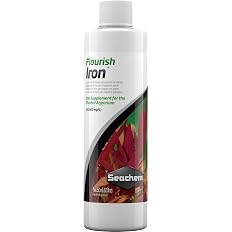
If iron is limiting, Seachem Flourish Iron is a concentrated ferrous iron supplement intended to support green and red plant coloration and prevent iron-related yellowing.
FROM AMAZON.COM
Seachem Flourish Iron 250 mL / 8.5 fl. oz.
Highly concentrated ferrous iron supplement for planted freshwater tanks. Corrects iron deficiency and supports vibrant green leaf color.
Buy on Amazon.comHappy Pet Zone may earn a commission when you click through to Amazon.com, at no extra cost to you. As an Amazon Associate, we earn from qualifying purchases.
More fertilizer does not automatically mean more red. If lighting is the limiting factor, increasing nutrients will not fix the underlying problem.
Water Parameters and Temperature
Temperature: 72–82°F (22–28°C)
pH: approximately 6.0–7.5
Hardness: soft to moderately hard water
Red Root Floater is adaptable to normal tropical freshwater conditions. Stable water is more useful than constantly chasing an exact number.
For a deeper look at stable aquarium water, see our Aquarium Water Guide.
The Biggest Problem: Surface Agitation
This is the first thing I would check when a healthy-looking colony starts deteriorating. Red Root Floater prefers relatively calm surface conditions.
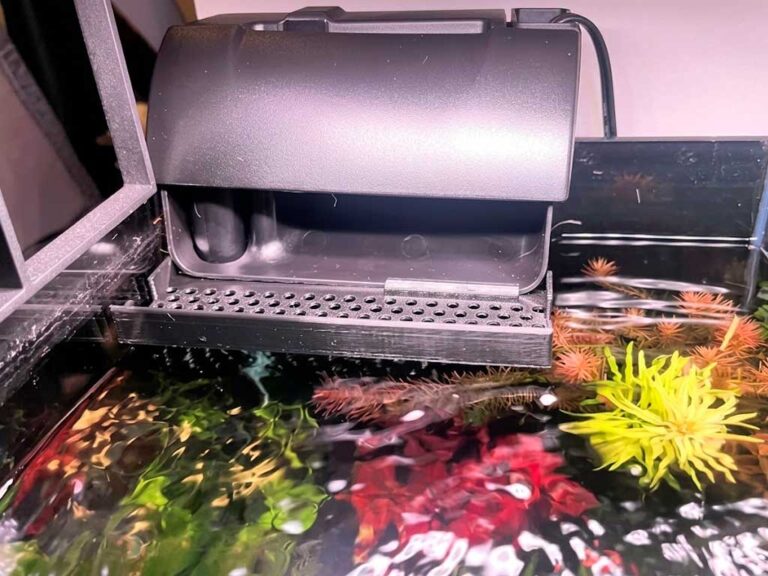
Water repeatedly landing on the leaves can cause damage and accelerate rot. Redirect a filter outlet so it maintains circulation without continuously splashing the plants.
Air stones can cause similar problems when bubbles break directly beneath the plant mat. The aquarium still needs gas exchange, but the goal is controlled surface movement rather than constant turbulence.
A feeding ring or simple floating barrier can keep the colony in a protected corner.
How to Add and Plant Red Root Floater
You don’t plant it. Rinse new plants gently with aquarium-safe water and place them directly on the surface.
Do not bury the roots in gravel or sand. Their natural growth habit is floating, and the roots are designed to hang in the water.
If a shipment contains soft or decomposing leaves, remove the damaged material and keep the firm healthy pieces floating in calm water.
Growth Rate and Maintenance
Once established, Red Root Floater can reproduce quickly when light and nutrients are adequate. The maintenance problem is often too much plant rather than too little.
A dense surface mat can shade submerged plants, crowd filter intakes, and make surface management difficult. Thin the colony regularly instead of waiting until the entire aquarium is covered.
Weekly check: remove plants covering the filter intake, thin dense areas, remove yellowing leaves, keep part of the surface open, and check that the remaining plants receive direct light.
How to Propagate Red Root Floater
Propagation is straightforward. Healthy plants branch and produce new growth, and sections can be separated gently and floated elsewhere.
No substrate or special propagation equipment is required. Keep newly separated portions away from strong splashing while they establish.
Red Root Floater Melting: What Went Wrong?
If your red root floaters are melting, inspect the leaves before changing the water chemistry. Translucent, soft, or deteriorating leaves can point to physical damage or poor surface conditions.
Water hitting the leaves: redirect the filter outlet.
Strong aeration: move the plants away from the strongest bubbling.
Too little light: increase usable surface lighting gradually.
Very lean water: review water-column nutrition.
Heavy crowding: remove old or damaged growth.
Do not change five variables at once. Change one major factor and watch the new growth.
Red Root Floater and Other Aquarium Plants
The main effect on other plants is shade. A controlled colony can provide cover for fish and work well above lower-light species such as Java Fern and Java Moss.
If the aquarium contains demanding carpeting plants or high-light stems, keep surface coverage limited so the floating layer does not block their light.
You can read our Java Fern Care Guide and Java Moss Care Guide for compatible lower-light plants.
Is Red Root Floater Good for Betta Tanks?
Yes, provided you control the coverage and keep the surface relatively calm. Floating vegetation can provide cover, and Red Root Floater suits the lower-flow conditions often used in betta aquariums.
Leave some open surface area. A solid mat across the entire aquarium can make feeding and surface access unnecessarily difficult.
Fish That May Eat Red Root Floater
Most peaceful community fish will leave an established colony alone, but herbivorous fish can consume or damage floating plants. Goldfish, koi, and some larger herbivores are poor matches for delicate floating colonies.
Fish that repeatedly disturb the surface can also break apart the colony even when they are not eating it. If every new leaf disappears, check compatibility before changing your plant-care routine.
Common Problems
- Leaves stay green: check light first, then water-column nutrients.
- Roots are not very red: review lighting and overall plant health.
- Leaves turn translucent: check for filter splash and decay.
- Plant keeps disappearing: check fish, filter intake, and surface flow.
- Growth becomes very slow: check light and nutrient availability.
- Surface becomes completely covered: thin the colony regularly.
- Leaves collect around the intake: reduce aggressive flow or use a floating barrier.
- New growth is smaller: check nutrients and crowding.
A Simple Maintenance Routine
Once a week, inspect the surface for damaged leaves and excessive coverage. Remove enough growth to keep part of the surface open, then check that the filter is not pulling plants toward the intake.
If the plant is healthy but green, look at lighting first. If the light is already strong, review nutrient availability before changing water chemistry.
A stable routine will tell you much more than constantly changing the aquarium.
Frequently Asked Questions
Red Root Floater is one of the easier ways to add a strong surface feature to a planted aquarium, provided you respect its unusual weakness: constant water hitting the leaves.
For healthy growth, start with moderate-to-strong surface lighting, balanced water-column nutrition, stable tropical temperatures around 72–82°F, and gentle surface movement. If red coloration is your goal, improve the light first and then make sure nutrients, including iron, are available.
Keep the mat controlled, leave some open surface, and remove damaged growth weekly. That routine is usually enough to turn a small starter portion of Phyllanthus fluitans into a healthy floating colony.