Amazon Sword Care Guide: Planting, Root Tabs & Growth
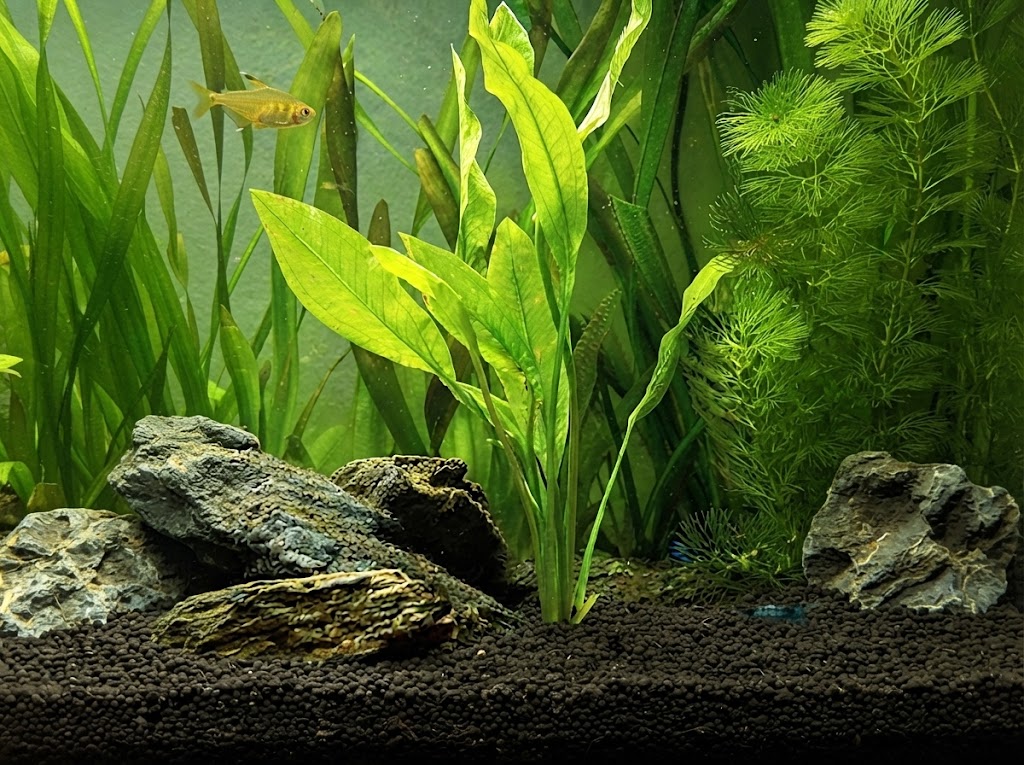
An Amazon sword can reach roughly 16–20 inches (40–50 cm) when fully established, making it one of the most useful background plants for a medium or large freshwater aquarium.
Amazon sword care comes down to enough root space, steady nutrients, moderate light, and keeping the crown above the substrate. This guide covers planting, substrate, lighting, root tabs, melt, propagation, growth, and common problems.
The plant is commonly sold as Echinodorus bleheri, although modern taxonomy has changed how several sword plants are classified. For aquarium keeping, the practical identification is a large rosette plant that feeds heavily through its roots and becomes a substantial background specimen.
Amazon Sword Quick Facts
Scientific name: Often sold as Echinodorus bleheri; trade and taxonomy names vary.
Typical mature size: About 16–20 inches tall and potentially 12 inches wide.
Placement: Background or large midground.
Light: Moderate light is a reliable starting point.
CO2: Optional for many home aquariums.
Feeding: Strongly root-oriented.
Temperature: Around 72–82°F (22–28°C).
pH: Roughly 6.5–7.5 is a common target range.
Propagation: Plantlets can form on flower stalks.
Why Amazon Sword Is Different From Java Fern and Java Moss
Java fern and Java moss are commonly attached to rocks and wood. Amazon sword is a rooted rosette plant, so its long-term performance depends much more on the substrate and root zone.
That distinction matters when planning a planted tank. An Amazon sword placed on driftwood has no practical advantage over planting it into the substrate, and covering the crown can cause problems even when the rest of the planting looks correct.
How to Plant an Amazon Sword Correctly
Start with a planting pocket deep enough for the roots to spread. A substrate depth of roughly 2.5–3 inches (6–8 cm) gives a large sword useful root volume.
- Prepare the roots. Gently separate tightly packed roots and trim only damaged or excessively long sections. Avoid cutting the whole root system back.
- Make a deep planting hole. Let the roots descend naturally instead of folding them sharply against the surface.
- Position the crown correctly. Bury the roots while keeping the central crown, where the leaves emerge, at or slightly above the substrate surface.
- Backfill gently. Firm the substrate around the roots so the plant is stable. Do not bury the crown under gravel or sand.
- 5. Give it time. A newly planted sword may spend several weeks building roots. New leaves from the center are a better sign than the condition of older foliage.
Does Amazon Sword Need Root Tabs?
For many aquariums, root tabs are one of the most useful tools for growing a large Amazon sword. It is a strong root feeder, so nutrients placed near the root zone can support growth directly.
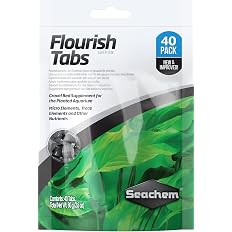
Seachem Flourish Tabs are designed to be buried in the substrate and are intended for root-feeding plants such as Amazon swords. Seachem states that the tablets release nutrients over roughly 3–4 months, so they fit a longer feeding cycle.
FROM AMAZON.COM
Seachem Flourish Tabs 40 Tab Pack
Root-zone fertilizer tabs packed with minerals and nutrients. Press into the substrate near plant roots for slow, steady feeding in freshwater tanks.
Buy on Amazon.comHappy Pet Zone may earn a commission when you click through to Amazon.com, at no extra cost to you. As an Amazon Associate, we earn from qualifying purchases.
Seachem Flourish Comprehensive supplies a broad range of micronutrients without being a dedicated nitrogen or phosphorus fertilizer. It can complement root feeding when the aquarium needs water-column micronutrients as well.
FROM AMAZON.COM
Seachem Flourish Freshwater Plant Supplement
A comprehensive plant supplement with minerals, trace elements, and vitamins to support healthy growth in freshwater planted tanks.
Buy on Amazon.comHappy Pet Zone may earn a commission when you click through to Amazon.com, at no extra cost to you. As an Amazon Associate, we earn from qualifying purchases.
Best Substrate for Amazon Sword
Amazon swords can grow in gravel or sand when roots can develop and the aquarium provides adequate nutrients. You do not need an expensive aquasoil simply to keep a sword alive.
With gravel, use enough depth for roots and avoid packing it so tightly that the root zone becomes difficult to penetrate. With sand, a planted-tank grade can work well, but avoid an excessively deep layer of very fine material.
If your aquarium already uses inert gravel, root tabs are often a simpler upgrade than replacing the entire substrate.
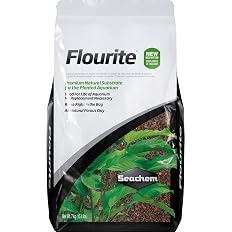
FROM AMAZON.COM
Seachem Flourite, 7 kg / 15.4 lbs
Porous clay gravel substrate specifically designed for planted freshwater tanks. Does not alter pH and never needs replacement.
Buy on Amazon.comHappy Pet Zone may earn a commission when you click through to Amazon.com, at no extra cost to you. As an Amazon Associate, we earn from qualifying purchases.
Amazon Sword in Gravel vs. Sand
- Gravel: Easy to plant and commonly used with root tabs. The spaces between pieces can give roots room to expand.
- Sand: Works when the root zone is managed carefully. Root tabs can be especially useful when the sand itself contributes little nutrition.
The complete root environment matters more than the label on the substrate. A sword in ordinary gravel with good root feeding can outperform one in nutrient-rich substrate that is constantly disturbed.
Lighting Requirements
Moderate lighting is a sensible starting point. Around 7–8 hours of consistent light per day works for many planted tanks, although intensity, plant density, and algae pressure can change the ideal schedule.
More light does not automatically produce a better sword. Increasing intensity without balancing nutrients, carbon availability, and maintenance can create algae before it creates stronger growth. See our aquarium lighting guide for the broader picture.
Does Amazon Sword Need CO2?
No. Many Amazon swords grow successfully without injected CO2. CO2 can increase growth under stronger lighting and higher nutrient availability, but a low-tech aquarium can still produce a large, healthy plant.
If you run a high-light planted tank, CO2 becomes more relevant because carbon demand rises with faster growth. Increasing light while leaving everything else unchanged often creates algae first.
Why Amazon Sword Leaves Melt
Leaf melt is common after an Amazon sword is moved into a new aquarium. Commercially grown swords may have been raised with leaves above the water, so those leaves can deteriorate after submersion while the plant produces new underwater foliage.
Melt is not automatically a sign that the plant is dying. Remove collapsing leaves, keep the crown correctly planted, and watch the center for new growth. A new submerged leaf is one of the clearest signs of successful transition.
If an established sword suddenly melts months after planting, review the aquarium as a whole. Changes in water chemistry, nutrient availability, root disturbance, temperature, or lighting can stress an otherwise stable plant.
How Fast Does Amazon Sword Grow?
Growth varies considerably. A new sword may spend weeks building its root system before producing vigorous leaves. Once established, it can become a fast-growing background plant in a warm, well-maintained aquarium.
Tank size changes how quickly the plant feels dominant. A sword that looks proportional in a 55-gallon aquarium can overwhelm a small tank surprisingly quickly, so plan for mature size when choosing its position.
How to Trim an Amazon Sword
Remove damaged, algae-covered, yellowing, or badly deteriorated leaves first. Cut the leaf stem close to the base without damaging the crown.
Large healthy leaves provide useful photosynthetic area and cover for fish. Aggressive trimming can leave the plant with too little healthy tissue to recover comfortably.
How Amazon Sword Propagates
Established Amazon swords can produce flower stalks that develop adventitious plantlets. Once young plants have several leaves and visible roots, they can eventually be separated and planted independently.
Do not rush the separation. A tiny plantlet with a weak root system has less margin for error than one that has developed roots and multiple leaves.
Amazon Sword Varieties and Trade Names
The aquarium trade uses several names for sword plants, including references to Echinodorus bleheri, Echinodorus grisebachii, broad-leaf forms, narrow-leaf forms, red swords, and compact selections.
Some names reflect older taxonomy, cultivar names, trade labels, or related plants. Treat a seller label as a useful clue, then compare expected mature size and form before buying.
Amazon Sword and Fish Compatibility
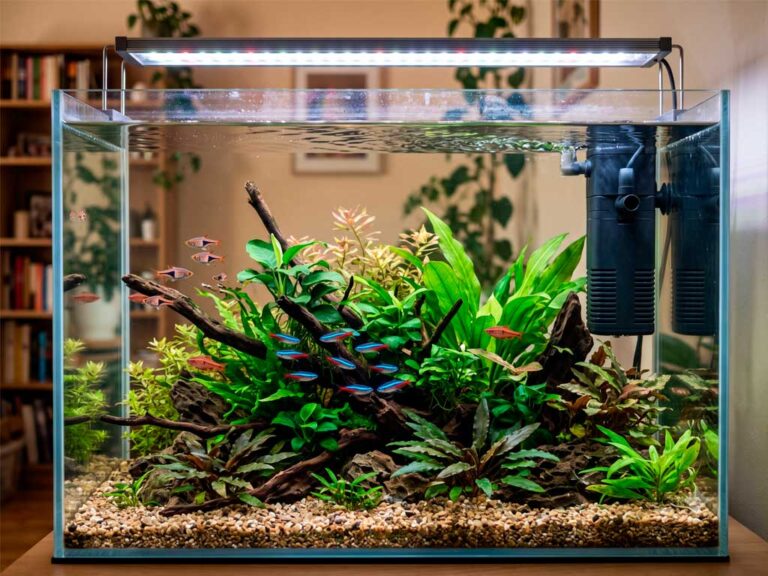
Amazon swords are generally compatible with peaceful freshwater community aquariums. Their broad leaves provide structure and cover, and a mature specimen can become a major part of the aquascape.
The bigger concern is fish behavior. Large cichlids, goldfish, and other fish that dig, uproot plants, or constantly disturb the substrate can prevent a sword from establishing. Fish that shred vegetation can also damage new leaves faster than the plant replaces them.
Common Amazon Sword Problems
Yellow older leaves: Check the root zone and overall nutrient availability. Older leaves can show deficiencies before newer growth does.
Small new leaves: Review root nutrition, light, carbon availability, and plant age. A recently planted sword may simply still be establishing.
Holes in older leaves: Inspect nutrient balance and leaf condition. Potassium deficiency is one possible cause of pinholes in older foliage.
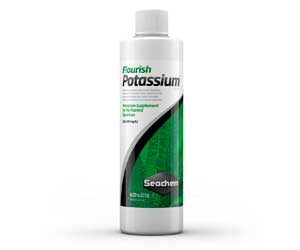
FROM AMAZON.COM
Seachem Flourish Potassium 500 mL / 17 fl. oz.
Concentrated potassium supplement for planted freshwater tanks. Supports strong stem growth and helps prevent deficiency without affecting pH.
Buy on Amazon.comHappy Pet Zone may earn a commission when you click through to Amazon.com, at no extra cost to you. As an Amazon Associate, we earn from qualifying purchases.
Yellowing between leaf veins: Iron availability can matter in fast-growing planted aquariums. Seachem Flourish Iron is a concentrated iron supplement for situations where iron supplementation is appropriate.
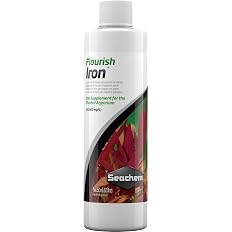
FROM AMAZON.COM
Seachem Flourish Iron 250 mL / 8.5 fl. oz.
Highly concentrated ferrous iron supplement for planted freshwater tanks. Corrects iron deficiency and supports vibrant green leaf color.
Buy on Amazon.comHappy Pet Zone may earn a commission when you click through to Amazon.com, at no extra cost to you. As an Amazon Associate, we earn from qualifying purchases.
Algae covering leaves: Check light, nutrient balance, circulation, and maintenance instead of treating the leaf surface alone. Our aquarium plant deficiency chart can help distinguish nutrient symptoms from other problems.
Amazon Sword and Algae
Broad Amazon sword leaves are easy surfaces for algae to colonize because they remain exposed to light. Some algae on older leaves is normal, but heavy coverage can indicate that the aquarium needs a broader adjustment.
Start with consistent lighting, appropriate feeding, regular water changes, adequate circulation, and removal of badly affected leaves. For persistent problems, review the tank with our aquarium water chemistry guide.
A Simple Amazon Sword Maintenance Routine
Once established, maintenance is straightforward. During weekly aquarium maintenance, inspect the newest leaves, check that the crown remains exposed, and look around the root zone for signs of disturbance.
Every week: Inspect new growth, remove severely damaged leaves, check the crown, and make sure fish have not uprooted the plant.
Every few months: Reassess the root zone and replace root tabs according to product instructions and the plant’s growth. Keep fertilizer away from the crown itself.
Frequently Asked Questions
A healthy Amazon sword usually comes down to a few measurable basics: give it 2.5–3 inches of usable substrate, moderate consistent light, reliable root nutrition, and room to reach roughly 16–20 inches. Keep the crown above the substrate, resist aggressive trimming, and judge the plant by its new growth.
Those fundamentals will take you much further than chasing a complicated fertilizer schedule.