Seachem Equilibrium: How to Raise GH the Right Way
Seachem Equilibrium exists for one specific problem: water that’s too soft for what you’re trying to keep. RO water, some municipal supplies, and rainwater-fed systems all lack the minerals plants and hard-water fish actually need, and conditioning alone doesn’t add anything back.
This guide covers dosage, how to avoid the cloudy mess that trips up first-time users, and where Alkaline and Acid Buffer fit in alongside it.
I run Equilibrium in more than one tank precisely because my source water tests soft, and getting the dosing routine right the first time saves a lot of frustration. In practice, it’s a simple product that a lot of people overcomplicate.
Frequently Asked Questions
What Equilibrium Actually Does
Equilibrium adds potassium, calcium, and magnesium back into the water column, which raises GH (general hardness). It’s built specifically for planted tanks and for fish or invertebrates that need harder water than RO or naturally soft tap water provides.

FROM AMAZON.COM
Seachem Equilibrium
Mineral supplement that raises calcium, magnesium, and potassium in low-mineral or RO/DI water — a staple for planted tanks.
Buy on Amazon.comHappy Pet Zone may earn a commission when you click through to Amazon.com, at no extra cost to you. As an Amazon Associate, we earn from qualifying purchases.
What it doesn’t do is raise KH (carbonate hardness) or directly stabilize pH. Those are separate jobs handled by Alkaline Buffer and Acid Buffer, which is exactly why this cluster of products gets confused so often.
How Much Equilibrium to Dose
Seachem’s standard guidance is to use Equilibrium as needed to reach your target GH, since the right amount depends entirely on how soft your starting water is and what you’re keeping. A planted tank with moderate-hardness fish typically needs less than a dedicated hard-water cichlid or livebearer setup.
Test your GH before dosing anything. Adding Equilibrium without knowing your baseline means you’re guessing at both the amount and whether you actually need it at all.
Avoiding the Cloudy Mess
The single most common complaint with Equilibrium is the temporary cloudiness it causes when added directly to the tank. The powder takes time to fully dissolve, and pouring it in dry creates a visible haze that alarms people the first time they see it.
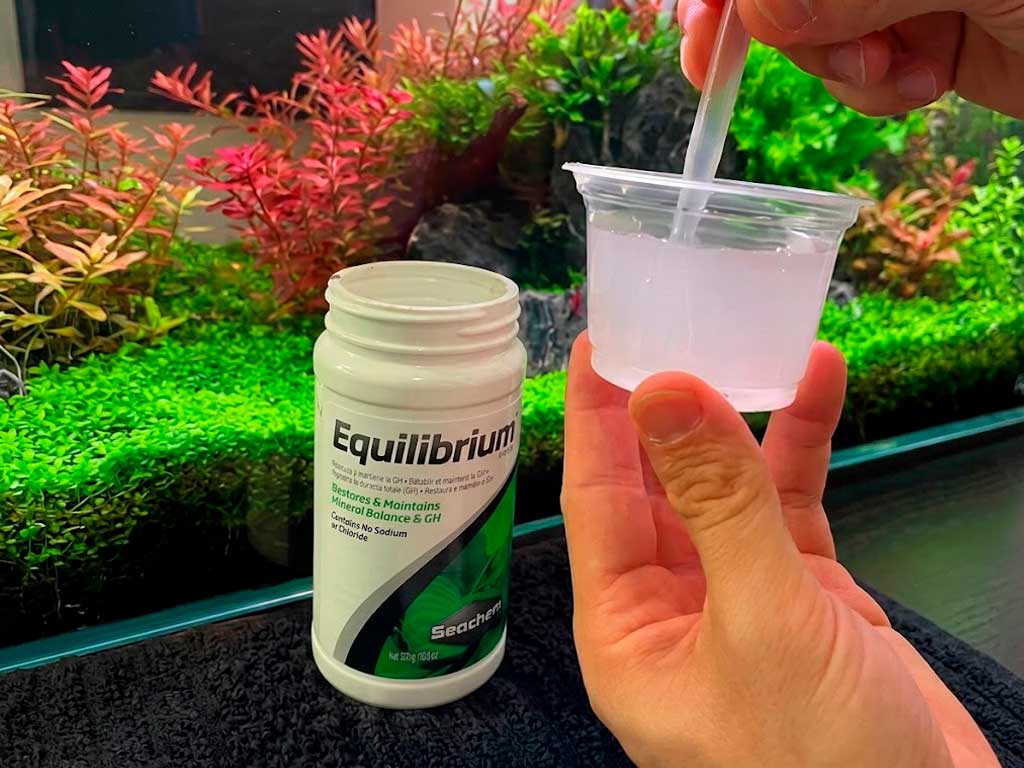
The fix is simple: dissolve the measured dose in a cup of warm tank water first, stir until it’s mostly clear, then pour the dissolved solution into the tank during a water change. This takes an extra minute and eliminates the cloudiness almost entirely.
Alkaline Buffer and Acid Buffer: Controlling KH and pH
Alkaline Buffer raises KH and pushes pH upward, while Acid Buffer does the opposite, lowering pH when paired with Alkaline Buffer to hit a specific target range. Used together, they let you dial in both KH and pH independently of whatever your source water happens to be.
Neutral Regulator combines both functions into a single product aimed at holding pH near neutral, which is useful for keepers who don’t want to manage two separate buffers. For most planted tank setups where GH is the primary concern, Equilibrium alone covers the need, and buffers only come into play when KH or pH also needs correction.
Building Your Remineralization Routine
Here’s what actually matters if your water tests soft: dose Equilibrium during water changes, pre-dissolve it to skip the cloudiness, and only add Alkaline or Acid Buffer if GH alone isn’t solving your actual problem. Most planted tanks never need the buffers at all.
For the nutrient side of what your plants need beyond hardness minerals, our plant deficiency chart covers the rest of what Equilibrium doesn’t address. And for how this fits into the full Seachem lineup, our Seachem products guide ties it back to the bigger picture.
This guide covers general water chemistry reference. Test your specific water parameters before dosing, and adjust GH gradually rather than all at once, especially in tanks with shrimp or other sensitive invertebrates.