Ich for Fish (and 5 Other Common Diseases): Symptoms and Treatments
Ich for fish is the disease almost every aquarist runs into eventually, and it is not close. Nearly every fish carries a dormant form of it, and the parasite only takes hold once stress compromises the immune system enough to let it bloom.
This guide covers ich first, then five other diseases that show up just as often, with the exact Seachem treatment for each one.
I have treated ich more times than any other disease in this hobby, and the pattern is always the same. Catch it in the first day or two and recovery is near guaranteed. Wait a week and you are fighting secondary infections on top of it.
Ich Is by Far the Most Common Fish Disease You Will See
Nearly every source on fish health agrees on this: white spot disease, known as ich in freshwater and often called velvet or marine ich in saltwater setups, causes more treatment questions than every other disease on this list combined.
Stress from a new tank, a temperature swing, or overcrowding is almost always the trigger that lets it surface.
The good news is that it responds well to prompt treatment. The bad news is that waiting even a few days lets the parasite complete its life cycle and reinfect the whole tank, so speed matters more here than with almost anything else.
Frequently Asked Questions
Ich and Velvet: The White Spot Disease
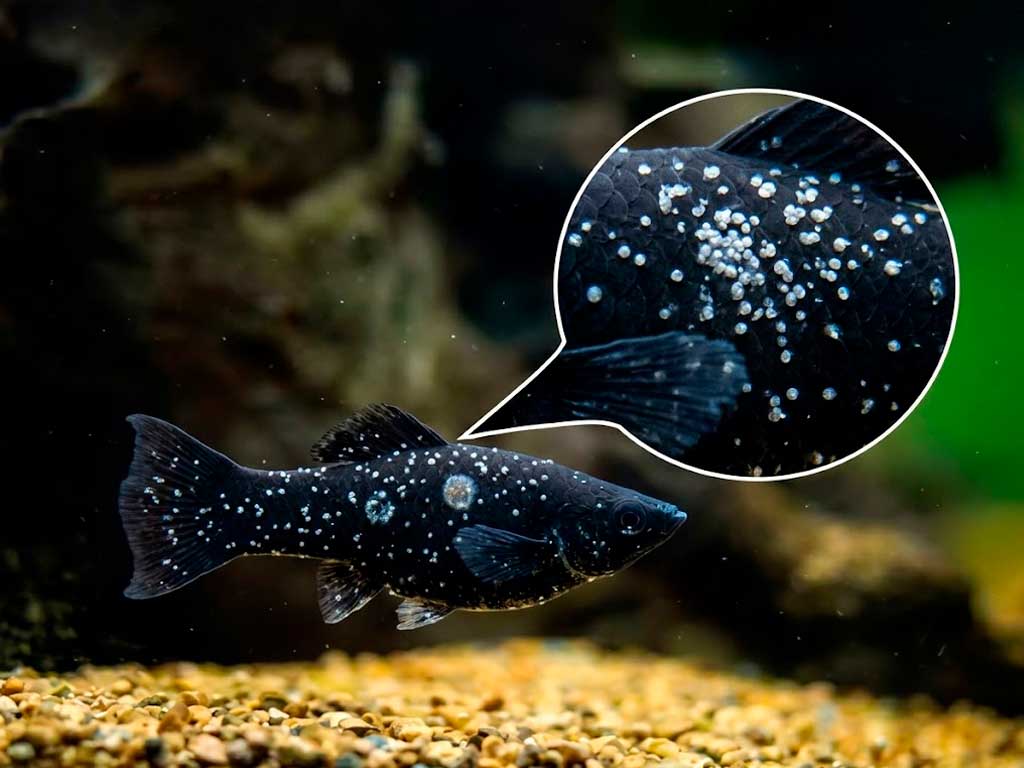
The telltale sign is grit-like white spots covering the body and fins, sometimes described as the fish looking like it was sprinkled with salt or fine sand.
Affected fish often scratch against decorations or the substrate trying to dislodge the irritation, and heavy infections bring rapid, labored breathing.
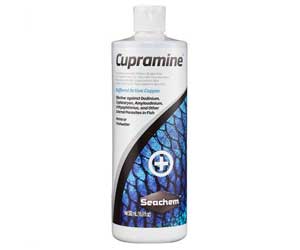
Cupramine treats both ich and velvet effectively, and MetroPlex or ParaGuard round out the options depending on severity.
Raising temperature slightly speeds up the parasite’s life cycle and shortens treatment time, but always remove invertebrates first since copper-based treatments are lethal to shrimp and snails.
FROM AMAZON.COM
Seachem Cupramine
A copper-based treatment that effectively knocks out ich and velvet — remove invertebrates first, since copper is lethal to shrimp and snails.
Buy on Amazon.comHappy Pet Zone may earn a commission when you click through to Amazon.com, at no extra cost to you. As an Amazon Associate, we earn from qualifying purchases.
Fin and Tail Rot
Fins that look frayed, ragged, or discolored at the edges, often with a whitish lining along the damaged area, point to fin and tail rot. It can stem from a bacterial or fungal source, and in practice the two often show up together once the fins are already compromised.
ParaGuard and KanaPlex both address this, with PolyGuard and SulfaPlex as broader-spectrum options when the cause is not obvious. Improving water quality alongside treatment matters here more than with most diseases, since fin rot frequently signals an underlying tank problem rather than a standalone infection.
Dropsy
Dropsy shows up as a bloated, swollen body with scales that protrude outward, giving the fish a pinecone appearance that is hard to mistake for anything else. It stems from fluid buildup tied to kidney or organ failure, usually the result of a bacterial infection in a fish whose immune system was already weakened.
Treatment is genuinely difficult once symptoms are visible, and success rates drop the longer it goes unaddressed. KanaPlex and Focus are the standard response, and catching it in the first day or two of visible bloating gives the best odds of recovery.
Popeye
One or both eyes protruding or appearing to bulge outward from the socket is popeye, and it is more of a symptom than a single disease. A localized injury or bacterial infection usually causes single-eye cases, while both eyes swelling together often points to a systemic issue like dropsy or poor water quality.
KanaPlex, Focus, and NeoPlex are the standard treatments, and testing water parameters alongside treatment helps rule out an underlying cause rather than just masking the symptom.
Fungus
White or gray cottony patches building up on the skin or fins, often starting small and spreading if left alone, signal a fungal infection. It almost always takes hold on a fish that is already stressed or injured, rather than attacking a genuinely healthy one.
ParaGuard, PolyGuard, and SulfaPlex all address fungal growth, and many cases clear up faster when paired with an antibiotic since bacterial and fungal infections frequently overlap in fish that are already run down.
Bacterial Hemorrhagic Septicemia
Streaky or blotchy red patches appearing on the fins, near the body, or under the scales are the hallmark of bacterial hemorrhagic septicemia. It spreads through a weakened immune system the same way most of the diseases on this list do, and it can progress quickly once visible.
NeoPlex, SulfaPlex, and KanaPlex are the standard response, and isolating the affected fish limits spread to healthy tank mates while treatment takes effect.
Building a Fish Disease Response Kit
Here is what actually matters if you want to stop researching mid-crisis every time something shows up: keep a broad-spectrum treatment like ParaGuard on hand at all times, since it covers fungus and several bacterial issues at once.
Add Cupramine specifically for ich and velvet, since copper treatments need their own dedicated bottle and cannot double as anything else.
That two-product baseline covers most of what is on this list without stocking six different medications you may never use. For water quality problems that lead to disease in the first place, our common aquarium problems guide covers the prevention side of this same picture.
This guide covers general fish health reference and is not a substitute for advice from an aquatic veterinarian, especially for fish that are not responding to treatment or showing rapid decline.