Belgian Malinois Dog Breed: The Complete Guide for Serious Owners
Thinking about bringing home a Belgian Malinois dog breed puppy? You’re about to meet one of the most driven, intelligent, and demanding dogs in the canine world. This guide covers everything from origin and temperament to daily exercise needs and health risks, based on official breed data and years of hands-on pet care knowledge. By the end, you’ll know exactly whether this athletic protector fits your lifestyle. Let’s start with where the breed came from.
History and Origin
The Belgian Malinois is one of four varieties of Belgian Shepherd, alongside the Laekenois, Tervueren, and Groenendael. Each variety takes its name from a different region of Belgium. Farmers and herders relied on these dogs for hard labor as far back as the Middle Ages.
In 1891, a professor at a Belgian veterinary school formalized breed standards for the various shepherd types. He noticed they shared a similar structure and differed mainly in coat. Consequently, he split them into separate varieties and recommended breeding them independently.
The Malinois became the first Belgian Shepherd variety to develop a distinct type and gain widespread popularity. Today, the breed serves as a favorite among military and police units worldwide. A Malinois named Cairo famously took part in the U.S. special forces operation that located Osama bin Laden in 2011.
Physical Characteristics
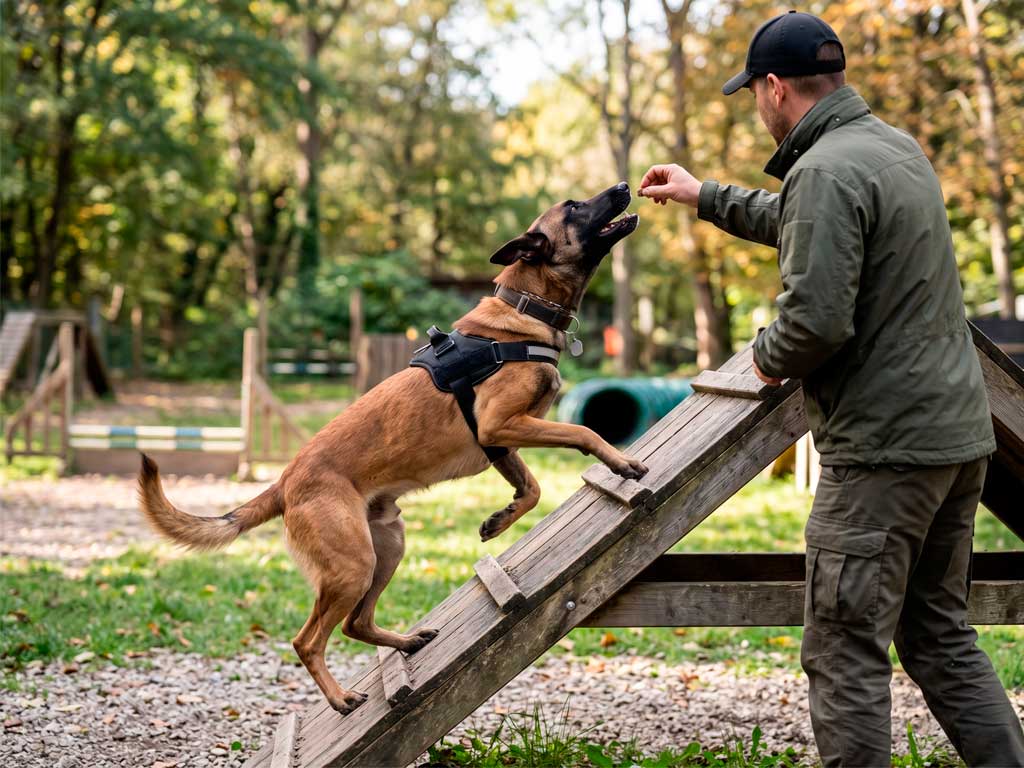
The Belgian Malinois has a square-shaped body, a short coat, and a medium build. People often mistake it for a German Shepherd, though the Malinois carries lighter bones and a more refined head shape.
Coat colors range from fawn to red or gray, typically with a black mask and black-tipped hairs. The ears and tail also tend to run darker, sometimes fully black at the tip.
Adult males stand between 24 and 26 inches tall, while females measure 22 to 24 inches. Weight generally falls between 44 and 66 pounds, depending on sex and build.
Temperament and Personality
This isn’t a breed for someone who wants “just a dog.” The Malinois forms a deeply loyal bond with its family and takes its protective instincts seriously.
Early socialization matters enormously here. Encouraging guarding behavior too young can backfire, since the dog may start protecting you in situations that don’t call for it. Left alone, natural protective instincts surface exactly when needed, without any extra encouragement from you.
Expect an alert, vocal, and highly energetic companion. Additionally, this breed doesn’t always warm up quickly to other pets, so introductions require patience and structure.
Care Guide
Diet and Nutrition
Large-breed dogs like the Malinois need a different nutrient balance than smaller breeds, particularly around minerals and vitamins that support joint and muscle health. Look for a formula designed specifically for active, large-breed adults.
Because this breed burns through energy fast, portion control matters. Overfeeding a Malinois that isn’t getting enough exercise can quickly lead to weight problems.
Exercise Requirements
A Belgian Malinois needs a minimum of two hours of exercise, training, and mental stimulation every single day. This isn’t a breed you can leave home alone all day and expect good behavior.
The dog excels at agility, obedience, and other canine sports. Therefore, structured activities work better than unstructured yard time alone. Give this dog a job, and it will thrive.
Grooming Needs
Despite its high-energy lifestyle, the Malinois keeps grooming simple. The short coat sits over a woolly undercoat, with thicker fur around the neck, tail, and hindquarters.
A weekly brush handles most maintenance. However, expect heavier shedding during seasonal coat blows, when more frequent brushing helps manage loose hair around the house.
Training and Education
Few breeds respond to training as quickly as the Belgian Malinois. That same intelligence, though, means boredom shows up fast if training stops being challenging.
Positive reinforcement methods work best with this breed. Harsh corrections tend to backfire with dogs this sensitive and driven, often creating anxiety instead of obedience.
Consistency matters from puppyhood onward. Because the breed can develop guarding tendencies around children and strangers, structured socialization should start early and continue throughout adolescence.
Health and Longevity
The Belgian Malinois typically lives between 12 and 14 years. Like most purebred dogs, however, the breed carries a predisposition to a few hereditary conditions.
Common health concerns include:
- Hip dysplasia, a joint condition that can affect mobility over time
- Hereditary cataracts, which cloud the eye’s lens and may reduce vision
- Progressive retinal atrophy, an inherited disorder that can lead to blindness
Responsible breeders screen for hip and eye issues before breeding, which significantly reduces the risk of passing these conditions to puppies. If you’re adopting from a breeder, ask directly about these screening results.
This article is for general educational purposes only and doesn’t replace professional veterinary advice. Always consult your veterinarian about your dog’s specific health needs.
Is This the Right Dog for You?
The Belgian Malinois suits experienced owners who genuinely enjoy an active lifestyle. If you’re already running, hiking, or training in dog sports regularly, this breed could become the ultimate partner.
On the other hand, first-time owners or households with limited time for daily exercise should think twice. A bored, under-exercised Malinois often develops destructive habits or excessive barking as an outlet for pent-up energy.
Frequently Asked Questions (FAQ)
Is a Belgian Malinois a good family dog? Yes, for families with experience handling high-energy, protective breeds. Early socialization with children makes a significant difference in how well the dog adapts.
How much does a Belgian Malinois shed? Shedding stays moderate most of the year but increases noticeably during seasonal coat changes, usually in spring and fall.
Can a Belgian Malinois live in an apartment? It’s possible, but only with a serious daily exercise commitment. Without at least two hours of activity, apartment living becomes difficult for both dog and owner.
Are Belgian Malinois dogs aggressive? Not inherently. They’re naturally protective and alert, but proper training and socialization prevent unwanted aggression toward people or other animals.
What’s the difference between a Belgian Malinois and a German Shepherd? The Malinois has a lighter bone structure, a more square profile, and a shorter coat compared to the German Shepherd’s longer coat and heavier build.
Ready to get started? Focus on exercise and structured training first. It’s the foundation that makes every other part of raising a Belgian Malinois easier. For more breed comparisons and training tips, check out our other guides on high-energy working breeds at Happy Pet Zone.