
![How to Prevent Fleas on Dogs Year-Round [2026 Guide]](https://happypetzone.com/wp-content/uploads/2026/06/How-to-Preven-Fleas-on-Dogs-Year-Round-Guide.jpg)
Most dog owners wait until they see a flea. Then they panic.
Here’s the problem: by the time you spot one flea on your dog, there are already 40 or more hiding in your home — in carpets, under furniture, in bedding — waiting for your dog to walk by.
And that’s before we talk about the biggest myth in flea prevention: that a pill or spot-on is enough.
In this guide, you’ll learn the method that actually works — starting from what no one tells you about how flea products really function, through to a complete year-round prevention routine you can start today. Most of it costs next to nothing.
Why the Pill Alone Is Not Flea Prevention
This is the part most vets don’t explain clearly enough.
When your dog takes an oral flea treatment, the active ingredient enters the bloodstream. The flea has to bite your dog to absorb the medication — and only then does it die. Within 24 hours, yes. But the damage? Already done.
The flea has already bitten. It may have already triggered a skin allergy. It may have already transmitted a parasite. And then it dies.
Here’s what that means in practice:
A dog on monthly flea pills is not a dog that fleas won’t bite. It’s a dog that kills fleas after they’ve already bitten. That’s a treatment mechanism, not a prevention mechanism.
The real goal of flea prevention is stopping the flea from ever reaching your dog’s skin in the first place.
And that requires a repellent — not a pill.
⚠️ This guide shares general information based on veterinary knowledge. Always consult your vet before changing your dog’s parasite prevention routine, especially for puppies, senior dogs, or dogs with health conditions.
The 1-Flea Rule (And Why It Changes Everything)
Here’s a fact that should completely change how you think about flea control:
When you see one flea on your dog, there are approximately 40 more in your immediate environment.
Those 40 aren’t on your dog yet. They’re in the carpet fibers, between sofa cushions, in the cracks along the baseboards. And they don’t need to be on your pet to survive — flea eggs, larvae, and pupae live in the environment for weeks or months, completely unaffected by anything you apply to your dog.
This is why treating your dog and ignoring the home is one of the most common reasons flea prevention “fails.”
The full picture of flea control has two equal parts:
- Treating your dog (repellent + adulticide if needed)
- Treating your home (cleaning, vacuuming, environmental sprays)
Skip either one and you’re only doing half the job.
The Foundation — Bathing Your Dog Properly
If you can only implement one thing from this guide, make it this.
A clean, well-bathed dog is dramatically less attractive to fleas. Here’s why: fleas thrive in environments with dead skin, excess oils, and debris. A dog with a dirty or flaky coat gives fleas the perfect terrain to lay eggs comfortably. A freshly bathed dog with clean skin gives them almost nothing to work with.
The target: a proper bath every 3 to 4 weeks. Not a quick rinse with a garden hose — a real bath with dog-specific shampoo, worked through the entire coat.
The Vinegar Rinse: The Step That Actually Repels Fleas
Here’s the part that makes the biggest difference.
On the final lather — before rinsing — mix your dog’s shampoo 50/50 with white vinegar. Work it thoroughly into the coat, all the way to the skin. Then leave it on for 12 to 15 minutes before rinsing with plenty of water.
Fleas navigate largely by smell. Vinegar creates a scent environment they strongly avoid. It won’t kill an active infestation on its own, but as a regular part of bathing, it makes your dog a consistently less appealing target.
The effect is cumulative. Dogs bathed this way regularly tend to pick up far fewer fleas from outdoor environments than dogs that aren’t.
Chapter 4: Flea Prevention Starts at the Food Bowl
This one surprises most dog owners.
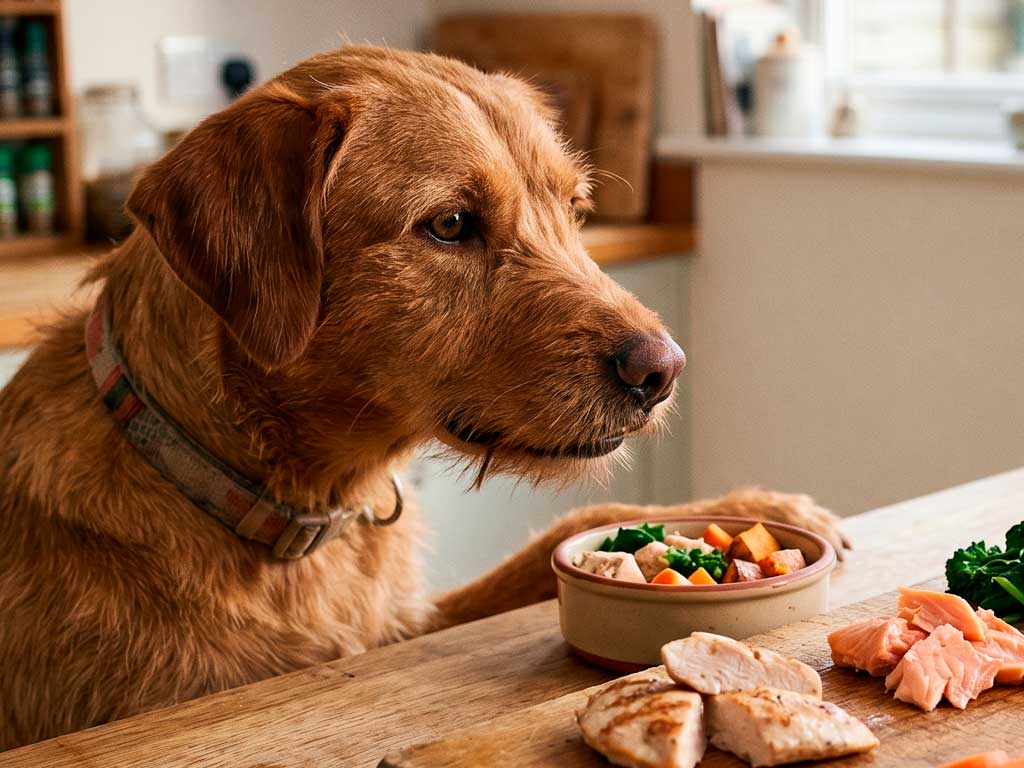
What your dog eats directly affects the condition of their skin — and the condition of their skin directly affects how attractive they are to fleas. Two supplements make a meaningful difference:
Omega-3 (Salmon Oil or Borage Oil)
Omega-3 fatty acids rebalance the skin’s lipid barrier, reducing inflammation and excess sebum production. The result is a healthier, less “appealing” skin surface for parasites — including fleas.
Salmon oil is the easiest to find and most dogs accept it readily. A few drops over food daily is sufficient for most breeds. Borage oil is a less common alternative with similar benefits.
Brewer’s Yeast
Brewer’s yeast is rich in B-group vitamins. When metabolized, these vitamins are released through the skin and produce a subtle odor that fleas find distinctly unpleasant.
It doesn’t repel 100% of fleas under all conditions. But it consistently shifts the odds in your favor — fleas will preferentially bite a dog that hasn’t had brewer’s yeast over one that has. It’s inexpensive, widely available, and has no meaningful side effects in healthy dogs.
Combined with omega-3, these two supplements create a skin environment that’s noticeably less hospitable to parasites. Not a replacement for other measures — but a real and cost-effective layer of protection.
Chapter 5: Emergency Flea Removal — The Baking Soda Method
Your dog just came in from the yard and you can see a flea. You want it gone now.
Don’t bathe them yet.
Grab baking soda instead.
Sprinkle it generously over your dog’s dry coat — working it down toward the skin with your fingers. Leave it on for 15 to 20 minutes, then rinse thoroughly with water.
Here’s the science behind why this works:
Fleas (like all insects) don’t breathe through lungs and airways. They breathe through small openings called spiracles located along the sides of their body. These openings are also how fleas detect scents and environmental cues. Baking soda physically blocks these spiracles — essentially suffocating the flea by preventing air exchange.
It’s mechanical, not chemical. No toxins, no residue concerns. A simple, effective first response.
One note: if your dog licks some baking soda, a small amount is harmless. But don’t leave it on for extended periods — 20 minutes and rinse is the right protocol.
For those who prefer it, diatomaceous earth (food-grade) works on the same principle — the fine particles physically damage the flea’s exoskeleton. It’s more expensive than baking soda but equally effective and entirely natural.
Chapter 6: DIY Flea Repellent Sprays (That Actually Work)
Here’s something the commercial flea industry doesn’t want you to think about:
You can make an effective flea repellent at home for almost nothing. These aren’t folk remedies — they work on real, documented principles (scent aversion, volatile compound deterrence) and I’ve used both of these regularly.
Spray #1: Rosemary & Chamomile Vinegar Spray
What you need:
- 3–4 fresh rosemary sprigs
- 1–2 chamomile tea bags
- 250 ml water
- A generous splash of apple cider vinegar
- ½ teaspoon of baking soda
How to make it: Bring the water, rosemary, and chamomile to a boil. Simmer for 10 minutes. Turn off the heat and let the mixture steep until it cools to room temperature. Add the apple cider vinegar and baking soda, stir, and transfer to a spray bottle.
How to use it: Spray lightly over your dog’s coat before walks and again when returning home. Pay attention to the legs, underbelly, and base of the tail — the areas where fleas most commonly jump on.
Spray #2: Citrus & Mint Repellent
What you need:
- 3–4 lemon slices
- 2–3 rosemary sprigs
- A handful of fresh mint leaves
- 200–250 ml water
How to make it: Boil the lemon slices and rosemary in the water for 10–15 minutes. Remove from heat. While still warm (not boiling), add the mint leaves and let the mixture steep as it cools completely. Strain and transfer to a spray bottle.
The citrus and mint combination creates a scent profile that fleas actively avoid. As a bonus, it smells far better than any commercial repellent — your dog will actually smell pleasant after application.
Both sprays keep well in the refrigerator for up to one week.
Cleaning Your Home — The Non-Negotiable Step
Your sprays and baths protect your dog. This step protects your home. You need both.
Vacuum thoroughly and frequently. At least twice a week on all carpets, rugs, upholstered furniture, and floor-wall junctions. Vacuuming does two things: it physically removes eggs and larvae, and the vibration triggers dormant pupae to hatch early — into the vacuum, not onto your dog.
Always empty or discard the vacuum bag or canister outside immediately after each session.
Wash all soft surfaces weekly. Your dog’s bed, blankets, any fabric they sleep on regularly. Hot water (above 95°F / 35°C) kills all flea life stages. If items can’t be washed, consider replacing them.
Treat the home environment if needed. For homes with confirmed flea activity, an environmental spray containing both an adulticide and an insect growth regulator (IGR) provides a critical extra layer. Focus on areas under furniture, along baseboards, and wherever your dog sleeps. One application is rarely sufficient — plan for two to three treatments spaced two weeks apart.
When to Use Commercial Products
Let’s be direct about this.
Natural prevention works well for most dogs in most situations — dogs with limited outdoor exposure, urban dogs, or dogs in areas with lower flea pressure. For these dogs, consistent bathing, dietary supplements, and DIY repellents provide real, comparable protection without the cost or chemical load of monthly pharmaceuticals.
But there are situations where commercial products are the right call:
- Dogs with regular access to dense vegetation, forests, or rural areas with high flea pressure
- Dogs who have previously had a severe infestation or flea allergy dermatitis
- Multi-dog or multi-pet households where controlling exposure is difficult
- Any situation where flea-transmitted disease (like Bartonella or tapeworms) is a specific concern in your region
In those cases, a vet-prescribed topical or oral product that combines an adulticide with an IGR is the appropriate choice. The key is combining it with environmental treatment — not relying on it alone.
Year-Round Prevention at a Glance
| Season | Priority Action |
|---|---|
| Spring | Start repellent spray routine before flea activity peaks. Confirm supplements are in rotation. |
| Summer | Peak risk. Bathe every 3 weeks with vinegar rinse. Apply DIY spray before every outdoor walk. |
| Fall | Fleas seek warmth as temperatures drop — indoor infestation risk increases. Don’t reduce vigilance. |
| Winter | Maintain bathing and supplement routine. Heated homes sustain flea life cycles year-round. |
Frequently Asked Questions
Can my dog get fleas even in winter? Yes. Fleas don’t die in cold weather — they move inside. A centrally heated home maintains the temperature fleas need to complete their life cycle in any month. Indoor dogs are not automatically safe. Year-round prevention applies to every season.
How do I know if my dog has fleas before I actually see one? Look for “flea dirt” — small black or reddish-brown specks in the fur, especially near the tail base and groin. Place them on a damp white paper towel: if they dissolve into a reddish-brown smear, that’s digested blood and confirms flea activity. Persistent scratching, biting at the base of the tail, or small red scabs are also early indicators.
Is apple cider vinegar safe for dogs? Diluted apple cider vinegar used externally — as in the bath rinse or spray recipes in this guide — is safe for most healthy dogs. Avoid applying it near the eyes, open wounds, or irritated skin. It should not be given internally in large quantities. If your dog has sensitive skin, test on a small area first.
My dog is already on monthly flea treatment but still gets fleas. Why? The most common reasons are: missed or delayed doses, incorrect application (product applied to fur instead of skin), untreated animals sharing the environment, or high environmental flea load that overwhelms the treatment window. Adding environmental treatment to your routine — vacuuming, washing bedding, home spray — usually resolves the issue within 6 to 8 weeks.
Are these DIY sprays safe for puppies? The rosemary and chamomile spray is generally gentle, but puppies have more sensitive skin and smaller body mass than adult dogs. For puppies under 12 weeks, avoid any topical spray without first consulting your vet. At that age, frequent gentle bathing and environmental cleanliness are the safest prevention tools available.
The most important shift in thinking this guide offers is this one:
Prevention means keeping the flea off your dog — not killing it after it’s already bitten.
That means repellents before adulticides. It means a clean dog and a clean home. And it means consistency — a routine maintained year-round, not just during peak summer months.
Start with the bath and the vinegar rinse this week. Add the omega-3 and brewer’s yeast to your dog’s food. Mix up a batch of the citrus spray before the next walk.
That’s 80% of the solution right there — and it costs almost nothing.
Want to understand the full parasite picture? Read our guide on How to Prevent Fleas in Cats Year-Round — the principles overlap, but there are critical differences every multi-pet household needs to know.