Anubias Care Guide: Light, Rhizome, CO₂ & Growth
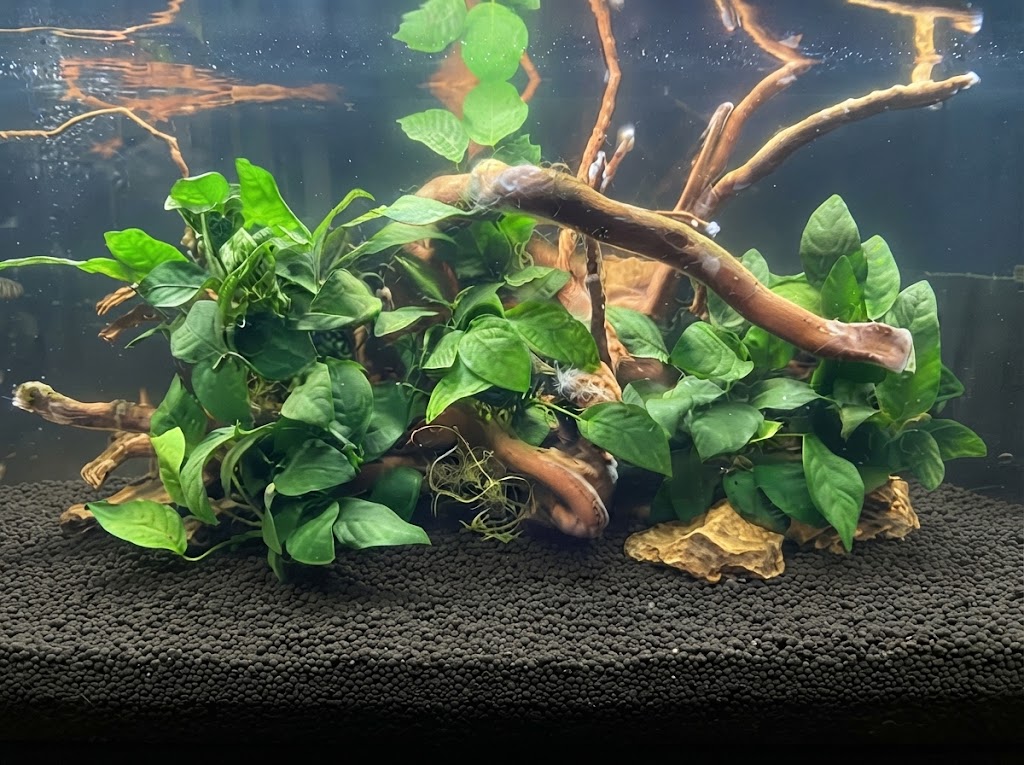
Anubias is one of the easiest aquarium plants to keep, but there is one rule that matters more than almost anything else: never bury the rhizome.
Keep that thick horizontal stem exposed, give the plant modest light, and Anubias barteri can grow steadily for years with very little fuss.
This Anubias care guide covers planting, driftwood and rock attachment, lighting, CO₂, fertilizing, water parameters, growth, propagation, algae control, common problems, and the most useful Anubias varieties for freshwater aquariums.
Anubias Care at a Glance
| Scientific name | Anubias barteri |
| Family | Araceae |
| Growth type | Rhizomatous epiphyte |
| Light | Low to moderate |
| CO₂ | Not required |
| Growth rate | Slow |
| Temperature | 72–82°F (22–28°C) |
| pH | About 6.0–7.5 |
| Propagation | Rhizome division |
What Is Anubias barteri?
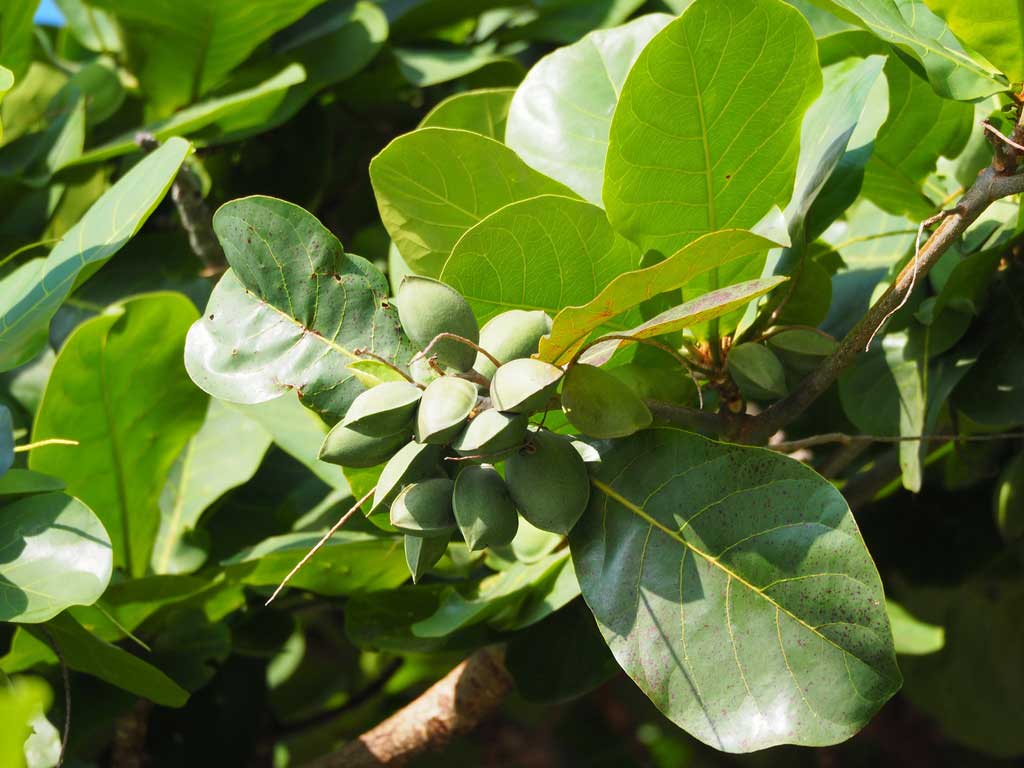
Anubias barteri is a slow-growing freshwater plant from the Araceae family. In nature, Anubias species are associated with wet, shaded environments and can grow attached to hard surfaces rather than being planted deeply into substrate.
That growth habit explains most of its aquarium care. The plant has a rhizome, and leaves and roots develop from it. The rhizome should remain above the substrate so water can circulate around it. The roots can be tucked around a rock or piece of wood, but the rhizome itself should stay exposed.
Tropica also recommends keeping Anubias barteri in a shaded position because excessive light can encourage algae on its long-lived leaves. This is one reason Anubias works so well in aquariums where faster plants would struggle with the available light.
Does Anubias Need to Be Planted?
Anubias does not need to be buried in aquarium substrate. In fact, burying the rhizome is one of the fastest ways to create problems. The rhizome contains the plant’s growing tissue, and prolonged burial can lead to rot.
Instead, position the plant on a rock, driftwood, or another hard surface. Let the roots make contact with the surface while the rhizome stays completely visible. Once the roots attach, the plant can remain there for a very long time.
How to Attach Anubias to Driftwood or Rocks
The easiest method is to place the Anubias against the hardscape and secure it until the roots grip the surface. A small amount of cyanoacrylate gel aquarium glue can hold the plant in position without requiring deep planting.

FROM AMAZON.COM
Seachem Flourish Glue
Cyanoacrylate adhesive for aquascaping, plastic repairs, and freshwater tanks. Bonds plants, rocks, and decorations securely underwater.
Buy on Amazon.comAs an Amazon Associate, Happy Pet Zone earns from qualifying purchases, at no extra cost to you.
Apply only a small amount to the attachment point, position the plant carefully, and give the glue time to set. Do not cover the rhizome with glue or force the plant into a position where the growing tissue is damaged.
Anubias Lighting Requirements
Anubias prefers low to moderate aquarium lighting. It can survive under stronger lights, but high intensity creates a common problem: the plant grows slowly while algae still has plenty of opportunity to use the available light.
A shaded location is often the better choice. Position Anubias beneath taller plants, wood, or other hardscape if your aquarium lighting is powerful. This can reduce the amount of direct light reaching the leaves while still giving the plant enough energy to maintain healthy growth.
If you are adjusting your aquarium lighting, our aquarium lighting guide can help you match intensity and photoperiod to the rest of the planted tank.
Does Anubias Need CO₂?
No. Anubias can grow without injected CO₂, which is one of the reasons it is so popular in low-tech aquariums. Fish respiration, surface exchange, and normal biological activity provide some dissolved carbon, and a healthy plant can make use of it.
Injected CO₂ can support faster and more vigorous growth when the rest of the aquarium is designed around it, but Anubias does not require a CO₂ system simply to survive. Its naturally slow growth rate should also be considered before changing your entire setup for this one plant.
How to Fertilize Anubias
Anubias takes a significant amount of its nutrition from the water column, so a complete liquid fertilizer can be more useful than adding heavy root fertilization. Dose according to the needs of the whole aquarium rather than trying to force rapid growth from a slow-growing plant.
FROM AMAZON.COM
Seachem Flourish Freshwater Plant Supplement
A comprehensive plant supplement with minerals, trace elements, and vitamins to support healthy growth in freshwater planted tanks.
Buy on Amazon.comHappy Pet Zone may earn a commission when you click through to Amazon.com, at no extra cost to you. As an Amazon Associate, we earn from qualifying purchases.
Seachem Flourish Comprehensive provides a broad range of micronutrients, including iron and other trace elements. It can be relevant when the aquarium’s overall nutrient supply is limited, particularly in a planted tank with several species competing for available nutrients.
Does Anubias Need Root Tabs?
Usually, no. Anubias is a rhizomatous plant and is not a heavy root-feeding species in the same way as plants such as Amazon swords. Root tabs can be useful elsewhere in a mixed planted aquarium, but placing one directly under Anubias is not necessary for healthy growth.
If your aquarium contains heavy root feeders, use root fertilizer for those plants according to their needs while keeping Anubias attached to the hardscape with its rhizome exposed.
Anubias Water Parameters
Anubias is tolerant of a fairly broad range of freshwater conditions. For a typical community aquarium, stable parameters matter more than chasing a narrow target specifically for the plant.
| Temperature | 72–82°F (22–28°C) |
| pH | About 6.0–7.5 |
| Hardness | Moderate range is generally suitable |
| CO₂ | Optional |
| Light | Low to moderate |
Avoid sudden changes whenever possible. If you are troubleshooting several aquarium parameters at once, our aquarium water chemistry guide provides a broader framework for understanding stability.
How Fast Does Anubias Grow?
Anubias grows slowly. A healthy plant may take weeks to produce a new leaf, especially in a low-light aquarium. That is normal and should not automatically be interpreted as a nutrient deficiency.
The advantage is longevity. Anubias leaves can remain useful for a long time, and the plant does not require frequent trimming. Give it stable conditions and judge progress over months rather than expecting visible changes every few days.
How to Trim Anubias
Remove yellow, damaged, or heavily algae-covered leaves by cutting the leaf stalk close to the rhizome. Use clean, sharp scissors and avoid cutting into the rhizome itself.
If the plant has become too large, you can also divide the rhizome. Each section should retain healthy tissue and enough leaves or growing points to continue developing.
Why Are My Anubias Leaves Turning Yellow?
A single older yellow leaf is not necessarily a serious problem. Anubias can naturally shed older leaves, particularly when the plant is adapting after being moved or replanted.
If several leaves are deteriorating, check the basics first: rhizome exposure, lighting intensity, algae buildup, water stability, and overall nutrient availability. A plant with a buried or damaged rhizome needs attention before adding more fertilizer.
Anubias Rhizome Rot
Rhizome rot is one of the most important Anubias problems to catch early. Warning signs include soft or mushy tissue, brown or hollow sections of rhizome, and leaves that detach unusually easily.
Remove the plant from the aquarium and inspect the rhizome. Cut away damaged tissue with a clean blade or scissors until only firm, healthy tissue remains. Reattach the remaining healthy section to hardscape and keep the rhizome fully exposed.
How to Propagate Anubias
The standard propagation method is rhizome division. Once the plant is large enough, separate a healthy section of rhizome with a clean cut. Each division should contain healthy growth tissue and enough foliage to support recovery.
Attach the new section to a rock or piece of wood and allow the roots to establish. Avoid burying the cut section in substrate.
Can Anubias Grow Out of Water?
Yes. Anubias can grow emersed when its roots and rhizome remain in a humid environment. This is one reason the plant is also useful in suitable terrarium and paludarium setups.
A plant moving between emersed and submerged growth may look different during the transition. Give it time to adapt rather than repeatedly moving it back and forth.
Anubias Flowers
Anubias can produce flowers even when grown underwater. Flowering is not a sign that the plant is failing. It is part of the plant’s normal reproductive cycle and can occur under aquarium conditions.
Anubias and Algae
Algae can be especially noticeable on Anubias because its leaves grow slowly and remain in the aquarium for a long time. If the light level is high relative to the amount of plant growth, algae can gain an advantage.
Start with the light. Reduce excessive intensity or place the Anubias in a shaded area, keep the photoperiod reasonable, and remove heavily affected leaves when necessary. If filamentous algae is the larger problem in your aquarium, see our guide to removing filamentous algae from aquariums.
Best Anubias Varieties for Aquariums
The Anubias group includes several forms that are useful for different aquarium layouts. Their size and leaf shape can vary considerably, so choosing the variety based on the scale of your hardscape is often more useful than choosing by care difficulty.
| Anubias barteri | Larger classic form for medium and large aquariums |
| Anubias Nana | Compact, popular choice for smaller aquascapes |
| Anubias Nana Petite | Very small form suited to nano layouts and detailed hardscape |
| Anubias Coffeefolia | Distinctive textured leaves with a darker appearance |
| Anubias Congensis | Longer, narrower leaves and a different visual profile |
| Anubias Pinto | Variegated leaves with lighter patterning |
Anubias With Fish That Destroy Plants
Anubias is a useful choice when aquarium fish are rough on softer plants. Its tough leaves are generally avoided by many herbivorous fish, and the plant can be secured directly to hardscape where digging fish are less likely to uproot it.
That does not make the plant indestructible. Large fish can still break leaves or knock attached plants loose, so the strength and size of your hardscape should match the fish you keep.
Anubias vs. Java Fern
Anubias and Java fern are both excellent rhizome plants for low-tech aquariums. Neither requires a deep substrate planting, and both can be attached to wood or rock.
| Anubias | Thick leaves, very slow growth, strong choice for shaded hardscape |
| Java fern | Longer leaves, rhizome growth, often produces plantlets on mature leaves |
If you are deciding between them, choose according to the leaf shape and scale you want in the aquascape. Our Java Fern Care Guide covers the other major rhizome plant in more detail, while our Java Moss Care Guide covers another low-demand option for attaching plants to hardscape.
Anubias Common Problems
| Rhizome turns soft | Check for burial or damage; remove rotten tissue and expose the healthy rhizome. |
| Leaves covered in algae | Reduce excessive light and improve overall aquarium balance. |
| Leaves turning yellow | Inspect older leaves first, then check light, nutrients, and rhizome condition. |
| No visible growth | Remember that Anubias is naturally slow; judge growth over several weeks or months. |
| Plant keeps moving | Secure it to rock or wood until the roots establish. |
A Simple Anubias Maintenance Routine
Anubias does not need a complicated maintenance schedule. Once a week, check that the rhizome is still exposed, inspect the leaves for algae or damage, and remove any leaf that is clearly dying.
Every few weeks, look at the attachment point and make sure the plant has not been crushed by hardscape or buried by shifting substrate. If the plant has become too large for its location, divide the rhizome rather than repeatedly cutting individual leaves.
The goal is simple: stable water, modest light, an exposed rhizome, and enough water-column nutrition to support the entire planted aquarium.
Frequently Asked Questions
Anubias is a strong choice for aquariums where reliability matters more than rapid plant growth. Give it low to moderate light, stable water, an exposed rhizome, and modest water-column nutrition. Keep algae under control and act quickly if the rhizome becomes soft.
Once those basics are right, the best thing you can do for Anubias is often to leave it alone to grow.