Java Moss Care Guide: 9 Essential Tips for Healthy Growth
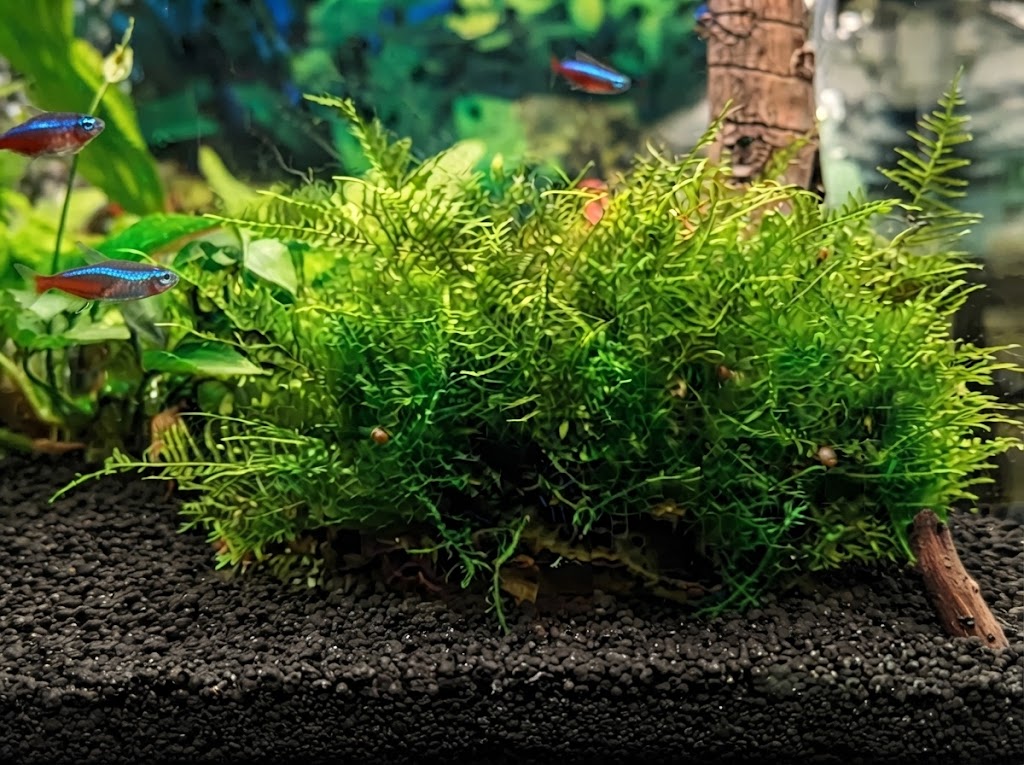
Java moss is one of those aquarium plants that looks almost indestructible in a store tank. Give it a few weeks in a new aquarium, though, and you may discover that keeping it healthy is a little more complicated than simply dropping it into the water.
The good news is that java moss is extremely adaptable when you understand what it actually needs. It can grow attached to driftwood, rocks, decorations, or other hard surfaces, and it can tolerate conditions that would challenge many more demanding aquatic plants.
The key is controlling the factors that matter most: light, water movement, nutrients, attachment, trimming, and algae management.
Java Moss at a Glance
- Scientific name: Taxiphyllum barbieri
- Light: Low to moderate
- CO2: Optional, but useful for faster growth
- Growth rate: Slow to moderate
- Placement: Rocks, driftwood and other hard surfaces
Java moss is especially useful when you want to add a natural appearance to hardscape without building a complicated planted-tank system.
What Is Java Moss?
Java moss, commonly identified as Taxiphyllum barbieri, is a freshwater aquatic moss widely used in aquariums and aquascaping.
Unlike rooted plants such as Amazon swords or Cryptocoryne, java moss does not need to be planted into aquarium substrate. It attaches itself to solid surfaces and spreads through fine branching growth.
That changes how you should think about its care. If you bury java moss under gravel or sand, you are not giving it a better root system. You are simply making it harder for light and water to reach the plant.
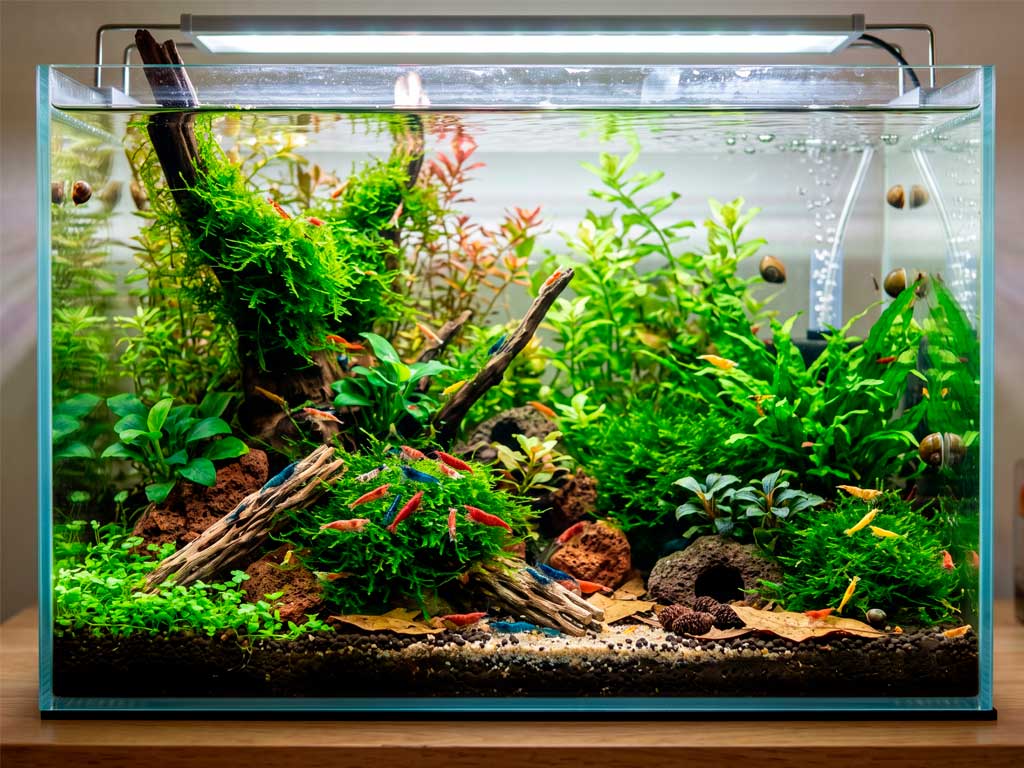
In practice, java moss works best when it is attached to something above the substrate. Driftwood is the classic choice, but rocks, aquarium decorations and mesh can work as well.
Java Moss Care Requirements
Java moss has a reputation for surviving almost anything, but there is an important distinction between surviving and growing well. A healthy colony should produce fresh green growth, gradually spread across its attachment surface and remain reasonably clean of algae and debris.
Lighting
Java moss does not require intense aquarium lighting. Low to moderate light is usually enough to keep it growing. Increasing the light can increase growth, but it also increases the amount of algae competing with the moss.
For a typical freshwater aquarium, aim for a consistent lighting schedule. Around 6–8 hours per day is a reasonable starting point, then adjust according to plant growth and algae levels.
For more detail, see the Happy Pet Zone guide on aquarium lighting.
Water Temperature and Flow
Java moss is adaptable to a broad range of freshwater aquarium temperatures. For most community aquariums, keeping the temperature appropriate for the fish and invertebrates in the tank is more important than creating a special temperature specifically for the moss.
Moderate water movement is helpful because circulation brings nutrients through the colony and reduces trapped debris. Extremely strong flow, however, can flatten the moss or loosen pieces.
CO2 and Nutrients
Java moss can grow without injected CO2. Adding CO2 can improve growth, but it is not a requirement. If your aquarium does not use CO2, focus first on stable lighting, clean water, appropriate nutrients and reasonable circulation.
Java moss uses nutrients from the water column rather than depending on a deep root system. A complete aquarium plant fertilizer can help when the aquarium has limited available nutrients. Use it according to the product directions rather than assuming more fertilizer means faster moss growth.
FROM AMAZON.COM
Seachem Flourish Freshwater Plant Supplement
A comprehensive plant supplement with minerals, trace elements, and vitamins to support healthy growth in freshwater planted tanks.
Buy on Amazon.comHappy Pet Zone may earn a commission when you click through to Amazon.com, at no extra cost to you. As an Amazon Associate, we earn from qualifying purchases.
If you are seeing yellowing, poor growth or unusual coloration, check the overall aquarium conditions before simply increasing fertilizer. See the Aquarium Plant Deficiency Chart for additional troubleshooting.
How to Attach Java Moss to Driftwood or Rocks
One of the best things about java moss is how easily you can turn ordinary hardscape into something that looks established and natural.
Method 1: Aquarium-Safe Glue
Cyanoacrylate gel is one of the easiest options. Place a small amount of aquarium-safe gel adhesive onto the driftwood or rock, press a thin layer of moss against it, and hold the moss in place briefly.
You do not need to cover the entire moss clump with glue. Using too much adhesive can make the attachment look messy and can prevent the moss from spreading naturally.
Seachem Flourish Glue is a cyanoacrylate gel designed for attaching aquarium plants and moss to hardscape.

FROM AMAZON.COM
Seachem Flourish Glue
Cyanoacrylate adhesive for aquascaping, plastic repairs, and freshwater tanks. Bonds plants, rocks, and decorations securely underwater.
Buy on Amazon.comAs an Amazon Associate, Happy Pet Zone earns from qualifying purchases, at no extra cost to you.
Method 2: Thread or Mesh
You can tie java moss to driftwood or rocks using suitable aquarium-safe thread. For larger moss walls or carpets, mesh can be useful. Spread a thin layer of moss between suitable mesh and secure the edges while the moss establishes.
How to Grow Java Moss on Driftwood
Start with a relatively thin layer of moss rather than attaching a huge clump. A thick layer can trap debris inside the plant and create conditions where algae becomes difficult to remove.
Spread the moss over the area you want to cover, then attach it at several points. Over time, new growth extends outward and fills the gaps.
If you allow the moss to become extremely thick, the lower portions can receive less light and water movement. A thinner, regularly trimmed layer is usually easier to maintain.
Does Java Moss Need Substrate?
No. Java moss does not need aquarium substrate. You can attach it directly to driftwood, rocks, aquarium decorations or mesh. This makes it particularly useful for aquascaping.
You can allow loose pieces to sit on the bottom of the aquarium, but this is harder to control. If your goal is a neat aquascape, attaching the moss to hardscape is usually the better approach.
How Fast Does Java Moss Grow?
Java moss generally grows at a slow to moderate rate, although the actual speed depends heavily on aquarium conditions. Light, nutrients, CO2, temperature, water movement and overall plant health all influence growth.
A heavily fertilized, CO2-injected planted aquarium with strong lighting can produce noticeably faster growth than a low-tech aquarium. Slow growth can actually be an advantage when you want to keep a specific aquascape shape.
Give the moss time to establish before deciding that it is not growing. Small branches may seem insignificant at first, then gradually fill the surface you prepared for them.
How to Trim Java Moss
Trimming is one of the most important parts of long-term java moss care. If you never trim it, the moss can become thick, uneven and difficult to clean.
Use clean aquarium scissors and remove excess growth gradually. Do not try to reshape a large colony in one aggressive cut. After trimming, remove loose pieces because fragments can establish themselves in places where you did not intend to grow moss.
A good trimming routine also improves water circulation through the colony. If the center has become dark and packed with debris, it is usually time to thin it.
How to Propagate Java Moss
Propagation is simple. Take a healthy portion of the moss and divide it into smaller pieces. Attach those pieces to new hardscape or place them where you want new growth to develop.
You do not need a large cutting. A small healthy section can gradually expand when conditions are suitable, making java moss useful when building an aquascape over time.
Java Moss and Algae: The Most Common Problem
When people say their java moss is “dying,” algae is often part of the problem. The moss itself can remain alive underneath a layer of algae while becoming increasingly difficult to maintain.
- Excessive lighting
- Excess nutrients
- Poor circulation
- Accumulated organic debris
- Inconsistent aquarium maintenance
Do not automatically blame fertilizer. Look at the whole system. If algae is established, remove heavily affected portions when practical and improve the conditions that allowed it to spread.
For additional help, see the Happy Pet Zone guide on removing filamentous algae from aquariums.
Can Java Moss Grow Without CO2?
Yes. Java moss can grow without injected CO2. This is one of the main reasons it remains popular in low-tech freshwater aquariums.
Growth may be slower than in a carefully optimized CO2 system, but slower growth is not necessarily a disadvantage. A beginner aquarium with stable water parameters, moderate lighting and regular maintenance can support healthy java moss without a CO2 injection system.
Java Moss for Shrimp and Small Fish
Java moss is especially useful in shrimp aquariums. Its dense structure creates a large surface area where microorganisms and biofilm can develop, and shrimp can spend considerable time picking through the moss.
It also provides shelter for young shrimp and small fish. Java moss does not replace proper filtration, feeding or water maintenance, but it can add valuable habitat without taking up much open swimming space.
What to Look for When Buying Live Java Moss
Look for healthy green growth rather than a large amount of moss packed into a dense, dirty clump. A smaller clean portion can be easier to establish than a huge mass containing dead material or algae.
- Visible algae
- Snails or other hitchhikers
- Decaying brown material
- Unusual discoloration
- Excess substrate or debris
Before adding purchased moss to an established aquarium, inspect it carefully and clean or quarantine new plants according to the needs of your aquarium and livestock.
FROM AMAZON.COM
Java Moss 5-Pack — Taxiphyllum Barbieri Portion Cups
Live aquarium moss for freshwater tanks, shrimp breeding, and aquascaping. Low light, no CO2 required.
Buy on Amazon.comHappy Pet Zone may earn a commission when you click through to Amazon.com, at no extra cost to you. As an Amazon Associate, we earn from qualifying purchases.
A Simple Java Moss Maintenance Routine
- During your regular water change: inspect the moss for debris, algae and loose sections.
- Every few weeks: trim overgrown areas and remove excess pieces.
- As the moss spreads: guide new growth toward the hardscape you want it to cover.
- If algae appears: check lighting duration, nutrient levels, water movement and overall maintenance.
- When the moss becomes too dense: thin it rather than allowing the colony to become a compact mass.
The numbers don’t lie: consistent maintenance usually produces a better result than occasional major cleanups.
The Bottom Line
Java moss is easy to grow, but the best results come from treating it like a real aquatic plant rather than an indestructible decoration.
Give it moderate light, clean water, reasonable circulation and enough nutrients to support growth. Attach it thinly to driftwood or rocks, then trim it before the colony becomes excessively dense.
CO2 can accelerate growth, but you do not need a CO2 system to enjoy healthy java moss. Start with a small healthy portion, attach it properly, and give it time.