Waxy Monkey Tree Frog: Complete Care Guide for Phyllomedusa sauvagii
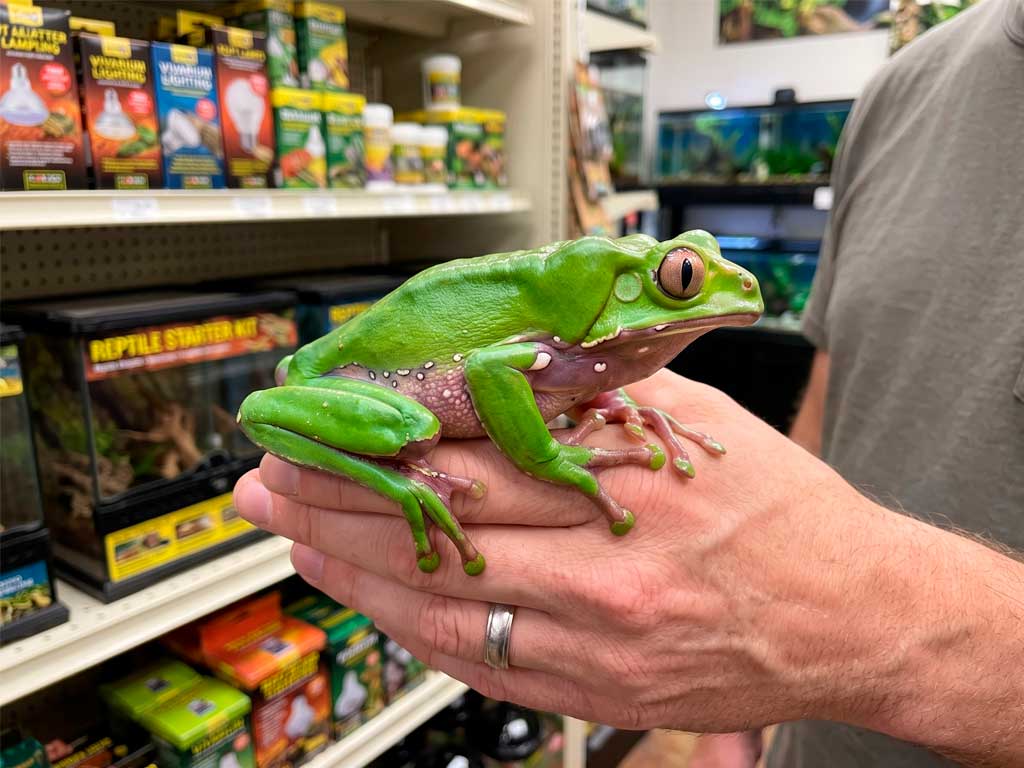
The waxy monkey tree frog is one of the most biologically fascinating amphibians you can keep in captivity. It walks like a primate, waterproofs its own skin like a reptile, and produces peptides in its secretions that researchers are actively investigating for medical applications.
All of this comes packaged in a docile, long-lived frog that adapts well to life in a terrarium.
This guide covers everything you need to keep Phyllomedusa sauvagii successfully, from enclosure setup to breeding triggers, diet, health, and the husbandry mistakes that cause most captive failures with this species.
By the end, you’ll understand exactly why this frog is different from every other amphibian you’ve likely encountered, and what those differences mean for how you care for it day to day. Let’s start with the biology, because understanding the animal shapes every husbandry decision you’ll make.
What Makes the Waxy Monkey Tree Frog Unique?
Most amphibians are slaves to moisture. Their permeable skin means they desiccate rapidly in dry environments, tethering them permanently to humid habitats near water. The waxy monkey tree frog evolved a different solution entirely.
Specialized lipid glands across the frog’s back produce a waxy secretion. The frog then uses its front and hind legs to methodically spread this coating across its entire body, in a motion that genuinely resembles someone waxing a car.
This lipid layer reduces evaporative water loss dramatically, allowing Phyllomedusa sauvagii to survive in the semi-arid Chaco region of South America, one of the driest environments any tree frog occupies anywhere on Earth.
This adaptation explains everything unusual about its care requirements. Unlike most frogs, the waxy monkey tree frog does not need a permanently humid environment. Too much moisture in captivity actually creates the conditions for bacterial and fungal skin infections in a species that evolved to stay dry.
The other defining characteristic is locomotion. Rather than leaping like most frogs, Phyllomedusa sauvagii walks slowly through vegetation using deliberate, hand-over-hand movement.
It is one of the only frog species with opposable thumbs, giving it a firm grip on thin branches. Watch one move through a planted terrarium and the monkey comparison is immediately obvious.
Waxy Monkey Tree Frog or Monkey Leaf Frog? Understanding the Name
Not as scary as it sounds this frog just has two working names, and both are correct. Phyllomedusa sauvagii belongs to the family Phyllomedusidae, which herpetologists commonly call “leaf frogs.”
That’s where “monkey leaf frog” comes from. Older field guides and pet stores tend to stick with “tree frog,” a holdover from when Phyllomedusidae was lumped in with the broader Hylidae family before genetic studies split it out.
Quick safety note: if you see this species listed as a leaf frog somewhere and a tree frog somewhere else, you’re not looking at two different animals. Same care sheet applies either way.
Adult size is where the naming confusion sometimes causes real problems for new keepers people search “leaf frog” expecting something smaller, like a red-eyed tree frog, and end up surprised.
Adults reach 3 to 4 inches (7 to 10 cm) in length, with females noticeably larger and heavier than males. Frogs typically hit full adult size around 12 to 18 months with consistent feeding, though growth slows well before that as they approach breeding maturity.
Natural Habitat and Distribution
The waxy monkey tree frog is native to the Gran Chaco region of South America, including eastern Bolivia, northern Paraguay, southwestern Brazil, and northern Argentina.
This region is characterized by seasonal extremes: a hot, wet rainy season followed by a hot, dry season where temperatures and drought stress push most amphibians underground.
Phyllomedusa sauvagii remains active year-round precisely because of its wax coating. It inhabits riparian zones along rivers and seasonal ponds, spending its days resting on branches and vegetation overhanging water, and becoming active at dusk to hunt insects and call for mates.
Waxy Monkey Tree Frog Vs Other Popular Tree Frogs
Keepers coming from other frog species sometimes struggle with Phyllomedusa sauvagii because they apply husbandry principles that simply don’t apply here. This table clarifies the key differences:
| Species | Humidity | Jumping Behavior | Experience Level | Lifespan |
|---|---|---|---|---|
| Waxy monkey tree frog | 50-60% (lower) | Walks, rarely jumps | Intermediate | 10+ years |
| White’s tree frog | 50-70% | Occasional jumping | Beginner | 15-20 years |
| Red-eyed tree frog | 70-90% | Active jumper | Intermediate | 5-10 years |
| Pacman frog | 50-80% | Ground-dwelling | Beginner | 10-15 years |
The humidity requirement is the most critical difference. Keepers who mist a waxy monkey tree frog enclosure the way they would a red-eyed tree frog setup almost always end up with bacterial skin infections within weeks.
Enclosure Setup for Waxy Monkey Tree Frogs
Getting the enclosure right is the single most important factor in long-term success with this species.
Tank Size
A pair of adult waxy monkey tree frogs needs a minimum 20-gallon enclosure, preferably a taller vertical tank since these frogs spend most of their time elevated in vegetation. For a group of three to four animals, move up to a 30-gallon or larger. Vertical height matters more than floor space for this arboreal species. A ready-to-use option like the 15 Gallon Tall Reptile Glass Tank 12″x12″x24″ comes pre-assembled with a drainage system.

FROM AMAZON.COM
15 Gallon Tall Reptile Glass Tank 12″x12″x24″ with Drainage Hole, Pre-Assembled Vertical Reptile Terrarium
A vertical 12x12x24 setup built for climbing species like geckos and small tree frogs, with a built-in drainage hole that makes bioactive setups easier to maintain.
Buy on Amazon.comAs an Amazon Associate, we earn from qualifying purchases. Happy Pet Zone may earn a commission when you click through to Amazon.com, at no extra cost to you.
A front-opening glass terrarium with a full-screen top provides the best combination of visibility, ventilation, and access. Good airflow is essential to maintain the lower humidity this species requires.
Substrate
Use dried coconut coir as your base substrate. The key detail most guides skip: let the coir dry thoroughly after expanding it with water before adding it to the enclosure. You want the consistency of slightly damp garden soil, not the saturated substrate appropriate for tropical species.
Aim for 2 to 3 inches of depth. The substrate should never feel wet underfoot. Waxy monkey tree frogs spend little time on the ground, but eggs and emerging tadpoles may eventually reach substrate level during a breeding setup.

FROM AMAZON.COM
Exo Terra Plantation Soil, 8 Qt (8.8 L)
A compressed coconut fiber substrate that holds humidity well, making it a solid base layer for tropical terrariums and bioactive reptile setups.
Buy on Amazon.comAs an Amazon Associate, we earn from qualifying purchases. Happy Pet Zone may earn a commission when you click through to Amazon.com, at no extra cost to you.
Temperature and Lighting
Daytime temperatures should range between 75°F and 85°F (24°C to 29°C), with a warm basking spot reaching up to 90°F to 95°F (32°C to 35°C). This is significantly warmer than the basking temperature of most tropical tree frogs, reflecting the sun-exposed Chaco environment where this species evolved.
Nighttime temperatures can drop to 65°F to 70°F (18°C to 21°C) without any issue. These temperature swings are natural and beneficial.
Provide a 12-hour light and 12-hour dark cycle. A low-percentage UVB bulb (5-7%) is recommended. While the waxy monkey tree frog is crepuscular to nocturnal, it does bask opportunistically when positioned near light sources, and UVB exposure supports calcium metabolism and immune function.

FROM AMAZON.COM
TFNN Reptile Heat Lamp — Double-Head UVA UVB Light, 25W + 50W
Clamp-on dual-head lamp with intelligent cycle timer. Covers both UVA and UVB needs for turtles, bearded dragons, lizards, and more.
Buy on Amazon.comAs an Amazon Associate, we earn from qualifying purchases. Happy Pet Zone may earn a commission when you click through to Amazon.com, at no extra cost to you.
Humidity
Target 50-60% ambient humidity. This is the number that surprises most new keepers coming from other tree frog species. Mist the enclosure lightly in the morning and evening to replicate the brief humidity peaks the frogs experience at dawn and dusk in the Chaco. Allow the enclosure to dry out between mistings.
Humidity peaks of 70-75% during misting are fine. Persistent high humidity that keeps the enclosure damp throughout the day is not. A digital hygrometer is essential for monitoring this accurately.

FROM AMAZON.COM
Automatic Humidity Reptile Mister, Custom Humidifier Fogger
Automatic Humidity Control with Sensor, Multi-Level Settings & Custom Settings for Home, Plants, Reptiles, and Terrariums
Buy on Amazon.comAs an Amazon Associate, we earn from qualifying purchases. Happy Pet Zone may earn a commission when you click through to Amazon.com, at no extra cost to you.
Décor and Planting
Provide multiple angled branches at different heights. Branches approximately twice the diameter of the frog’s body give the most secure footing and mimic the thick stems of Chaco vegetation. Cork bark tubes offer additional hiding spots and reduce stress in newly introduced animals.
For plants, prioritize broad-leafed, sturdy species over delicate moisture-loving plants. Spineless bromeliads (Neoregelia spp.), Chinese evergreen (Aglaonema), and pothos all work well and tolerate the lower humidity.
Females will use large, pliable leaves as egg-laying sites during breeding, so having Scindapsus or similar broad-leafed climbing plants in the enclosure becomes important when you’re working toward breeding.
Always provide a shallow water dish with fresh, dechlorinated water. Change it daily. Contaminated water is among the leading causes of illness in captive frogs of all species.
Diet and Feeding
The waxy monkey tree frog is a strictly insectivorous ambush predator. In the wild, it feeds on whatever invertebrates it encounters in the Chaco vegetation. In captivity, variety is the most important principle after gut-loading.
- Staple foods: Brown or black crickets make up the bulk of most captive diets. Match prey size to the frog’s head width; nothing larger. Dubia roaches and locusts are excellent alternatives.
- Supplemental feeders: Waxworms, mealworms, and silkworms can be offered once or twice weekly. These are higher in fat and should not become the primary food source.
Feeding schedule:
- Juveniles: daily feeding, 3 to 5 appropriately sized prey items
- Adults: every second or third day, 6 to 10 crickets or equivalent
Gut-load all feeder insects 24 hours before offering them using vegetables, fruit, and commercial gut-load products. Dust prey with a calcium supplement and vitamin D3 powder at every other feeding. Vitamin A deficiency shows up regularly in captive amphibians on monotonous diets, so rotating feeders is not optional with this species.
Remove all uneaten prey from the enclosure within 15 to 20 minutes of feeding. Loose crickets stress frogs considerably, particularly at night when the animals are trying to rest.
Breeding Waxy Monkey Tree Frogs
The waxy monkey tree frog breeds during the rainy season in the wild, typically between October and May. Triggering breeding in captivity means copying that dry-to-wet transition on purpose.
The Conditioning Period
Reduce the light cycle from 12 to 8 hours daily. Let temperatures drop to 65°F (18°C). Lower humidity to the 50% baseline by misting less frequently. Feed the frogs sparingly during this 5 to 6 week conditioning window. This simulates the cooler, drier period before the rains arrive.
Triggering the Breeding Response
After the conditioning period, restore full lighting and normal temperatures. Begin increasing misting intensity over 7 to 10 days, gradually building to heavy simulated rainfall. Males will begin calling within this window, producing a distinctive crawk-crawk-crawk vocalization after sunset.
A ratio of two males to one female increases competition between males and typically produces better breeding results than a simple pair. After amplexus, the female deposits 200 to 800 eggs on leaves overhanging water.
She folds the leaf around the clutch to protect it from desiccation and predators. The same behavior occurs in captivity if broad-leafed plants overhang a water section in the enclosure.
Tadpoles hatch within 5 to 7 days and drop into the water below. Feed them finely crushed fish flakes, spirulina powder, and boiled leafy greens. Metamorphosis completes in 4 to 6 weeks.
For the full breakdown of rain chamber construction, water chemistry for tadpoles, and froglet care, our complete guide to breeding frogs at home covers every step in detail.
Health Issues in Captive Waxy Monkey Tree Frogs
- Bacterial skin infections are the most common health problem in this species. They almost always come from excessive moisture. Red discoloration, swelling, or open sores on the skin require immediate veterinary attention and a review of your humidity setup.
- Red leg syndrome presents as reddening of the limbs and underside combined with lethargy and loss of appetite. It progresses quickly. Treatment needs an amphibian-experienced vet.
- Nutritional deficiencies from monotonous diets cause metabolic bone disease over time. Soft limbs, deformity, and difficulty gripping branches are the warning signs.
Always consult an amphibian-experienced veterinarian if your frog shows any signs of illness. This article is for informational purposes only and does not constitute veterinary advice.
4 Common Mistakes With Waxy Monkey Tree Frog Care
1. Keeping the enclosure too wet. This is the single most frequent mistake. More moisture does not mean better care for this species. Sustained high humidity actively harms the waxy monkey tree frog by creating the perfect environment for bacterial skin disease.
2. Buying wild-caught animals. Wild-caught specimens carry heavy parasite loads, arrive severely stressed, and often refuse food for extended periods. Always purchase captive-bred animals from a reputable breeder. They establish in captivity dramatically faster and have far better long-term survival rates.
3. Insufficient basking temperature. Many keepers set the basking spot too cool by applying general tree frog guidelines. This species evolved in a semi-arid environment and tolerates and benefits from significantly higher basking temperatures than most tropical frogs.
4. Skipping the conditioning period before breeding. Placing a pair together without the preceding dry-cool conditioning cycle rarely produces results. The environmental transition is the trigger, not proximity.
Frequently Asked Questions About Waxy Monkey Tree Frogs
1. Is the waxy monkey tree frog a good beginner frog? It is classified as intermediate level. The core requirements differ enough from typical amphibians that first-time keepers often make costly humidity mistakes. Experience with another species first is recommended.
2. How large do waxy monkey tree frogs get? Adults typically reach 3 to 4 inches (7 to 10 cm) in total length, with females larger and heavier than males. Most individuals reach that full adult size between 12 and 18 months, growing noticeably slower after their first year as energy shifts toward breeding maturity rather than continued growth.
3. How long do waxy monkey tree frogs live? Well-maintained captive specimens regularly live 10 or more years. Some individuals have been documented reaching 12 to 15 years with excellent husbandry.
4. Why does my waxy monkey tree frog rub itself with its legs? This is the wax application behavior the species is named for. The frog is actively spreading its own lipid secretions across its skin to reduce water loss. It is entirely normal and indicates the frog is healthy and behaving naturally.
5. Can waxy monkey tree frogs be handled? They tolerate handling better than most amphibians and become quite calm with a patient keeper. That said, limit handling to necessary maintenance. Oils, salts, and residues from human skin damage the frog’s permeable skin and can interfere with its wax coating.
6. Do waxy monkey tree frogs need UVB light? Yes, low-level UVB is recommended. Although they are primarily crepuscular and nocturnal, they do bask opportunistically and benefit from UVB for calcium metabolism and immune health.
7. How do I know if my waxy monkey tree frog is male or female? Males are smaller and slenderer, and develop brown nuptial pads on the first digit of their forelegs during breeding season. Males also possess a visible loose vocal sac under the throat. Females are larger, rounder, and lack both features.
8. What humidity level do waxy monkey tree frogs need? Target 50-60% ambient humidity with brief peaks to 70-75% during morning and evening misting. Do not sustain high humidity levels throughout the day.
9. Can I keep waxy monkey tree frogs with other species? Keep them only with other Phyllomedusa sauvagii of similar size. This species will attempt to eat smaller tankmates, and mixing species introduces disease risk and incompatible environmental requirements.
10. Why is my waxy monkey tree frog not eating? The most common causes are recent transport or relocation stress (allow 2 to 4 weeks for new animals to settle), temperatures outside the preferred range, prey items that are too large, or enclosures that are too bright without adequate hides. Address each variable systematically before assuming illness.
11. Is a monkey leaf frog the same as a waxy monkey tree frog? Yes. Both names refer to Phyllomedusa sauvagii. “Leaf frog” reflects its taxonomic family, Phyllomedusidae; “tree frog” is the older, more commonly used name at pet stores. The care requirements are identical regardless of which name you see used.
Start with the enclosure conditions before purchasing your animal. Getting the humidity and basking temperature dialed in before the frog arrives means less stress for both of you during the acclimation period.
More Frog Care Guides on Happy Pet Zone
Waxy monkey tree frogs are just one of several fascinating frog species we cover in depth here. If you’re building out your knowledge or planning your next terrarium, these guides are worth your time.
Thinking about breeding your frogs? Our complete guide to breeding frogs at home walks through conditioning periods, rain chamber setup, and tadpole care step by step, including techniques that apply directly to Phyllomedusa sauvagii.
Looking for a species with a completely different personality? Our poison dart frog guide covers the entire Dendrobatidae family, including which genera suit beginners and why captive-bred dart frogs carry no toxicity at all. And if you’re drawn to larger, more prehistoric-looking frogs, our Pacman frog care guide breaks down the Ceratophrys genus in full detail.
Every frog has different needs, but Happy Pet Zone keeps building out this library so you always have somewhere reliable to check next.