Meet the Brittany: The High-Energy Powerhouse That Redefines Loyalty
Finding the perfect dog is a lot like dating.
You want someone who matches your energy, shares your interests, and—most importantly—is loyal to the core. If you lead an active lifestyle and want a companion that can keep up, you might have just met your match.
Enter the Brittany dog.
Often mistakenly called the “Brittany Spaniel,” this breed is in a league of its own. They are versatile, athletic, and incredibly sweet. But here is the deal: they aren’t for everyone.
In this definitive guide, we are going to dive deep into what makes the Brittany tick. We’ll cover their fascinating history, their “Energizer Bunny” energy levels, and exactly what you need to do to keep them happy and healthy.
Whether you are a seasoned hunter or an active family looking for a new best friend, this guide has everything you need to know.
History and Origin
The story of the Brittany dog begins in the rugged, northwestern province of France known as Brittany (Bretagne).
Historically, French hunters needed a dog that was a “jack of all trades.” They didn’t want a dog that just pointed or just retrieved; they wanted a dog that could do it all in the dense cover of the French countryside.
The first recorded references to the breed appeared in the mid-19th century. Legend has it that the modern Brittany was born from a cross between a local French land spaniel and an English Setter brought over by British hunters.
By 1907, the first breed standard was established in France. Interestingly, the breed was originally called the Épagneul Breton. When it reached American shores, it was called the Brittany Spaniel. However, in 1982, the American Kennel Club (AKC) officially dropped “Spaniel” from its name.
Why? Because the Brittany’s hunting style is much more like a pointer or a setter than a flushing spaniel.
Today, the Brittany remains one of the most popular versatile gun dogs in the world, prized for its keen nose and tireless work ethic.
Physical Characteristics
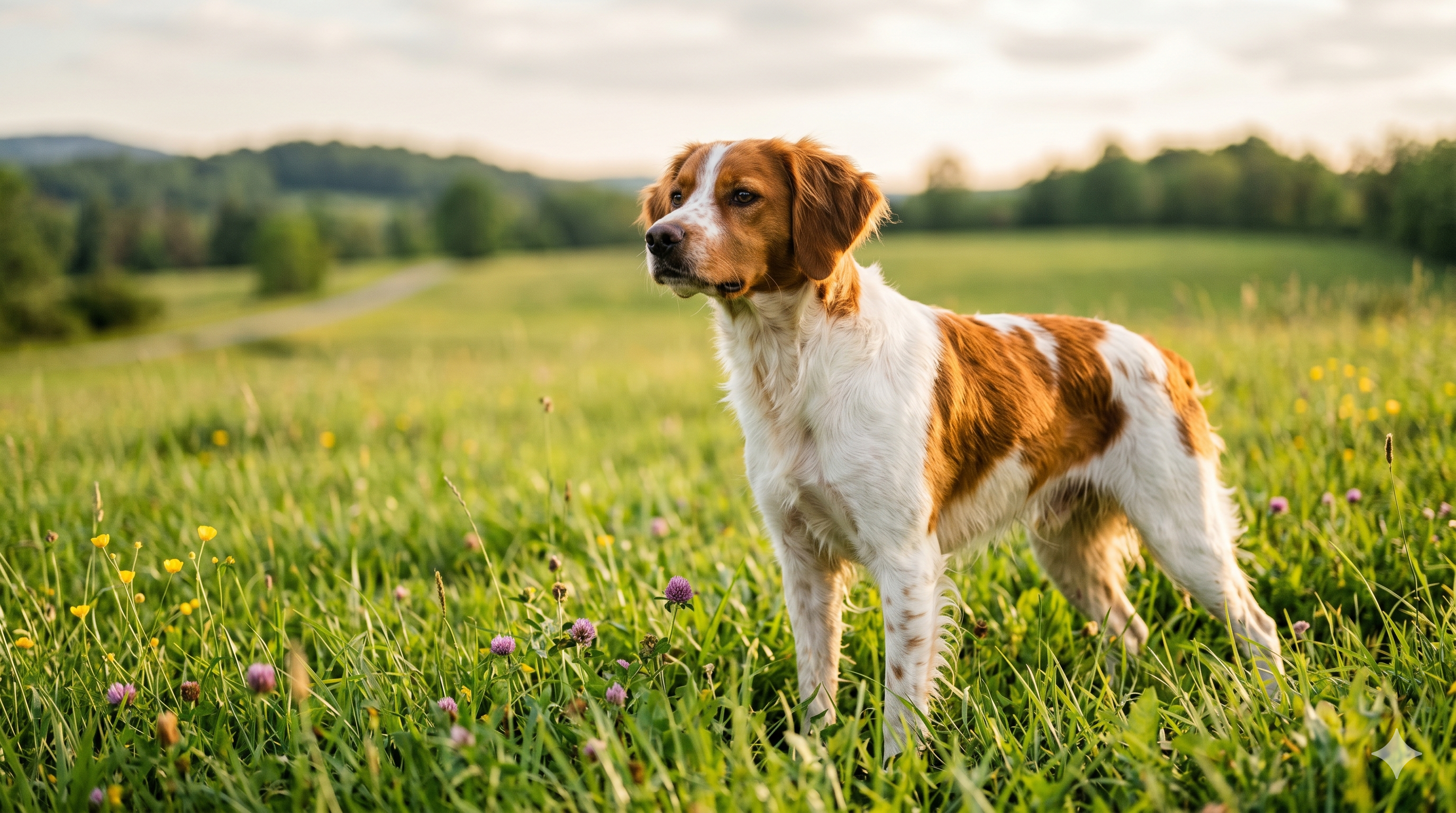
When you first see a Brittany, the word that comes to mind is “leggy.”
They are medium-sized dogs that stand between 17.5 and 20.5 inches at the shoulder. They typically weigh between 30 and 40 pounds. Their build is “square”—meaning they are roughly as long as they are tall.
The Coat and Colors
Their coat is dense and can be flat or wavy, but it is never curly. One of the most distinctive features of the Brittany is the color palette:
- Orange and White
- Liver and White
- Orange Roan or Liver Roan
- Tricolor (Liver, White, and Orange)
Note: In the United States, black is strictly disqualified by the AKC, though you might see black Brittanys in Europe.
The Face and Tail
They have an alert, eager expression with amber or hazel eyes that seem to be constantly looking for the next adventure. Their ears are high-set and fringed with just a little bit of hair.
And then there’s the tail. Brittanys can be born with a naturally short “bobtail,” or they are traditionally docked to less than four inches. This was originally done to prevent injuries while the dog sprinted through thick briars and brush.
Temperament and Personality
If you are looking for a “couch potato,” keep walking.
The Brittany temperament is defined by one word: Energy.
These dogs are happy, bright, and incredibly affectionate. They are often described as “soft” dogs. This means they are highly sensitive to their environment and the emotions of their owners. A harsh word can hurt a Brittany’s feelings more than a physical correction would hurt a tougher breed.
A Social Butterfly
Brittanys generally love everyone. They are excellent with children and usually get along well with other dogs. However, because of their high prey drive, they might be a bit too interested in the family cat or a backyard squirrel.
The “velcro” Factor
Unlike some independent hunting breeds, Brittanys want to be with you. They thrive on human companionship. If left alone in a backyard for hours, they won’t just get bored—they will get destructive. They are “people dogs” through and through.
Care Guide
Caring for a Brittany is a commitment to an active lifestyle. They are relatively low-maintenance in some areas, but high-maintenance in others.
Diet and Nutrition
Because Brittanys are high-output athletes, they need a diet that fuels their metabolism.
- High-Protein Formula: Look for quality kibble where the first ingredient is a whole protein (like chicken, beef, or salmon).
- Watch the Calories: Despite their energy, Brittanys love to eat. It is easy to overfeed them if you aren’t careful. Use your dog’s ribs as a guide; you should be able to feel them easily but not see them.
- Age-Appropriate Food: Ensure you are feeding puppy, adult, or senior formulas as they age to provide the right balance of minerals and joint support.
Exercise Requirements
This is the most important section of this guide.
A Brittany needs at least 60 to 90 minutes of vigorous exercise every single day. A slow walk around the block will not cut it.
If a Brittany doesn’t burn off its steam, it will find “jobs” to do. These jobs usually involve chewing your shoes, digging up your garden, or barking at the wind.
Best activities for a Brittany:
- Hiking: They love exploring new scents on a trail.
- Off-leash running: A fenced-in field where they can sprint is ideal.
- Fetch: They are natural retrievers.
- Dog Sports: They excel at agility, dock diving, and flyball.
Grooming Needs
The good news? The Brittany is a “wash and wear” dog.
Their coat is somewhat dirt-resistant. Usually, a good weekly brushing is all they need to remove loose hair and prevent tangles in their “feathers” (the longer hair on their legs and ears).
- Ears: Because their ears hang down, they are prone to infections. Check them weekly for redness or a funky smell.
- Nails: Since they are active, they might wear their nails down naturally, but you should still check them monthly.
- Bathing: Only bathe them when they are actually dirty or smelly. Over-bathing can strip the natural oils from their coat.
Training and Education
Training a Brittany is a joy—if you use the right methods.
Because they are so smart and eager to please, they pick up commands very quickly. However, their sensitive nature means that positive reinforcement is the only way to go.
- Use Treats and Praise: Reward-based training works wonders.
- Early Socialization: Expose your Brittany puppy to different people, sounds, and environments early on. This prevents them from becoming overly shy or “spooky.”
- Mental Stimulation: Use puzzle toys and scent work games. A tired brain leads to a tired dog.
- Consistency: Keep training sessions short and fun. A bored Brittany will start looking for something else to do.
Health and Longevity
Brittanys are generally a very healthy and hardy breed. They have an average lifespan of 12 to 14 years.
However, like all breeds, they are prone to certain genetic conditions. Responsible breeders will screen for:
- Hip Dysplasia: A condition where the hip joint doesn’t fit together perfectly, which can lead to arthritis.
- Epilepsy: Seizure disorders can occasionally occur in the breed.
- Hypothyroidism: An underactive thyroid that can affect energy levels and coat quality.
Regular vet checkups and keeping your dog at a healthy weight are the best ways to ensure a long, happy life.
Is this the Right Dog for You?
Bottom line?
The Brittany is an amazing dog, but they are a lifestyle choice.
You will love a Brittany if:
- You spend your weekends outdoors hiking or running.
- You want a highly trainable, sensitive companion.
- You have a fenced-in yard and plenty of time for play.
You should skip the Brittany if:
- You live in a small apartment with no access to open space.
- You work 10 hours a day and the dog will be left alone.
- You prefer a quiet, sedentary life.
FAQs
1. Is a Brittany a good family dog?
Yes! They are exceptionally gentle and patient with children. Their size makes them sturdy enough for play but small enough not to be overwhelming.
2. Do Brittanys bark a lot?
They are not known as “nuisance barkers,” but they will alert you if someone is at the door. If they are bored or under-exercised, however, they may bark out of frustration.
3. Can a Brittany live in an apartment?
It is possible, but it is “expert level” dog ownership. You would need to commit to several hours of outside activity every single day to make it work.
4. Are Brittanys hard to train?
Not at all. They are among the most trainable hunting breeds. They are smart and sensitive, so they respond quickly to positive cues.
5. How much do Brittanys shed?
They are moderate shedders. Regular weekly brushing will keep the hair in your house to a minimum, but you will still find some “fuzz” around the home.