Bodeguero Dog Breed: The Complete Guide to Spain’s Feisty Ratter
If you want a small dog with a big personality, the Bodeguero dog breed deserves a spot on your shortlist. This is Spain’s answer to the Jack Russell Terrier, and it comes with the same fearless attitude packed into a compact frame.
We’ve spent hours researching official breed standards, veterinary sources, and Spanish kennel club records to put together the most accurate guide available in English. Below, you’ll find everything from the breed’s wine-cellar origins to the exact health conditions your vet should watch for.
One detail most guides get wrong: whether this breed is recognized by the FCI. We’ll clear that up, along with the adoption path that most sites skip entirely.
History and Origin
The Ratonero Bodeguero Andaluz traces its roots to the sun-baked wine country of southern Spain.
The name explains the job description. Ratonero means “rat catcher.” Bodeguero refers to the wine cellars, or bodegas, scattered across Andalusia. Winemakers in towns like Jerez needed a small, fast dog to keep rodents away from their barrels, and this breed answered the call.
English wine merchants trading in the sherry region during the 18th and 19th centuries brought their own terriers along. Those dogs interbred with local Spanish ratters, and the mix produced the athletic, alert breed we recognize today. That shared ancestry is exactly why the Bodeguero looks and acts so much like a Jack Russell Terrier.
Here’s the detail competitor sites often get backwards: the breed is officially recognized as a native Spanish breed by the Real Sociedad Canina de España (RSCE), but it does not currently hold FCI (Fédération Cynologique Internationale) recognition. It remains one of Spain’s twelve native breeds, yet stays largely unknown outside the country.
Physical Characteristics
Small size, serious athleticism. That’s the Bodeguero in one sentence.
Body and Build
Every part of this dog is built for speed and agility. The chest sits moderately deep, the back stays strong and level, and the legs are lean but powerfully muscled.
- Height: 35 to 43 cm (14 to 17 inches) at the withers
- Weight: 8 to 12 kg (18 to 26 lbs)
- Build: Compact, athletic, and well-proportioned
Head and Expression
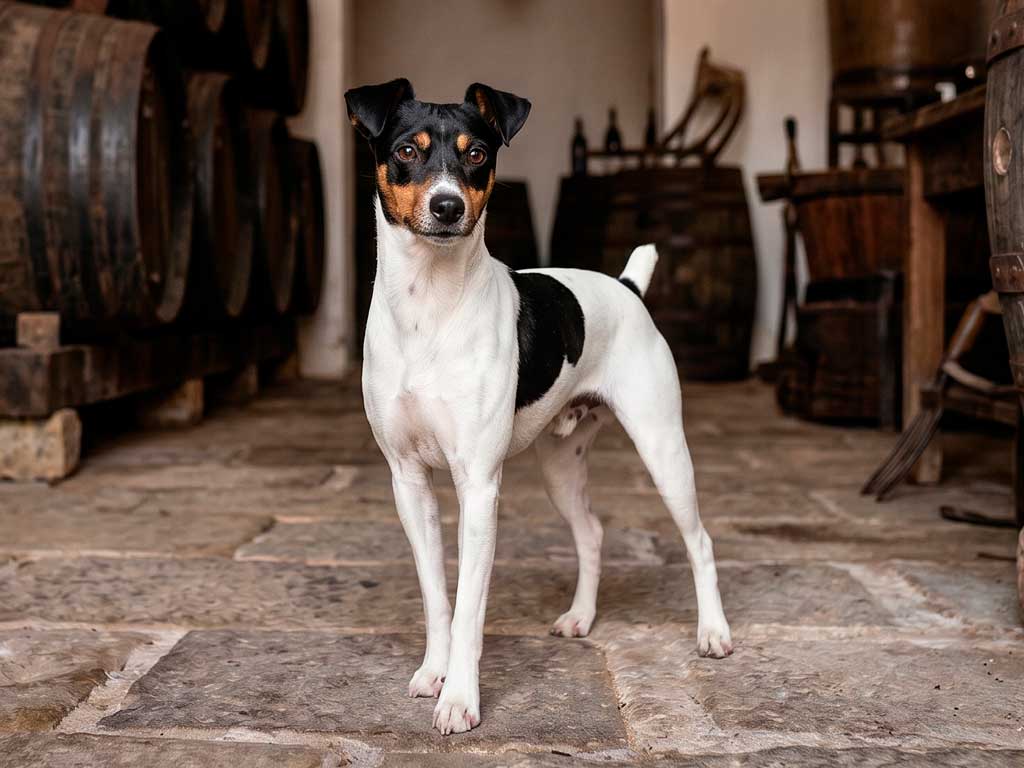
The head forms a clean triangle with a defined stop and a moderately tapered muzzle. Dark, oval eyes give the breed a permanently alert, thinking-two-steps-ahead look. Ears sit semi-erect or fold forward, adding to that sharp expression.
Coat and Colors
A short, smooth, glossy coat makes grooming easy. The base color runs predominantly white, with black-and-tan tricolor markings concentrated on the head. No two dogs wear the pattern exactly the same way.
Temperament and Personality
This is not a lap dog. The Bodeguero brings bold, curious, and relentlessly energetic to every room it enters.
With Family
Despite its hunting instincts, the Bodeguero bonds deeply with its people. It wants to be part of everything happening at home. Children get a playful, patient companion, though supervised play is smart around toddlers given the dog’s exuberance.
With Other Animals
Early socialization makes the biggest difference here. Introduced properly as a puppy, the Bodeguero generally does fine with other dogs. Small pets like rabbits or hamsters are a different story. The prey drive runs deep, so careful management matters in multi-pet homes.
As a Watchdog
Twelve kilos of dog with the confidence of something twice its size. The Bodeguero stays alert and vocal, announcing anything unusual. Quiet isn’t part of the package.
Bodeguero vs. Jack Russell Terrier: What’s the Real Difference?
Because the two breeds share ancestry and look strikingly similar, this comparison comes up constantly. Here’s how they actually differ.
| Trait | Ratonero Bodeguero Andaluz | Jack Russell Terrier |
|---|---|---|
| Origin | Spain (Andalusia) | England |
| Official recognition | RSCE (Spanish native breed) | Recognized by AKC, FCI, and others |
| Height | 35–43 cm (14–17 in) | 25–38 cm (10–15 in) |
| Weight | 8–12 kg (18–26 lbs) | 6–8 kg (13–17 lbs) |
| Coat markings | Mostly white, tricolor head mask | White with tan, black, or brown patches anywhere |
| Global popularity | Rare outside Spain | Widely bred and shown worldwide |
| Temperament | Bold, independent, working-dog mindset | Bold, high-energy, more show-line variety |
The overlap in personality is real. Both breeds need serious daily exercise and mental work, and both were built to hunt vermin. The Bodeguero tends to run slightly larger and carries a more standardized tricolor head pattern, while Jack Russells show far more coat variation.
Care Guide
Diet and Nutrition
The Bodeguero burns through energy fast, so it needs high-quality food formulated for small, active breeds.
Look for real meat as the first ingredient. Budget kibble loaded with fillers won’t support this dog’s activity level. Portion control still matters, though. Small dogs pack on weight quickly if you overfeed, even with all that energy burn.
Feeding guidelines:
- Two measured meals per day works best for most adults
- Skip free-feeding since it makes portions hard to track
- Keep fresh water available at all times
- Ask your vet to adjust portions for age, weight, and activity level
Dental health deserves attention too. Small breeds build up tartar faster than larger dogs. Dental chews and regular brushing help prevent problems down the line.
This article provides general care information and does not replace advice from a licensed veterinarian. Always consult your vet for guidance specific to your dog.
Exercise Requirements
Plan for at least 1 to 2 hours of physical activity every single day.
Walks alone won’t satisfy this breed. The Bodeguero needs work that engages both body and brain: fetch, agility courses, scent games, or secure off-leash time. Skip the exercise, and you’ll likely see restlessness, barking, or destructive chewing instead.
Key activities:
- Daily brisk walks or jogs, 45 to 60 minutes minimum
- Interactive fetch or tug sessions
- Agility or obstacle course training
- Nose work and scent-based games
Grooming Needs
Good news here. Grooming this breed takes almost no effort.
A weekly brush with a rubber mitt or soft bristle brush keeps the short coat looking sharp and removes dead hair. Bathe every four to six weeks, or whenever the dog gets genuinely dirty.
- Ears: Check weekly for wax buildup or redness
- Nails: Trim every three to four weeks, or when you hear clicking on hard floors
- Teeth: Brush two to three times weekly to prevent dental disease
Training and Education
Smart, sometimes frustratingly so. That’s the honest description of Bodeguero trainability.
Commands click fast with this breed, which sounds great until boredom sets in. Generations of working alone in wine cellars left this dog with a genuinely independent streak, so training sessions need to stay short and varied.
What works best:
- Positive reinforcement using treats, praise, and play
- Sessions capped at 10 to 15 minutes to hold focus
- Basic obedience starting around 8 to 10 weeks old
- Early exposure to different people, sounds, and environments
Recall training matters more here than with most breeds. A dog that spots a squirrel and bolts needs a rock-solid “come” command, since that prey drive doesn’t fade with age.
Agility and competitive obedience suit this breed exceptionally well. The problem-solving instinct that once served it in the cellar translates directly into strong performance in dog sports.
Health and Longevity
One genuine strength of this breed: a robust constitution built through natural selection rather than aggressive selective breeding.
Life expectancy runs 12 to 15 years, which sits at the high end for a dog of this size. Still, a few conditions deserve real attention rather than a passing mention.
Patellar luxation occurs when the kneecap slips out of its normal groove, a common issue in small, athletic breeds. Mild cases cause an occasional skipped step; severe cases require surgical correction. Watch for intermittent limping, especially after activity.
Dental disease develops faster in small breeds because their teeth sit closer together, trapping plaque. Left unchecked, this progresses to periodontal disease and tooth loss. Daily brushing and regular vet checks catch problems early.
Skin allergies show up occasionally, usually triggered by diet or environmental factors. Dietary adjustments and veterinary guidance typically manage symptoms well.
Eye conditions, including early cataracts, warrant regular checks as the dog ages, even though the breed doesn’t show a strong genetic predisposition compared to some purebred lines.
Wounds from hunting activity are worth mentioning given this breed’s instincts. A Bodeguero that encounters actual vermin may pick up nips or scratches. Clean any wound promptly and watch for swelling or discharge that signals infection.
The best preventive plan is straightforward: annual vet checkups, quality nutrition, consistent exercise, and up-to-date vaccinations and parasite control.
Health information in this guide is for educational purposes only. Any symptoms of illness or injury should be evaluated by a licensed veterinarian promptly.
Adopting a Ratonero Bodeguero Andaluz
Because this breed remains rare outside Spain, most guides push you straight toward breeders. We’d rather point you toward adoption first.
Breed-specific rescues for the Bodeguero are scarce outside Spain, but that doesn’t mean adoption is off the table. Start with general small-terrier and terrier-mix rescues in your area, since Bodeguero-type dogs sometimes land in shelters mislabeled as Jack Russell or rat terrier mixes given the visual overlap. Spanish rescue organizations and breed clubs occasionally coordinate international adoptions for people willing to handle the logistics.
If adoption genuinely isn’t an option where you live, prioritize transparency from any breeder. Ask for health clearances on the parents, meet the puppy in person when possible, and avoid anyone unwilling to answer detailed questions about lineage and temperament.
Whichever path you take, this breed does best with owners who understand its working-dog roots before bringing one home.
Is This the Right Dog for You?
This breed is remarkable, but it’s not the right fit for everyone.
A great match if you:
- Live an active lifestyle and can commit to daily vigorous exercise
- Want a dog with a big personality and a sharp mind
- Have children or other dogs, with proper socialization in place
- Prefer a low-maintenance coat without expensive grooming bills
- Have interest in dog sports like agility or nose work
Probably not ideal if you:
- Work long hours without a plan for mental stimulation
- Share your home with small pets like rabbits or birds
- Want a quiet, calm companion that rarely barks
- Are a first-time owner unprepared for a high-energy, independent terrier
Apartment living works fine here, as long as you meet the daily exercise quota. Small square footage won’t hold this dog back if you’re committed to getting outside.
Frequently Asked Questions
Is the Bodeguero dog breed good with families?
Yes. This breed bonds closely with everyone in the household and does especially well in active families with kids. Supervise interactions with very young toddlers, since the dog’s exuberance can be a lot for a small child to handle.
How much exercise does a Bodeguero need daily?
Plan for 1 to 2 hours of physical activity every day, combining walks with mentally engaging play. Skimp on exercise and you’ll likely see restlessness or destructive habits emerge.
Is the Ratonero Bodeguero Andaluz easy to train?
It’s highly intelligent and eager to learn, but its independent streak means training needs consistency. Short, varied, positive-reinforcement sessions beat long repetitive drills every time.
Can a Bodeguero live in an apartment?
Yes, provided its exercise needs get met daily without exception. Access to outdoor space for running and play matters more than square footage.
What’s the difference between a Bodeguero and a Jack Russell Terrier?
Both share English terrier ancestry brought to Spain by wine traders in the 1700s and 1800s. The Bodeguero is a native Spanish breed recognized by the RSCE, while the Jack Russell is British and recognized by kennel clubs including the AKC. The Bodeguero also runs slightly larger and carries a more standardized tricolor head pattern.
Is the Bodeguero recognized by the FCI?
Not currently. The breed holds official recognition from Spain’s RSCE as a native breed, but it does not yet have FCI recognition. Some other sites state otherwise, so this is worth double-checking before you rely on that claim.
Does the Bodeguero shed a lot?
Shedding runs light to moderate. The short coat sheds fairly consistently year-round rather than in heavy seasonal blowouts, and weekly brushing keeps loose hair under control.
Are Bodegueros good with cats?
It depends heavily on socialization and the individual dog. The strong prey drive means introductions should happen slowly and under supervision, ideally starting when the dog is a puppy. Some Bodegueros coexist peacefully with cats they’re raised alongside; others never fully lose the instinct to chase.
How long do Bodegueros live?
Life expectancy typically falls between 12 and 15 years, helped along by the breed’s naturally robust health and its history of development through practical working selection rather than intensive inbreeding.
Where can I find a Bodeguero to adopt?
Start with terrier-focused rescues in your region, since Bodeguero-type dogs sometimes get surrendered under a different breed label. Spanish breed clubs and rescue networks are also worth contacting if you’re open to an international adoption process.
Not sure this breed matches your lifestyle? Don’t guess. Browse every profile in our Dog Breeds library and take the free interactive quiz there to find the breed that actually fits how you live.