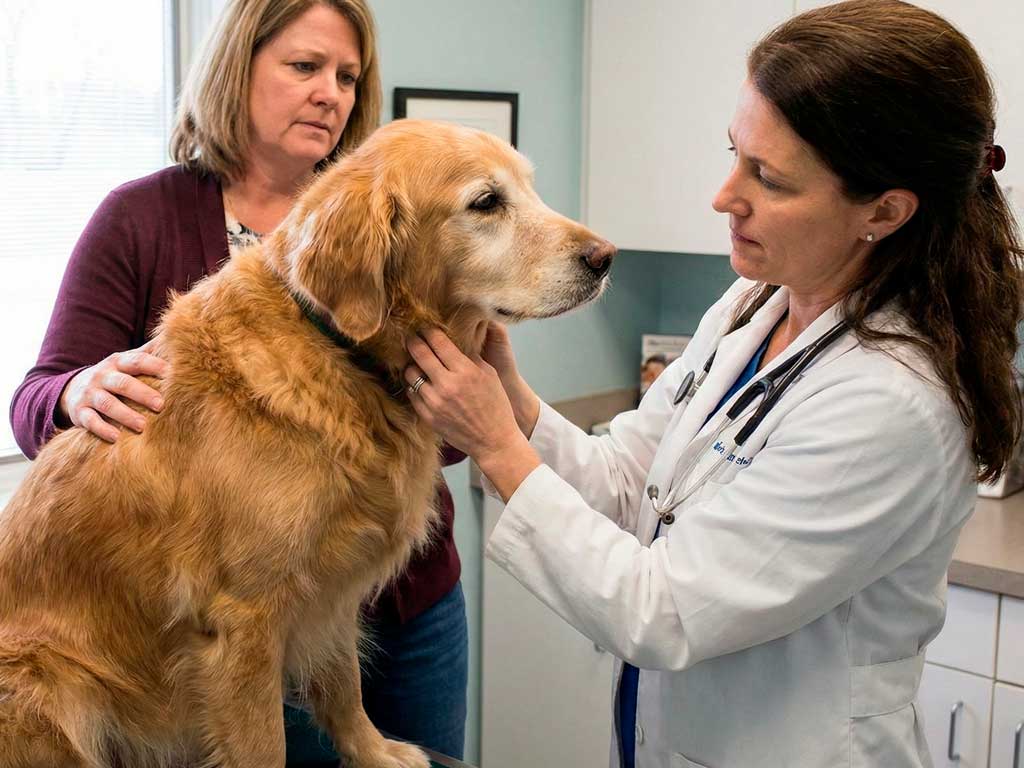

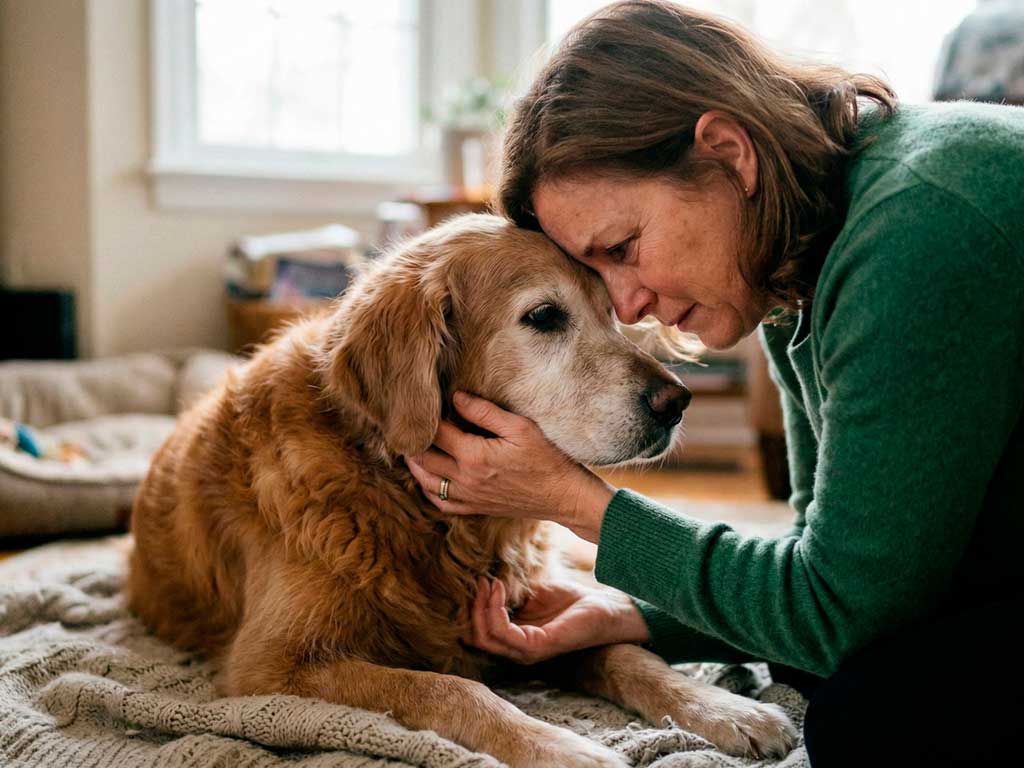
There is no heavier burden for a pet owner than the question of “when.” Whether your companion is struggling with severe arthritis, battling cancer, or simply reaching the final stages of a long life, the weight of deciding their end-of-life care is immense.
I hear from owners every single day who are searching for a sign. They ask, “How do I know if it’s time?” or “Am I giving up too soon?” As someone who has spent a lifetime surrounded by dogs and helping families navigate these final chapters, I can tell you two things: every dog is a world unto themselves, and your intuition as their guardian is your most powerful tool.
However, when emotions are high, it’s hard to see clearly. That is why we use a specific tool in the veterinary world to help “mathematize” this deeply personal choice. It is called the HHHHHMM Scale (or the Quality of Life Scale). This framework helps transition the decision from a place of pure heartbreak to one of objective compassion, ensuring your dog’s dignity remains the priority.
Veterinary Disclaimer: The following information is intended for educational purposes and to support your decision-making process. It does not replace the professional advice of your veterinarian. Always consult with a medical professional regarding your pet’s specific condition and palliative care options.
Why “Wait and See” Is Often the Hardest Path
When a dog is diagnosed with a chronic illness like canine osteoarthritis or a terminal condition like Leishmaniasis, the decline is rarely a straight line. There are “up” days that give us hope and “down” days that leave us in tears.
The problem with waiting for a “clear sign” is that dogs are masters at hiding discomfort. It is a survival instinct deeply rooted in their DNA. By the time a dog is overtly showing signs of extreme suffering, they have often been struggling in silence for much longer than we realize.
The goal of using a Quality of Life Scale isn’t to find an excuse to say goodbye; it’s to ensure that we don’t allow our desire to keep them with us to outweigh their right to a life free from suffering.
Breaking Down the HHHHHMM Scale
This scale, developed by Dr. Alice Villalobos, evaluates seven different categories of a dog’s daily existence. By scoring each of these from 0 to 10 (with 10 being ideal), you can get a clearer picture of where your dog stands.
1. Hurt (Pain Management)
Pain control is the foundation of quality of life. Is your dog’s pain manageable with current medication?
- Signs to look for: Panting, inability to get comfortable, whining, or a reluctance to move.
- The Goal: If the pain can be controlled so the dog can rest and engage in some level of “normal” behavior, that is a positive sign. However, if even the strongest medications aren’t providing relief, the “Hurt” score drops significantly.
2. Hunger (Nutrition and Appetite)
A dog that stops eating is a dog that is losing its “will to live” signal. While it’s common for seniors to have a lower appetite, a total refusal to eat—or the need for forceful hand-feeding—is a major red flag.
- Assessing the situation: Can your dog still chew? Do they show interest in high-value treats?
- The Threshold: If your dog requires a feeding tube or constant intervention just to maintain basic caloric intake, their autonomy is severely compromised.
3. Hydration (Fluid Intake)
Dehydration is a fast track to organ failure and mental confusion. If your dog isn’t drinking enough water on their own, they will feel nauseous and weak.
- The “Pinch Test”: You can check hydration by gently lifting the skin between their shoulder blades. If the skin snaps back instantly, they are hydrated. If it stays “tented” or moves back slowly, they are dehydrated.
- Other signs: Pale, dry gums and sunken eyes.
4. Hygiene (Dignity and Cleanliness)
Dogs are naturally clean animals. When a dog can no longer move to urinate or defecate, or if they are constantly “soiling the nest,” it affects their mental well-being.
- Maintenance: Can the dog be kept clean after accidents? Are they developing pressure sores (bedsores) from being unable to change positions?
- Mental Impact: Many dogs become visible distressed when they have an accident where they sleep. Losing the ability to maintain basic hygiene is a heavy blow to their dignity.
5. Happiness (Mental Vitality)
Does your dog still find joy in anything? This is the most subjective part of the scale, but also one of the most important.
- The Spark: Do they wag their tail when you come home? Do they still enjoy watching the birds or receiving a head scratch?
- Apathy: If your dog is staring at the wall, hiding in corners, or seems completely disconnected from their environment, their “Happiness” score is low.
6. Mobility (The Ability to Move)
Mobility doesn’t mean they need to be able to run a marathon. It means they can get up to change positions, go outside, or reach their water bowl.
- Support: Are you using a harness or a sling to help them walk? If the dog is completely paralyzed or lacks the strength to stand even with help, their world becomes very small and frustrating.
- Arthritis Factors: In cases of severe canine arthritis, mobility often becomes the deciding factor. If the joints are so degraded that every step is an ordeal, it’s a sign that the body is failing the spirit.
7. More Good Days Than Bad Days
This is the ultimate “M” in the scale. When the bad days consistently outnumber the good ones, the battle is likely lost.
- The Calendar Method: I often suggest that owners keep a literal calendar. Mark a “smiley face” for a good day and an “X” for a bad day.
- The Reality Check: When you look back at a week and see five “X” marks, it becomes much harder to tell yourself that “they’re doing okay.” It provides the objective proof your heart might be trying to ignore.
How to Calculate the Score
To use this tool effectively, score your dog on each of the seven categories from 0 (Poor) to 10 (Excellent).
- A total score above 35 generally suggests that your dog’s quality of life is still acceptable and that continued palliative care (hospice) is appropriate.
- A total score below 35, or a score of 0-3 in multiple categories, suggests that it may be time to discuss euthanasia with your veterinarian.
Dealing with the “Pet Owner Guilt”
One of the reasons this decision is so agonizing is the feeling that we are “killing” our best friend. We need to shift that perspective.
Choosing euthanasia for a dog in pain is not an act of malice; it is the final act of love. It is a gift we give them—the gift of a peaceful, painless exit before their life becomes a cycle of constant suffering.
When we say, “I’m not ready to let go,” we are often talking about our needs, not the dog’s. A dog lives in the present. They aren’t worried about tomorrow or what they’ll miss next year; they only know how they feel right now. If “right now” is constant pain or confusion, then letting go is the kindest thing we can do.
The Role of Your Veterinarian
Your vet is your partner in this. They use these same scales to validate their professional recommendations. When a vet suggests euthanasia, they aren’t doing it lightly. They are looking at the clinical signs—the bloodwork, the joint degradation, the cognitive decline—and comparing it to the standard of a “life worth living.”
Knowing about the HHHHHMM scale allows you to speak the same language as your vet. It helps you understand their reasoning and gives you a sense of control in a situation where you might feel completely powerless.
Final Thoughts: Finding Peace in the Choice
If you are reading this and crying because you know the time is near, please be gentle with yourself. You have given your dog a lifetime of safety, snacks, and love. You have been their whole world.
Using the Quality of Life scale won’t stop the pain of the loss, but it can stop the pain of the uncertainty. It allows you to look at your dog and say, “I am doing this for you, because I promised to protect you until the very end.”
Trust the scale, trust your vet, but most importantly, trust the bond you have built. You will know when the “spark” is gone, and when that day comes, letting them go is the most courageous thing you will ever do.
Checklist: Quality of Life Assessment (HHHHHMM Scale)
This tool is designed to help you observe your dog with critical yet compassionate eyes during difficult times. Evaluate each category from 0 to 10 points (where 0 is “completely absent/severe” and 10 is “ideal/perfect”).
Important Note: If your dog’s health situation is critical, always consult your veterinarian immediately. This checklist is a supportive guide for decision-making, not a definitive medical diagnosis.
1. Hurt (Pain Management and Relief)
- Is my dog’s pain managed effectively with current medication?
- Do they have difficulty breathing or pant excessively, even when resting?
- Do they whine, groan, or seem unable to find a comfortable position to sleep?
- Score (0-10): _______
2. Hunger (Nutrition and Appetite)
- Do they show interest in food (even high-value treats)?
- Can they eat on their own, or do they require force-feeding?
- Have they lost a significant amount of muscle mass or weight?
- Score (0-10): _______
3. Hydration
- Do they drink enough water on their own?
- If you perform the skin pinch test, does the skin return to place quickly?
- Are their gums moist and pink, or dry and pale?
- Score (0-10): _______
4. Hygiene (Dignity and Cleanliness)
- Can they get up to urinate and defecate away from their bedding?
- Do they stay clean after soiling themselves, or do they lay in it?
- Do they have sores from being in the same position too long (bedsores)?
- Score (0-10): _______
5. Happiness (Mental Vitality and Stimulation)
- Do they show joy when you arrive home or when you call their name?
- Do they still enjoy basic stimuli (like looking out the window or being petted)?
- Do they seem depressed, anxious, scared, or completely apathetic to their surroundings?
- Score (0-10): _______
6. Mobility
- Can they walk without help, even slowly?
- Do they need constant harness or sling support to move around?
- Do they stumble or fall frequently, causing frustration or pain?
- Score (0-10): _______
7. More Good Days than Bad
- When looking at a calendar of the last week, were there more days of well-being than suffering?
- Is the disease progression stalled or worsening daily?
- Do you feel your dog is still “there,” or just a shadow of who they were?
- Score (0-10): _______
How to Interpret the Results
Add up the points from all seven categories. The maximum total is 70 points.
- Above 35 points: Generally indicates that the quality of life is acceptable. This is the time to focus on palliative care and comfort management to maintain this score as long as possible.
- Below 35 points: Suggests that suffering is beginning to outweigh moments of well-being. This is an objective signal to have an honest conversation with your veterinarian about humane euthanasia.
- A score of 0 in any category: If a single category (such as uncontrollable pain or total lack of hydration) hits zero, a decision may need to be made urgently, regardless of the total score.
Happy Pet Zone Advice: Bring this completed checklist to your veterinarian. Sometimes, seeing the numbers written down helps the professional understand exactly what you see at home 24/7, and it provides you with the peace of mind that you are making a decision based on their well-being, not just your fear of losing them.