
Bringing a cockatiel home is an adrenaline-filled moment for you, but for the bird, it is likely the most terrifying day of its life. In the wild, being moved to a new location usually means a predator has caught you. Our goal this week is to prove, through consistent and calm action, that you are a friend, not a foe.
Day 1: The Arrival and the “Silent Observation”
The biggest mistake new owners make is trying to handle the bird immediately. Today, your hands should only enter the cage for absolute necessities.
- The Setup: Place the cage in a corner of a quiet room. Having two walls behind the cage gives the bird a “safe zone” where they don’t have to worry about something sneaking up behind them.
- The Introduction: Open the travel carrier and let the bird hop into the cage on its own terms. Do not reach in and grab it.
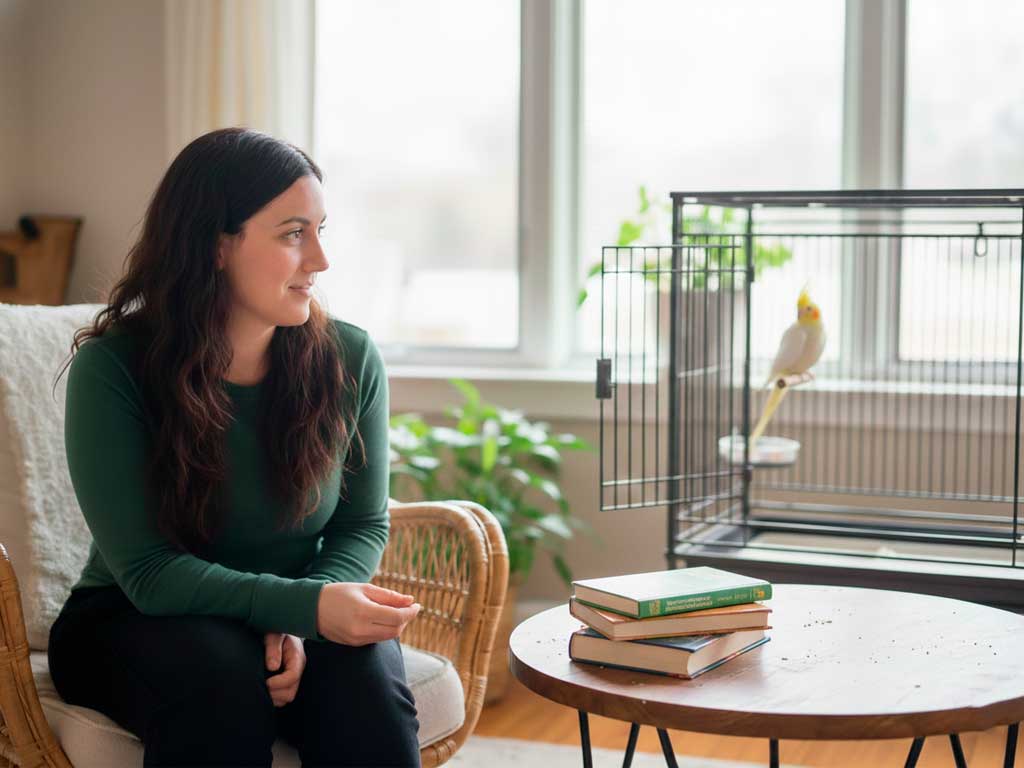
- The “Slow Blink”: Sit near the cage (about 3-5 feet away) and read a book or talk softly. Periodically look at the bird and blink your eyes very slowly. In bird language, a direct stare is a predator’s gaze. A slow blink says, “I am relaxed, and you can be too.”
- Feeding: Ensure they see where the water and food are. If they don’t eat for the first few hours, don’t panic—this is normal stress behavior.
Day 2: The Sound of Your Voice
Today is about auditory acclimation. Cockatiels are extremely sensitive to sound.
- Ambient Noise: Leave a radio or a TV on low volume (soft jazz or classical music works wonders). Absolute silence is actually scary for birds because in the wild, silence usually means a predator is nearby and all the other animals have stopped calling.
- Narrate Your Life: Talk to your bird about everything. “I’m just folding the laundry now, Max,” or “I’m going to get some water.” Your goal is for your voice to become a predictable, comforting background noise.
- Avoid Quick Movements: When you walk past the cage, do it slowly. No sudden arm movements or running children.
Day 3: The Hand as a Non-Threat
By now, the bird should be eating and drinking. Now we start “desensitizing” them to your hands.
- The Statue Technique: Rest your hand on the outside of the cage bars, near where the bird is sitting, but not so close that they hiss. Leave it there for 5 minutes. Don’t move your fingers.
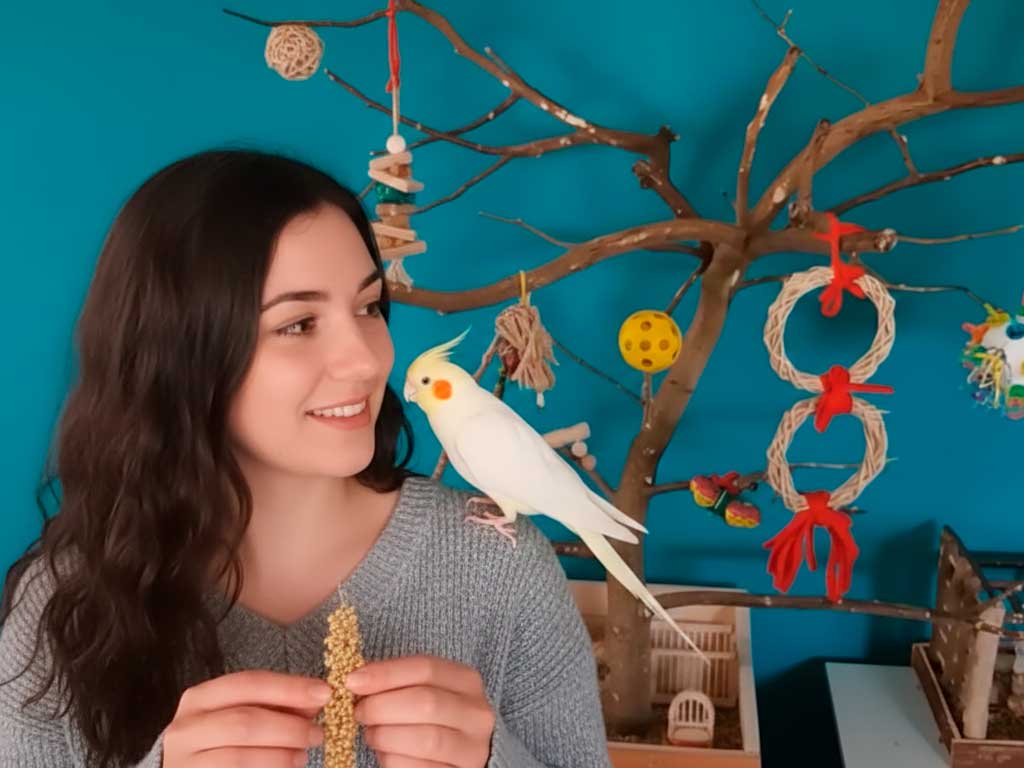
- The Millet Bribe: If the bird seems calm, hold a long spray of millet through the bars. Don’t move toward the bird; let the bird decide to walk toward the millet. If they take even one bite, they’ve made a huge leap in trusting you.
- Observation: Start watching their crest. If it’s flat against their head, they are angry or scared. If it’s straight up, they are startled or curious. If it’s slightly curved and relaxed, they are starting to feel at home.
Day 4: Entering the “Sanctuary”
Today, we move from the outside of the cage to the inside, but still with zero pressure.
- Cleaning Duties: Change the cage liner and refresh the water. Do this with slow, deliberate movements. Talk to them while you do it.
- The Interior Hand: Place your hand inside the cage, at the bottom, away from the bird. Just leave it there for a few minutes. You are teaching the bird that your hand entering the cage doesn’t mean “I’m going to grab you.” It just means “The hand is here, and nothing bad is happening.”
- Treat Introduction: Try offering a small piece of broccoli or a leaf of kale. Fresh foods are new and exciting, and being the “provider” of these treats boosts your status in the flock.
Day 5: The First “Step Up” Attempt
If your bird is no longer hissing or moving to the back of the cage when you approach, you can try the “Step Up.”
- The Command: Use a consistent word like “Step up” or “Up-up.”
- The Method: Offer your index finger (or a perch if the bird is very nippy) and gently press it against their lower chest, just above their legs. This naturally unbalances them, and their instinct will be to step onto your finger to regain balance.
- The Reward: The second both feet are on your finger, give them a tiny bit of millet and praise them. Then, let them hop back to their perch. We want them to know that stepping up is a choice that leads to rewards.
Day 6: Exploration and Boundaries
If the room is 100% bird-proof (windows closed, mirrors covered, no ceiling fans on), you can consider the first out-of-cage experience.
- The Open Door: Don’t pull the bird out. Just open the door and sit nearby with some treats. Let their curiosity win.
- The “Landing Pad”: Have a play gym or a branch (like the one in our article’s photo) ready nearby. Cockatiels are ground foragers, but they feel safest high up.
- The Flight: If they fly, they might crash into a wall or land on the floor. Don’t scream or run toward them. Walk over slowly, offer your finger, and help them back to their “safe zone” (the cage).
Day 7: Establishing the Routine
Birds thrive on schedules. By the end of the first week, you should have a set “Flock Schedule.”
- Morning Ritual: Uncover the cage at the same time, refresh food, and have a 10-minute “chat” session.
- Afternoon Outing: Set a specific time for out-of-cage exercise.
- Evening Wind-down: Around sunset, start dimming the lights. Cover the cage with a breathable, dark fabric to ensure they get their 12 hours of sleep.
- The Bond: Spend tonight just sitting with them. Maybe they’ll sit on your shoulder, or maybe they’ll just sit on top of their cage watching you. Either way, you are now officially “part of the flock.”
FAQs
Why is my cockatiel afraid of my hands even though I’ve never hurt them?
It is an instinctive response. Cockatiels are prey animals in the wild, and our hands move much like the talons of a predator. The key is patience: never force your bird to step onto your hand; instead, let them approach you out of curiosity by offering treats like millet.
Is it normal for my cockatiel to make loud noises in the morning?
Yes, this is called a “flock call.” In the wild, cockatiels scream at sunrise to locate the rest of their family and ensure everyone is safe. At home, it’s their way of saying hello and asking for attention after the night.
How can I tell if my cockatiel is overweight?
You should gently feel the chest area (the keel bone). If the central bone feels very sharp, the bird is too thin; if you can’t feel the bone at all and notice a soft, padded area of fat, they need more exercise and fewer fatty seeds (like sunflower seeds).
Can cockatiels live with other birds, such as lovebirds?
You must be very careful. Cockatiels are peaceful and somewhat timid birds, while lovebirds (Agapornis) tend to be much more territorial and aggressive. They should never share the same cage and should only be together under constant supervision.
What does it mean when my cockatiel shakes its head quickly after I speak?
Don’t worry, this is usually a sign that they are paying close attention. Sometimes they do it to “focus” better on the sound or simply as a reaction of excitement when interacting with you. If they do it constantly without any stimulus, consult a vet to rule out an ear irritation.