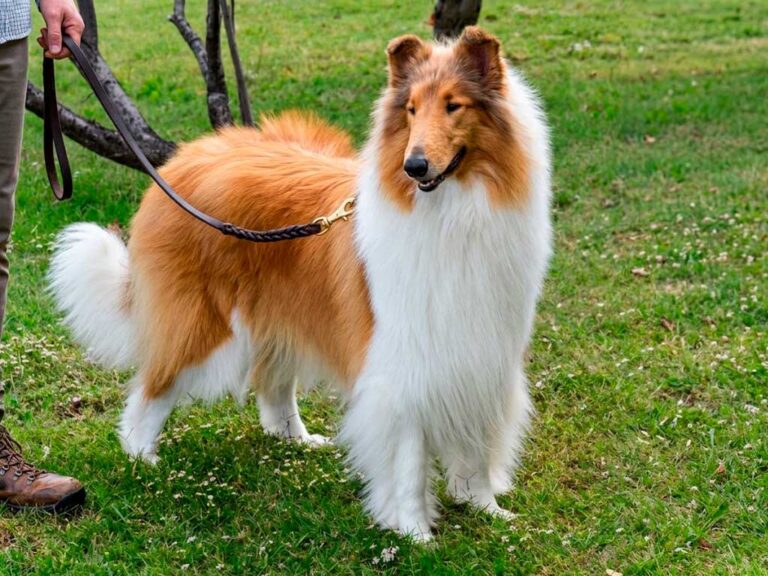
How to choose a dog bed: Key Factors and Benefits
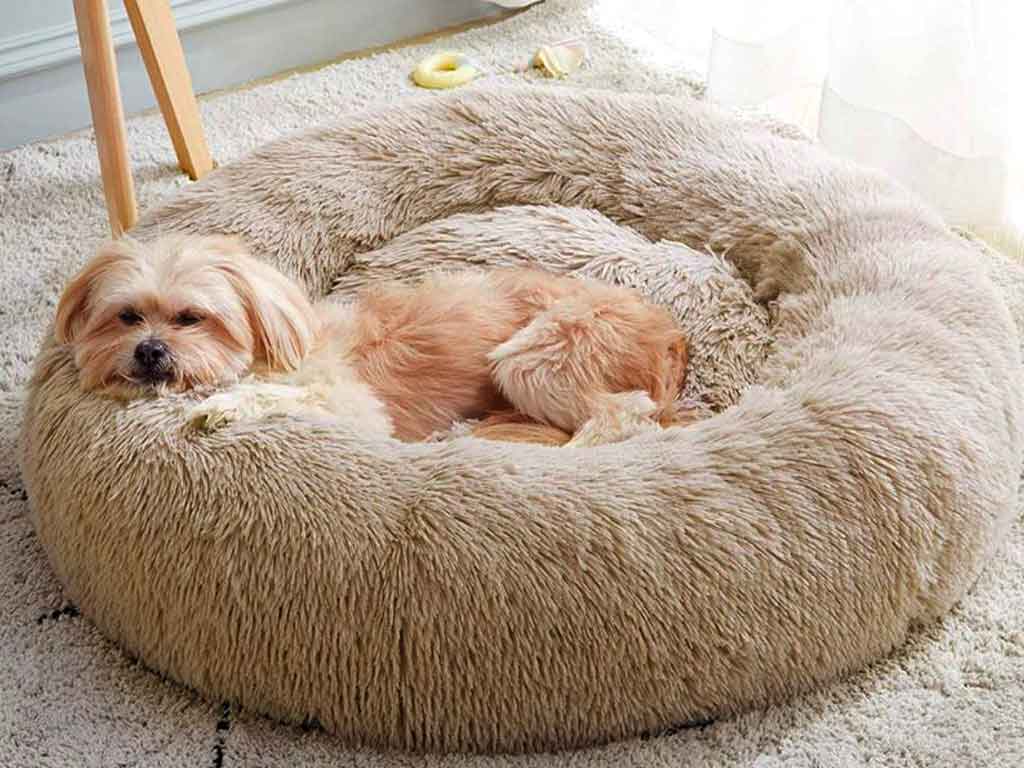
A good dog bed should support your dog’s body, accommodate their sleeping habits, and give them a comfortable place to rest. The right choice also depends on age, size, joint health, and even the temperature of your home.
Learning how to choose a dog bed starts with understanding what your dog actually needs. Let’s look at the different styles, materials, and features worth considering before you buy.
Quick Facts: Choosing the Right Dog Bed
- Replacement: Usually every 1–3 years, depending on wear and condition.
- Best for senior dogs: Orthopedic memory foam beds with adequate support.
- Best for hot climates: Elevated beds that allow air to circulate underneath.
- Correct sizing: Measure your dog from nose to tail and add 6–8 inches (15-20 cm).
- Essential feature: A removable, machine-washable cover.
- Best for dogs who curl up: Bolster or nest-style beds.
- Best for dogs who stretch out: Flat, rectangular mattresses.
1. Consider Your Dog’s Size and Sleeping Position
Before looking at colors, materials, or prices, pay attention to two things: how large your dog is and how they prefer to sleep.
A Chihuahua that curls into a tight ball has different needs from a Labrador that stretches across the entire floor. Buying a bed based on breed alone can lead to an uncomfortable fit.
How to Measure Your Dog for a Bed
Start by watching your dog lie down in their usual sleeping position.
Measure from the tip of the nose to the base of the tail. Add another 6–8 inches to allow enough room for stretching and changing positions.
If your dog likes to stretch out completely, make sure the bed provides enough space without forcing them to curl up.
Use these general size guidelines as a starting point:
- Small dogs: Chihuahuas, Yorkies, and similar breeds usually need small or medium beds.
- Medium dogs: Beagles and Cocker Spaniels often need medium or large beds, depending on their sleeping position.
- Large dogs: Labradors and Golden Retrievers generally need large or extra-large beds.
- Giant breeds: Great Dane and similar dogs need extra-large beds with sufficient weight capacity.
Always check the manufacturer’s measurements and weight recommendations. Two beds labeled extra-large can have very different dimensions.
Match the Bed Shape to Your Dog’s Sleeping Style
Dogs have their own sleeping preferences. Some curl up tightly, while others stretch their legs in every direction.
Dogs that curl up
A round or oval nest-style bed with raised edges gives these dogs somewhere to lean their heads and rest their bodies. The surrounding cushion can also make the sleeping area feel more enclosed.
Dogs that stretch out
A flat rectangular mattress usually works better. Look for enough surface area for your dog to extend their legs without hanging over the edges.
Dogs that like resting their heads on something
Bolster beds provide raised sides that dogs can use as a headrest. They’re worth considering if your dog regularly rests their chin on pillows, furniture, or your legs.
Watch your dog over several nights before choosing. Their usual sleeping position tells you much more than the picture on the packaging.
2. Choose a Dog Bed Based on Age and Joint Health
Age makes a difference when selecting a bed. A young, healthy dog may be perfectly comfortable on a standard cushioned mattress, while an older dog might need additional support.
Puppies and Young Adult Dogs
Most healthy puppies and young adult dogs can use a standard cushioned bed.
Look for:
- A durable cover that can handle regular washing.
- Enough room for your puppy to grow.
- Comfortable cushioning that retains its shape.
- A non-slip bottom, especially on tile or hardwood floors.
Puppies that chew their bedding also need closer supervision. Choose durable materials and remove damaged bedding before loose pieces become a swallowing hazard.
Senior Dogs and Orthopedic Beds
Older dogs may develop arthritis, hip dysplasia, and other joint conditions that make resting uncomfortable.
An orthopedic dog bed can help distribute body weight more evenly and reduce pressure on sensitive areas. Many models use high-density foam or memory foam designed to contour around the dog’s body.
Look for these features:
- Supportive foam: Thick, resilient foam that doesn’t flatten easily.
- Low entry height: Easier access for dogs with limited mobility.
- Stable construction: A non-slip bottom helps prevent unwanted movement.
- Washable cover: Important for maintaining hygiene as your dog gets older.
- Water-resistant protection: Useful for dogs experiencing occasional urinary accidents.
A thick mattress isn’t automatically orthopedic. Check the actual foam construction, density, and manufacturer’s specifications before purchasing.
If your dog has started circling excessively before lying down, struggling to get comfortable, or showing stiffness after resting, consider discussing these changes with your veterinarian.
Sudden limping, difficulty standing, or signs of pain deserve veterinary attention. A supportive bed can improve resting comfort, but it cannot treat an underlying medical condition.
3. Compare the Different Types of Dog Beds
Dog beds come in several styles, each designed for different sleeping habits and environments.
Here is a practical comparison to help narrow down your options.
What Each Dog Bed Type Is Best For
| Bed Type | Best For |
|---|---|
| Orthopedic memory foam | Senior dogs and dogs needing additional joint support |
| Standard cushioned | Healthy adult dogs and everyday use |
| Elevated cot-style | Hot climates and dogs that prefer cooler sleeping surfaces |
| Heated beds | Dogs needing additional warmth in colder environments |
| Bolster or nest | Dogs that curl up or enjoy raised edges |
Pros and Cons of Different Dog Beds
| Bed Type | Advantages and Limitations |
|---|---|
| Orthopedic memory foam | Excellent cushioning and support, but generally more expensive |
| Standard cushioned | Affordable and widely available, although filling may flatten over time |
| Elevated cot-style | Allows airflow and is easy to clean, but provides less cushioning |
| Heated | Adds warmth in cold conditions, but requires careful temperature and electrical safety |
| Bolster or nest | Offers raised edges for resting, but may restrict dogs that stretch out |
Orthopedic Memory Foam Beds
These beds are particularly useful for senior dogs and larger breeds that need more cushioning.
Look for high-density foam that maintains its shape under your dog’s weight. Cheap models sometimes use thin foam that compresses quickly.
Standard Cushioned Beds
Standard beds are suitable for many healthy adult dogs.
They typically use polyester filling, cotton, or foam. They’re often affordable, although the filling may lose its shape with frequent use and washing.
Elevated Dog Beds
Elevated beds keep dogs above the floor, allowing air to circulate underneath.
They’re particularly useful in warm environments and for dogs that shed heavily. Many models also have washable fabric surfaces and frames that can be wiped clean.
However, they don’t provide the same pressure-point cushioning as orthopedic mattresses. A dog with joint problems may need a different option.
Heated Dog Beds
Heated beds can provide additional warmth for short-haired dogs, some senior pets, and dogs living in colder homes.
Choose products specifically designed for pets, with appropriate temperature controls and protected electrical components. Follow the manufacturer’s instructions and make sure your dog can move away from the heated surface whenever they want.
They’re generally less necessary in warm climates or for dogs with thick double coats.
4. Pay Attention to Materials, Cleaning, and Hygiene
The materials inside and outside a dog bed affect its comfort, durability, and maintenance requirements.
A bed might look great when new, but poor-quality fabric or filling can become uncomfortable after a few months.
Common Dog Bed Filling Materials
- Memory foam: Provides body-contouring support and is commonly used in orthopedic beds. Check the foam thickness and density.
- Polyurethane foam: Available in different densities and firmness levels. Higher-quality versions can provide good everyday support.
- Polyester fiber: Soft, lightweight, and generally affordable. However, it can flatten with repeated use.
- Cotton filling: Comfortable and breathable, although it may clump or lose its shape after washing.
The best material depends on your dog’s needs. A senior Labrador may benefit from supportive foam, while a healthy young dog might be perfectly comfortable with polyester filling.
Why a Removable, Washable Cover Matters
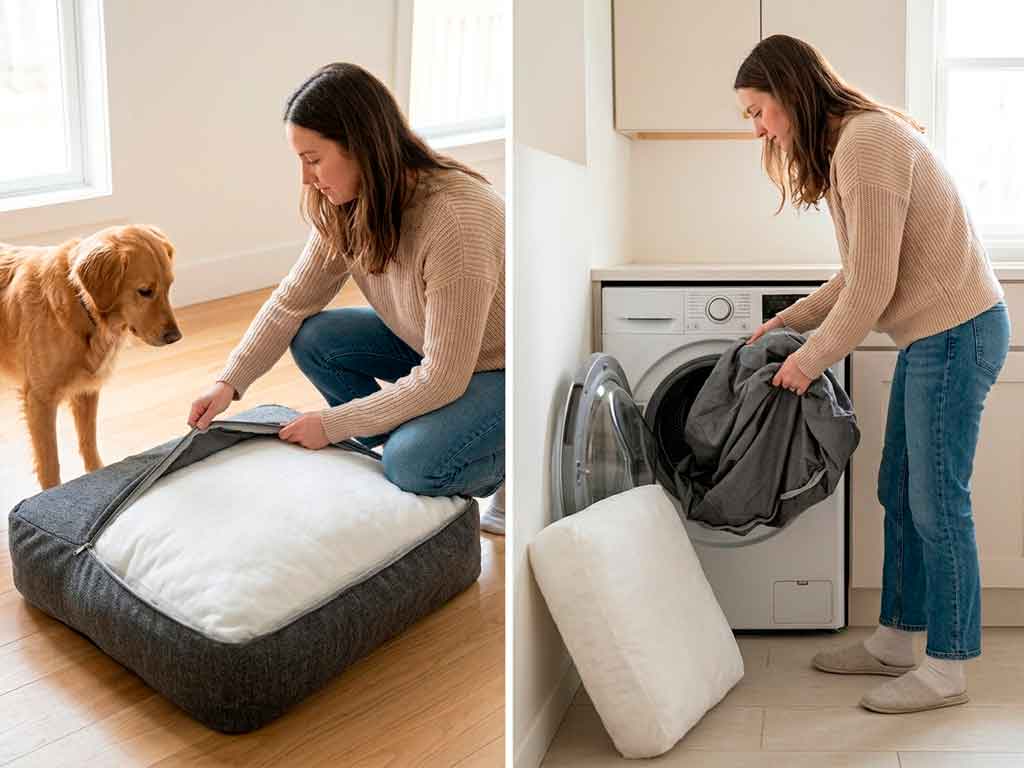
A removable, machine-washable cover makes regular cleaning much easier.
Dog beds collect hair, dirt, skin flakes, saliva, and other debris. If your dog spends time outdoors, the bedding can also pick up environmental allergens and parasites.
Before purchasing, check:
- Whether the cover is machine washable.
- Whether the foam insert can be removed.
- The recommended washing temperature.
- Whether the fabric can tolerate frequent cleaning.
- Whether the zipper and seams are durable.
Wash the cover according to the manufacturer’s instructions and allow all components to dry completely before putting the bed back together.
If flea prevention is already part of your routine, regular bedding maintenance is another useful step. You can also read our guide on how to prevent fleas on dogs year-round for more information.
5. Consider Durability, Price, and Construction
A dog bed doesn’t have to be expensive to be comfortable. What matters is whether it can withstand your dog’s weight, activity, and everyday use.
Check the stitching, seams, zipper quality, and fabric thickness before buying.
For large breeds, pay particular attention to the foam construction and maximum weight capacity. A bed that looks thick in product photographs may compress significantly under a heavier dog.
Consider these features:
- Reinforced stitching around frequently stressed areas.
- Durable fabric that resists everyday wear.
- A removable cover with a strong zipper.
- Non-slip backing for smooth floors.
- Replacement covers or inserts, when available.
Read customer reviews carefully, especially those discussing how the bed holds up after several months. Recent reviews can reveal problems that aren’t obvious from the manufacturer’s product description.
Our Pick for Senior and Large Dogs
If you’re considering an orthopedic bed for a large or senior dog, the EHEYCIGA Orthopedic Extra Large Dog Bed is one option worth looking at.
Its listed features include egg-crate polyurethane foam, a waterproof layer, and a removable cover that can be washed. The 44-inch version may suit many large dogs, although you should compare its actual sleeping dimensions with your dog’s measurements.
The non-slip bottom is another useful feature, particularly if the bed will sit on hardwood or tile.
Before purchasing, check the current product specifications, available sizes, and weight recommendations to make sure the model suits your dog.
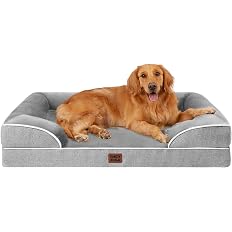
EHEYCIGA Orthopedic Extra Large Dog Bed, Waterproof Washable
Non-Slip Bottom and Egg-Crate Polyurethane Foam Big Dog Couch Bed with Washable Removable Cover, Grey.
Shop on AmazonHappy Pet Zone may earn a commission when you click through to Amazon.com, at no extra cost to you.
6. Find the Right Location for Your Dog’s Bed
Even a comfortable bed can go unused if you put it in the wrong place.
Dogs need somewhere they can rest without constantly reacting to people walking past, loud noises, or household activity.
Choose a location that is:
- Away from cold drafts and direct heat sources.
- Outside busy hallways and doorways.
- Relatively quiet, especially during nighttime.
- Close enough to family activity if your dog enjoys company.
- Easy for your dog to access without climbing stairs or jumping.
Some dogs prefer sleeping near their owners, while others seek a quieter corner. Pay attention to where your dog naturally chooses to rest.
And if your dog repeatedly ignores a new bed, try moving it before assuming the bed itself is uncomfortable.
7. Common Mistakes to Avoid When Choosing a Dog Bed
A few purchasing mistakes can leave you with a bed your dog rarely uses.
Keep these points in mind:
- Buying based on appearance: A stylish bed isn’t necessarily comfortable. Prioritize your dog’s sleeping habits and physical needs.
- Choosing a bed that’s too small: Saving floor space isn’t worth making your dog sleep in a cramped position.
- Ignoring weight recommendations: Large dogs need beds designed to support their actual weight, particularly when choosing orthopedic or elevated models.
- Forgetting about cleaning: A non-removable cover can make regular maintenance unnecessarily difficult.
- Choosing the wrong shape: Dogs that stretch out need more open sleeping space than dogs that curl up.
- Assuming your dog’s needs will never change: Puppies grow, adult dogs develop different sleeping preferences, and senior dogs may need additional support.
Review your dog’s bed periodically. If the filling has flattened, the fabric is damaged, or the bed no longer provides adequate support, it’s probably time for a replacement.
8. How Often Should You Replace Your Dog’s Bed?
Most dog beds need replacing every 1–3 years, although their lifespan depends on construction, materials, cleaning habits, and how frequently your dog uses them.
Rather than relying entirely on a calendar, inspect the bed regularly.
Look for these warning signs:
- Flattened or compressed filling.
- Exposed foam or damaged internal material.
- Torn seams and broken zippers.
- Persistent odors that remain after washing.
- A slippery or damaged bottom.
- Areas that no longer provide even support.
A well-maintained, high-quality bed may last longer than an inexpensive model used every day.
If the mattress has lost its shape, replacing the cover alone won’t restore the support your dog needs.
Frequently Asked Questions
Choosing the right dog bed becomes much easier when you start with your dog’s actual sleeping habits. Measure carefully, consider their age and physical needs, and pay attention to the materials and cleaning requirements.
A comfortable bed should give your dog enough room to settle naturally and rest without unnecessary pressure on their body.
Start by observing where and how your dog sleeps tonight. That simple step will help you choose a bed they’re much more likely to use.