Is the Beauceron Dog Breed Right for You? Temperament & Care Facts
The Beauceron dog breed is one of France’s best-kept secrets — and once you meet one, you’ll understand why dedicated owners never look back.
This large, powerful French herding dog combines razor-sharp intelligence with fierce loyalty. In fact, the Beauceron has served alongside military and police forces across two World Wars, tracked criminals, and guided livestock across the vast plains of northern France for centuries.
In this guide, you’ll get everything you need to know: history, physical traits, temperament, diet, grooming, training tips, and health considerations. By the end, you’ll know exactly whether this breed belongs in your home.
History and Origin
The Beauceron traces its roots to the Beauce region of northwestern France, with documented references dating as far back as the late 16th century.
Also known as the Berger de Beauce or Bas Rouge (meaning “red stockings” — a nod to the rust-colored markings on its legs), this breed was originally developed as a sheep and cattle herder. Farmers across northern France relied on the Beauceron to move large flocks and protect them from wolves, which were a genuine threat in rural areas at the time.
Here’s where it gets interesting: the Beauceron is closely related to the Briard, a longer-coated French herding dog. Both breeds share a common ancestry, but the Beauceron developed a shorter, denser coat suited to working outdoors in harsher conditions.
During World War I and World War II, the breed’s intelligence and trainability made it invaluable to the French military. Beaucerons served as:
- Messenger dogs, carrying communications between trenches
- Supply carriers, transporting ammunition and medical supplies
- Mine detectors, using their sensitive noses to protect soldiers in the field
Today, the Beauceron remains an active working dog used by French law enforcement, search-and-rescue teams, and military units around the world. In pop culture, the breed has appeared in films including James Bond’s Moonraker, Luc Besson’s Nikita (1990), and Martin Scorsese’s Gangs of New York.
Physical Characteristics
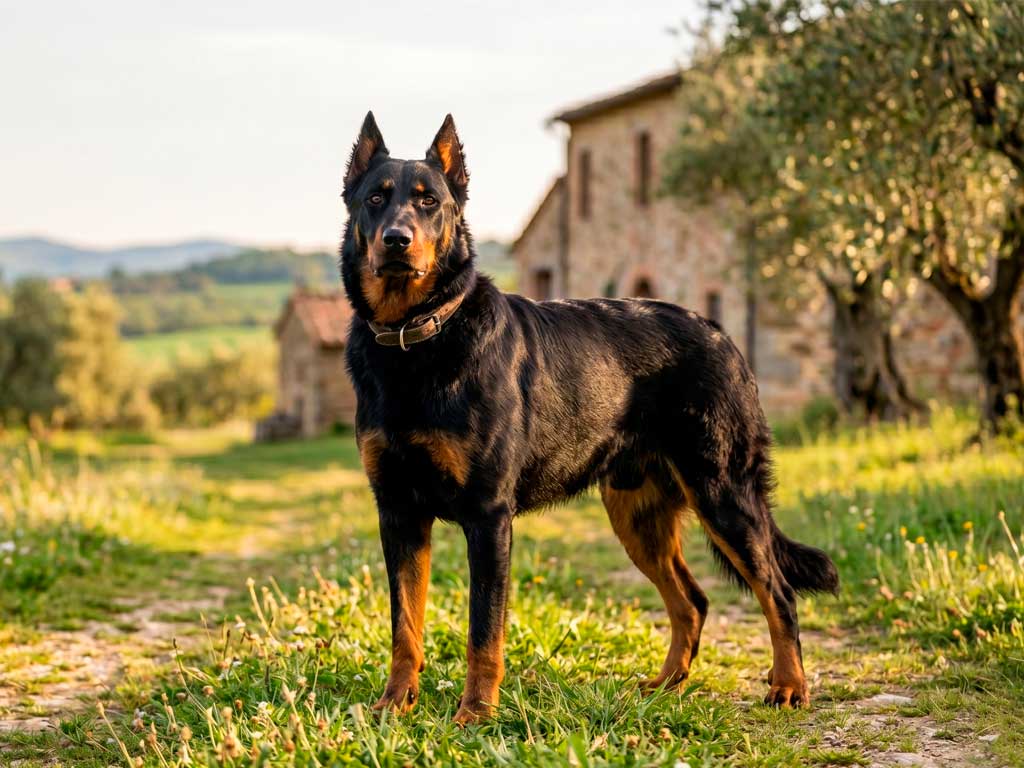
The Beauceron is a large, muscular, and imposing dog that commands attention the moment it walks into a room.
Key measurements:
- Weight: 66–85 lbs (30–38.5 kg)
- Height: 25.5–27.5 inches (65–70 cm) for males; females slightly shorter at around 26.5 inches (68 cm)
- Lifespan: 10–12 years
The coat is short and thick, approximately 1.5 inches (3–4 cm) in length, coarse to the touch, and lies flat against the body. It’s slightly longer on the back of the thighs and underneath the tail — a spot where tangles can develop if neglected.
The breed comes in two recognized color patterns:
- Black and tan (Harlequin): A jet-black base coat with rich rust or tan markings on the legs, chest, eyebrows, and muzzle
- Tricolor (Grey Harlequin): A grey and black patchwork coat with the same tan markings
One of the most distinctive physical traits of the Beauceron is its double dewclaws on the hind legs. Unlike most other breeds, this breed carries two extra claws on each back foot — a unique feature that was selectively preserved because it improves traction on uneven terrain.
Temperament and Personality
The Beauceron is bold, confident, and deeply loyal to its family.
That said, this is not a breed for everyone. Here’s the honest picture:
The good: Beaucerons are affectionate with their human pack. They form incredibly deep bonds with their owners and thrive on human companionship. They’re also highly alert and naturally protective, making them outstanding watchdogs.
The challenging: This breed is strong-willed and tenacious. Without consistent leadership, a Beauceron will test boundaries — and win. Additionally, they tend to be naturally suspicious of strangers, which means early and thorough socialization is not optional; it’s essential.
Beaucerons can coexist with children and other pets, but they typically need supervision and proper introduction, especially with smaller animals. Their herding instinct is strong, so they may attempt to “herd” children or other pets by circling or nudging.
Bottom line: This is a dog that will become your most devoted companion — provided you give it the structure, exercise, and mental stimulation it needs to thrive.
Care Guide
Diet and Nutrition
The Beauceron is a large, high-energy working breed, and its diet should reflect that.
Large breeds have different nutritional requirements compared to smaller dogs. They need:
- Higher protein content to support lean muscle mass
- Controlled calcium and phosphorus levels during puppyhood to support healthy bone development
- Joint-supporting nutrients like glucosamine and omega-3 fatty acids, especially as they age
Feed your Beauceron a high-quality kibble formulated specifically for large or giant breeds. Most adults do well on two meals per day rather than one large feeding, which helps reduce the risk of bloat (gastric dilatation-volvulus) — a serious condition that affects deep-chested breeds.
Avoid exercising your dog immediately before or after meals. Furthermore, always provide access to fresh water, particularly after vigorous activity.
Exercise Requirements
This is a working dog through and through, and it needs to move — a lot.
Expect to commit to a minimum of 2 hours of physical activity per day. A casual stroll around the block won’t cut it. The Beauceron needs vigorous, purposeful exercise that engages both its body and its mind.
Excellent activities for this breed include:
- Hiking and trail running — the Beauceron excels on varied terrain
- Schutzhund and protection sports — taps into its natural working instincts
- Agility and flyball — fast-paced and mentally stimulating
- Obedience trials and nose work — channels intelligence constructively
- Fetch and frisbee — great for burning energy in a yard
Mental stimulation is just as important as physical exercise. A bored Beauceron can become destructive, anxious, or difficult to manage. Puzzle toys, training sessions, and interactive games go a long way toward keeping this breed content.
Grooming Needs
Despite its rugged appearance, the Beauceron is relatively low-maintenance in the grooming department.
The short, dense coat requires brushing two to three times per week to remove dead hair, distribute natural oils, and keep the coat looking its best. During seasonal shedding periods (typically spring and fall), you may need to brush more frequently.
Bathing should be done on an as-needed basis — approximately every 6–8 weeks unless the dog gets particularly dirty.
Pay special attention to these areas:
- Behind the thighs and under the tail: Longer fur here is prone to matting
- Double dewclaws: These extra hind claws must be checked and trimmed regularly, as they don’t wear down naturally like the other nails
- Ears: Check weekly for dirt, moisture, or signs of infection
- Teeth: Brush 2–3 times per week to maintain dental health
Training and Education
Training a Beauceron is both rewarding and demanding.
The good news: this breed is exceptionally intelligent and genuinely wants to work. Given the right direction, a Beauceron can master complex commands, tasks, and sports at an impressive level.
The reality check: intelligence without leadership creates problems. The Beauceron will test its owner to establish where it fits in the hierarchy. Without consistent, calm, and firm guidance from day one, this dog will fill the leadership vacuum itself — and that leads to behavioral challenges.
Key training principles for the Beauceron:
- Start early. Begin basic obedience training at 8–10 weeks. The sooner you establish clear expectations, the better.
- Socialize aggressively. Expose your puppy to a wide variety of people, dogs, environments, sounds, and situations. This reduces reactivity and stranger suspicion in adulthood.
- Use positive reinforcement. This breed responds best to reward-based methods — treats, praise, and play. Harsh corrections typically backfire, creating a stubborn or anxious dog.
- Be consistent. Every member of the household must apply the same rules. Mixed signals confuse the dog and undermine training progress.
- Challenge it mentally. Regular training sessions, sport participation, or working tasks keep this breed engaged and well-behaved.
The Beauceron is not recommended for first-time dog owners. However, experienced owners who invest in early training will be rewarded with one of the most capable and obedient companions in the dog world.
Health and Longevity
Overall, the Beauceron is considered a healthy and robust breed with a typical lifespan of 10 to 12 years.
As with all large breeds, there are specific health concerns to be aware of:
Hip dysplasia is the primary concern. This hereditary condition occurs when the hip joint doesn’t develop correctly, leading to arthritis and mobility problems over time. Responsible breeders screen their breeding dogs for hip health, and prospective owners should always request hip evaluation certificates.
Eye conditions are also monitored in breeding lines. Regular eye examinations help detect progressive retinal atrophy or other hereditary eye diseases before they significantly impact quality of life.
Bloat (GDV) is a life-threatening emergency that affects deep-chested breeds like the Beauceron. Symptoms include a distended abdomen, unproductive retching, and restlessness. If you observe these signs, get your dog to an emergency vet immediately.
Additional preventive care checklist:
- Annual vet check-ups starting from puppyhood
- Keep vaccinations and parasite prevention up to date
- Maintain a healthy weight — obesity accelerates joint problems in large breeds
- Monitor the dewclaws for overgrowth, splitting, or injury
Is This the Right Dog for You?
Let’s be direct: the Beauceron dog breed is spectacular, but it’s not for everyone.
You’re a great fit if you:
- Have prior experience owning and training large or working breeds
- Lead an active lifestyle and can commit to 2+ hours of daily exercise
- Have space — a house with a secure yard is ideal
- Enjoy dog sports, training, or working activities
- Want a deeply loyal, protective companion
You may want to reconsider if you:
- Are a first-time dog owner with no prior experience with strong-willed breeds
- Work long hours and can’t provide sufficient companionship or exercise
- Live in a small apartment with no outdoor access
- Prefer a low-maintenance or very easy-going dog
- Have very young children and aren’t prepared for careful supervision
With the right owner, the Beauceron is an extraordinary dog — loyal, intelligent, athletic, and deeply bonded to its family. It’s the kind of dog that will change how you think about what a canine companion can be.
FAQs
Is the Beauceron a good family dog?
Yes, the Beauceron can be an excellent family dog — but with important caveats. This breed is deeply loyal and protective of its family, including children. However, its size, strength, and herding instincts mean that interactions with young children should always be supervised. Early socialization and consistent training are essential for a well-adjusted family Beauceron.
2. How much exercise does a Beauceron need every day?
The Beauceron requires a minimum of two hours of vigorous exercise daily. As a working breed, it needs far more than casual walks. Activities like hiking, running, agility training, flyball, or dog sports are ideal. Without sufficient physical and mental stimulation, this breed is prone to boredom-related behavioral problems.
3. Are Beaucerons aggressive?
The Beauceron is not inherently aggressive, but it is naturally reserved and suspicious of strangers. Without early and thorough socialization, this wariness can develop into reactive or defensive behavior. Proper training, socialization from puppyhood, and consistent leadership from an experienced owner are the keys to a well-balanced, non-aggressive Beauceron.
4. Do Beaucerons shed a lot?
The Beauceron sheds moderately year-round, with heavier shedding during seasonal coat blows in spring and fall. Regular brushing two to three times per week keeps shedding manageable. This breed is not hypoallergenic, so it’s not suitable for people with dog allergies.
5. What’s the difference between a Beauceron and a Doberman?
At first glance, the black-and-tan coloring of the Beauceron can make it look similar to a Doberman Pinscher. However, the two breeds are quite different. The Beauceron is a French herding dog with a denser, rougher coat, a heavier build, and double rear dewclaws. The Doberman is a German breed developed primarily for personal protection. Temperamentally, both are intelligent and loyal, but the Beauceron tends to have a stronger herding instinct, while the Doberman leans more toward guarding and protection work.
Now you know what makes the Beauceron one of France’s most remarkable working dogs.
Our recommendation: if you’re an active, experienced owner ready for a true partnership with a dog, start by connecting with a reputable Beauceron breeder or rescue organization. Visit the American Beauceron Club or the Kennel Club’s Breed Register for verified contacts.