Is Pet Insurance Worth It? A Real Answer, Not a Sales Pitch
Ever wonder if you’re about to pay for a policy you’ll never actually use? It’s a fair question, and most pet insurance pages won’t give you an honest answer to it.
Is pet insurance worth it? For a lot of owners, yes. Some genuinely don’t need it, though, and honesty matters more here than a sales pitch would suggest.
The answer depends less on the insurance itself and more on your specific pet, your savings, and how you’d handle a bill in the thousands.
Quick answer: Pet insurance tends to be worth it if you don’t have a dedicated emergency fund for vet costs, if your pet’s breed carries elevated health risks, or if you’d struggle to say yes to a $3,000-plus surgery on the spot. It’s less clearly worth it if you’ve already got savings set aside specifically for vet emergencies and the discipline not to touch them.
The Real Math: Premiums vs. Emergency Costs
Here’s the calculation nobody walks you through. A typical accident and illness policy runs $35 to $75 a month for a dog, $20 to $50 for a cat.
Over a year, that’s roughly $400 to $900 for a dog, $240 to $600 for a cat. Multiply that across a typical 10 to 15 year lifespan and you’re looking at a real cumulative cost, not just a monthly line item.
Compare that to what a single serious incident costs without coverage. A torn ligament repair can run $3,000 to $5,000, and cancer treatment often exceeds $5,000 to $10,000 depending on the type.
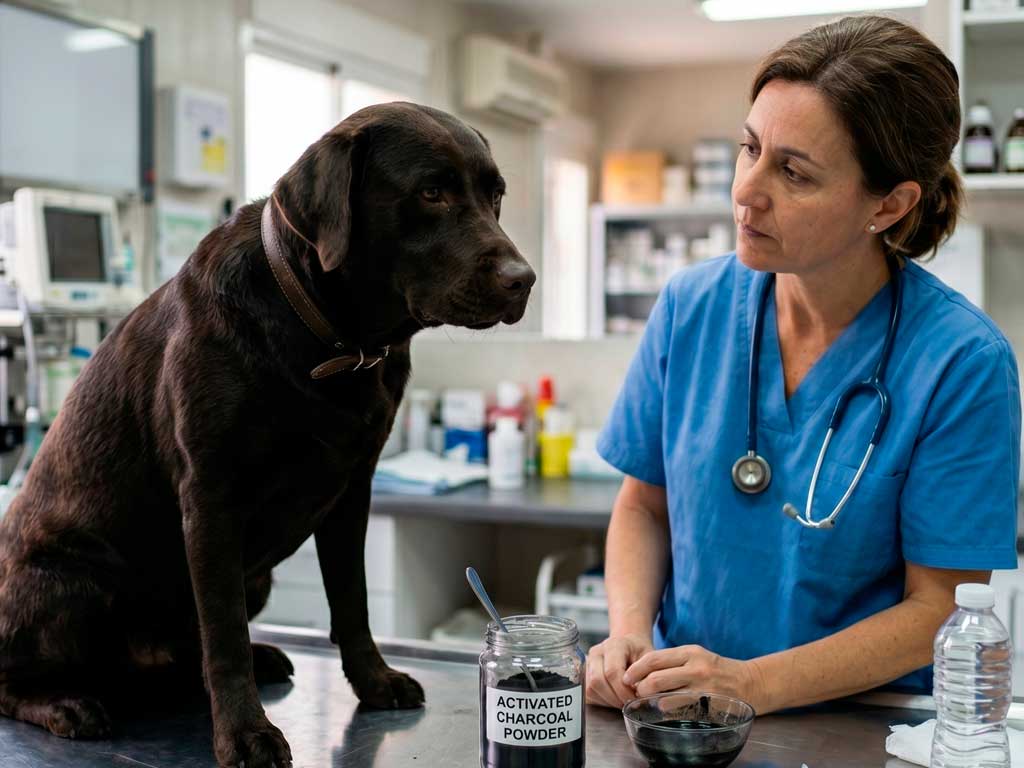
A foreign object swallowed and requiring surgery frequently lands in the $1,500 to $3,000 range. Any one of these events alone can outpace years of premiums in a single vet visit.
Dog insurance worth it comes down to this: if your dog has even one of these events over a typical lifetime, and most dogs do, the insurance usually pays for itself several times over. The math gets less favorable only if your pet stays remarkably healthy for its entire life, which nobody can predict in advance.
When Pet Insurance Is Worth It
A few situations make the case for coverage pretty clear-cut.
You don’t have a dedicated emergency fund. If a surprise $2,000 vet bill would mean a credit card, a loan, or a hard conversation about what you can afford, insurance turns that into a predictable monthly cost instead.
Your pet’s breed carries known risk. Breeds prone to hip dysplasia, breathing issues, or certain cancers are exactly the ones where an unexpected bill is more likely, not less.
You’re insuring young. A healthy puppy or kitten with a clean medical history is the easiest, cheapest pet to insure. Waiting means more time for something to show up and become uninsurable.
You have multiple pets. The math compounds. Two or three pets each carrying accident and illness risk makes self-insuring a much bigger gamble than it is for a single animal.
When It Might Not Be Worth It
Insurance isn’t automatically the right call for every owner, and it’s worth being honest about that.
If you’ve genuinely got several thousand dollars set aside specifically for vet emergencies, and you won’t touch that money for anything else, self-insuring can work. The premiums you’d otherwise pay stay in your own account instead.
An older pet already carrying multiple pre-existing conditions is another case where the math shifts. The biggest catch is pre-existing conditions, and a policy that excludes most of what your pet is actually likely to need treatment for isn’t providing much real protection, even if the premium looks reasonable.

FROM LEMONADE
Pet insurance with super fast everything
Sign up in seconds. Get paid in minutes. Award-winning service.
Carefully crafted in collaboration with our vet team and lots of excited pet parents.
Happy Pet Zone may earn a commission when you click through to Lemonade, at no extra cost to you.
What Actually Changes the Answer
Two things move this decision more than almost anything else: your specific plan type, and what it actually costs for your pet.
The right plan type changes this answer substantially. An accident-only plan is cheap but skips the illnesses that generate the biggest bills.
Full accident and illness coverage costs more but protects against the scenarios that actually bankrupt people. The cheaper plan can end up being the worse deal if the thing that eventually happens to your pet falls outside what it covers.
Run the real numbers for your specific pet rather than relying on a national average, since breed, age, and location can shift your actual quote significantly in either direction.
A Simple Break-Even Way to Think About It
Here’s a rough way to frame the decision without overcomplicating it. Add up roughly what you’d pay in premiums over five years for your pet’s age and breed.
Then ask yourself honestly: is it more likely than not that your pet will need at least one procedure or treatment costing more than that five-year total? For most breeds with any known health risk, and for most dogs generally, the honest answer is usually yes.
For a genuinely low-risk breed with a strong health history and an owner who already has real savings set aside, the answer can reasonably go the other way. Neither answer is wrong. They’re just different bets on the same uncertain outcome.
What People Actually Say Online
Search “pet insurance worth it reddit” and you’ll find a fairly consistent split in the conversation. One camp describes a single claim, often a surgery or cancer diagnosis, that covered thousands of dollars and paid for years of premiums in one shot.
The other camp describes frustration with exclusions, waiting periods, or a pre-existing condition denial they didn’t see coming. Both experiences are real, and they usually trace back to the same root cause: whether the owner understood their policy’s exclusions before they needed to file a claim, not whether insurance itself is a scam or a guaranteed win.
The pattern holds pretty consistently across most public discussion of this topic. People who read their policy closely before enrolling tend to have a much better experience than people who didn’t.
The Self-Insurance Alternative
Setting aside your own emergency fund instead of paying premiums is a legitimate strategy, not just a rationalization for skipping coverage.
The math works if you’re disciplined. Say you’d pay $50 a month for a dog policy. Put that same $50 into a dedicated savings account instead, and after two years you’ve got $1,200 set aside, growing every month you don’t need it.
The risk is timing. A major illness in month three of year one leaves you with $150 saved and a $4,000 bill. Insurance smooths that timing risk out. Self-insuring only works if the emergency happens to land after you’ve built up enough of a cushion.
Decide With the Full Picture
There’s no universal answer here, and anyone who tells you otherwise is oversimplifying it. The honest version is that pet insurance is worth it for most owners, most of the time, but not for every single situation, and pretending otherwise doesn’t actually help anyone make a better decision.
Look at your own savings, your pet’s breed and age, and what a real emergency would actually cost you before deciding either way. That’s a far better foundation for a decision than a generic recommendation could ever be. For the rest of what goes into a policy, go back to our complete pet insurance guide.