Alaskan Malamute: The Complete Guide to This Arctic Breed
Choosing an Alaskan Malamute will completely transform your daily life into a thrilling northern adventure. Fortunately, our dedicated editorial team has spent decades managing large arctic working breeds to bring you verified pet care advice.
Specifically, this comprehensive guide reveals their intense shedding cycles, specialized exercise requirements, and vital socialization methods. Therefore, you should keep reading to discover if this majestic sled dog fits your family lifestyle perfectly.
History and Origin of the Alaskan Malamute
The magnificent history of the breed began thousands of years ago in the frozen coastal regions of North America. Indigenous Mahlemut tribes originally developed these powerful canines to haul heavy freight across treacherous fields of ice. Consequently, these resilient dogs routinely assisted human hunters by tracking large arctic predators like polar bears.
During the famous Klondike Gold Rush, incoming prospectors quickly recognized the incredible strength of these native sled dogs. As a result, outsiders eagerly purchased these animals to transport essential supplies through sub-zero winter blizzards. This intense demand unfortunately led to widespread crossbreeding with alternative working canines from foreign territories.
Fortunately, dedicated breed purists successfully salvaged the foundational bloodlines during the early decades of the twentieth century. The American Kennel Club officially recognized these magnificent northern workers shortly thereafter in the year 1935. Today, they proudly serve as the official state dog of Alaska while thriving as loving family companions worldwide.
Physical Characteristics
You will immediately notice the substantial bone structure and deep chest that defines this impressive working canine. Adult male individuals typically stand around 25 inches tall at the shoulder when fully mature. In contrast, female dogs are slightly smaller and measure approximately 23 inches in height.
Healthy adult males generally weigh around 85 pounds of solid, athletic muscle. Meanwhile, mature females usually maintain a slightly lighter weight framework of approximately 75 pounds. Their physical proportions enable immense endurance rather than rapid sprinting speed over short distances.
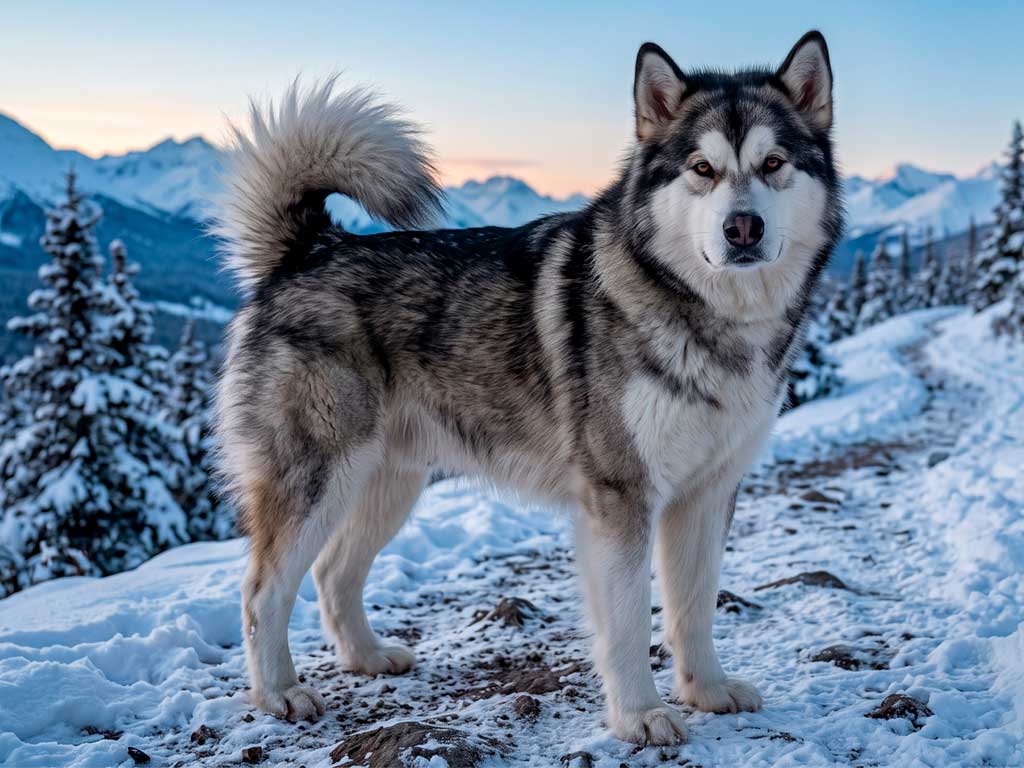
Most importantly, their weather-resistant double coat features a coarse outer layer combined with a dense, woolly undercoat. This abundant fur displays beautiful color variations ranging from light gray to striking shades of black and white. Their dark, almond-shaped eyes project intense intelligence, while their heavily furred tail curls gracefully over their back.
Temperament and Personality
The outgoing temperament of these dogs makes them exceptionally loving companions for active households. They possess an intensely social pack mentality that drives them to crave constant interaction with human family members. Consequently, they view every person in the home as an essential part of their immediate pack structure.
However, this extreme friendliness means they make terrible watchdogs for property protection. They will likely welcome unfamiliar house guests with a joyful howl rather than a protective warning growl. Furthermore, they possess an independent mindset that can occasionally manifest as a bit of stubborn behavior during daily routines.
Because of their ancient hunting heritage, they retain an incredibly strong prey drive today. This means they will instinctively chase smaller neighborhood animals like domestic cats, squirrels, or rabbits. Therefore, you must always supervise their interactions around other pets to ensure complete household safety.
Care Guide
Properly managing a giant arctic canine requires a serious and consistent daily commitment from every family member. You must prepare your schedule and your home environment to meet their demanding physical requirements effectively.
Diet and Nutrition
Providing high-quality nutrition is vital for supporting the heavy skeletal structure of your growing companion. You should select a premium commercial kibble formulated specifically for large, active canine breeds. Additionally, ensure that real animal protein remains the primary ingredient listed on the food packaging.
These food-motivated dogs can easily gain excess weight if you offer them too many training treats. Obesity puts dangerous strain on their joints and can accelerate underlying orthopedic complications over time. Because of this risk, you must measure their daily meals precisely using a digital scale.
Most veterinarians recommend dividing their total daily food allowance into two separate meals. This calculated schedule successfully prevents them from developing life-threatening digestive conditions like bloat. Always ensure that fresh, clean water is accessible in their bowls throughout the entire day.
Exercise Requirements
An active dog requires a massive amount of physical exertion every single day to stay healthy. You should provide at least two hours of structured exercise to keep them physically and mentally satisfied. For example, long hiking trips, backpacking adventures, and weight-pulling activities work beautifully to burn off steam.
Mental stimulation is equally critical to prevent the development of destructive boredom behaviors indoors. Bored individuals will quickly resort to digging massive holes in your lawn or chewing your furniture. Therefore, a spacious home with a large, securely fenced yard is highly recommended for this breed.
Grooming Needs
Maintaining the dense double coat of this breed demands a rigorous and regular grooming routine from owners. You should brush their thick fur at least three times a week to remove loose undercoat hair. Specifically, a high-quality metal undercoat rake and a slicker brush are the best tools for this task.
Furthermore, they will completely blow their heavy undercoat twice a year during major seasonal shifts. During these intense shedding periods, daily brushing becomes absolutely mandatory to control the floating fur. Fortunately, their coat naturally repels dirt and odors, meaning full baths are rarely required throughout the year.
Training and Education
Training requires an abundance of patience, creativity, and firm consistency. These intelligent canines grasp new commands rapidly but often possess an independent mindset that rejects boring repetition. For this reason, utilizing positive reinforcement techniques like high-value treats and enthusiastic praise yields the best results.
Harsh training methods will only cause them to become stubborn and completely uncooperative. You should keep your education sessions short, varied, and highly engaging to maintain their sharp focus. Early puppy socialization is absolutely mandatory to manage their intense adult strength safely around other dogs.
Expose your young puppy to diverse environments, unfamiliar sounds, and friendly people safely. This proactive approach ensures they grow into confident, well-adjusted adult companions who handle novelty calmly. Establishing clear household rules early prevents them from testing your personal boundaries as they grow.
Health and Longevity
Disclaimer: The following health information serves educational purposes only and requires professional veterinary verification.
The breed enjoys a robust constitution and a lifespan of 10 to 14 years. However, they can occasionally inherit certain genetic health conditions that require careful monitoring over time.
For instance, orthopedic issues like hip dysplasia frequently affect many large, fast-growing canine breeds. This condition causes painful joint inflammation, which eventually leads to debilitating arthritis and mobility problems. Therefore, you should only purchase puppies from responsible breeders who provide official joint clearance scores.
In addition, hereditary eye disorders such as cataracts can impact this specific arctic breed. Regular veterinary wellness examinations are vital for detecting these medical concerns during early stages. Maintaining an active lifestyle and a lean body weight will safeguard their skeletal system effectively.
Is This the Right Dog for You?
Deciding to bring this majestic arctic breed into your life requires careful personal consideration. If you lead a highly active outdoor lifestyle, this energetic companion will match your pace perfectly. Active families who enjoy hiking and cold weather will appreciate their enthusiastic partnership in the field.
However, apartment dwellers or busy professionals who work long hours away should consider a different breed. They need consistent human companionship and plenty of regular daily enrichment to remain completely happy. Furthermore, you must feel fully prepared to manage their intense shedding and strong digging instincts responsibly.
Start with establishing a consistent daily exercise routine because structured care has the biggest impact on behavior. Providing them with ample attention ensures you receive absolute devotion and unmatched companionship for many years. You can discover additional step-by-step care resources directly on happypetzone.com to prepare your home today.
Frequently Asked Questions (FAQ)
Do Alaskan Malamutes bark a lot?
No, they rarely bark like traditional guard dogs. Instead, they prefer to express themselves through melodic howls or characteristic woo-woo vocalizations when communicating with their pack.
Are they good with young children?
These gentle giants are incredibly patient and affectionate with members of their own human family. However, their massive size means they can accidentally knock down small toddlers during enthusiastic play sessions.
How much do they shed?
They shed a moderate amount of hair consistently throughout the entire course of the year. Additionally, they completely blow their heavy undercoat twice annually, creating massive clouds of loose fur.
Can they live in hot climates?
Their thick double coats make them extremely sensitive to excessive heat and humidity. Therefore, you must provide cool air-conditioned indoor spaces and fresh water during warm summer months.
Are they easy to train?
Their high canine intelligence allows them to grasp new commands with remarkable speed. However, their independent heritage means they can easily display a stubborn streak during obedience sessions.