Belgian Laekenois: The Complete Guide to This Rare Breed
Thinking about bringing home a Belgian Laekenois? Here’s the thing this is one of the rarest working breeds in the country, and most owners have no idea what they’re signing up for until week two.
This guide covers everything real: the wiry coat, the exercise demands, the health risks, and yes, what it actually costs to buy one.
Quick Facts: Belgian Laekenois
| Trait | Detail |
|---|---|
| Size | Medium-large (55–65 lbs males, 45–55 lbs females) |
| Exercise needs | 2+ hours daily |
| Coat | Rough, wiry, weather-resistant |
| Shedding | Light to moderate |
| Lifespan | 10–14 years |
| Good for beginners? | No |
| Best living situation | House with a large, secure yard |
Keep this table in mind as you read. Every section below expands on one of these lines.
How Do You Pronounce “Laekenois”?
Most people stumble on this one, and that’s fine. It’s pronounced “LAK-in-wah,” named after the Royal Castle of Laeken in Belgium. Get comfortable saying it out loud before you call a breeder trust it, on this one, it saves an awkward first phone call.
History and Origin
The Belgian Laekenois is the rarest of Belgium’s four native shepherd breeds, sharing ancestry with the Malinois, Tervuren, and Groenendael. Shepherds in the late 1800s used the wiry-coated dogs to herd sheep and guard linen bleacheries out in the open fields, where the rough coat held up against brambles and bad weather far better than a smooth one.
In 1891, Professor Adolphe Reul of the Belgian veterinary school examined 117 dogs and formally classified the four coat varieties by region. Queen Marie Henriette favored this particular line and helped popularize it near the Château of Laeken, which is where the name comes from.
Both World Wars devastated the breed’s numbers. Beyond herding, Laekenois dogs also served as messenger and guard dogs for the military, a working role that carries through today in some European police and service programs. A handful of dedicated breeders rebuilt the bloodline from what remained, and it’s stayed a genuinely rare sight in households ever since.
Physical Characteristics
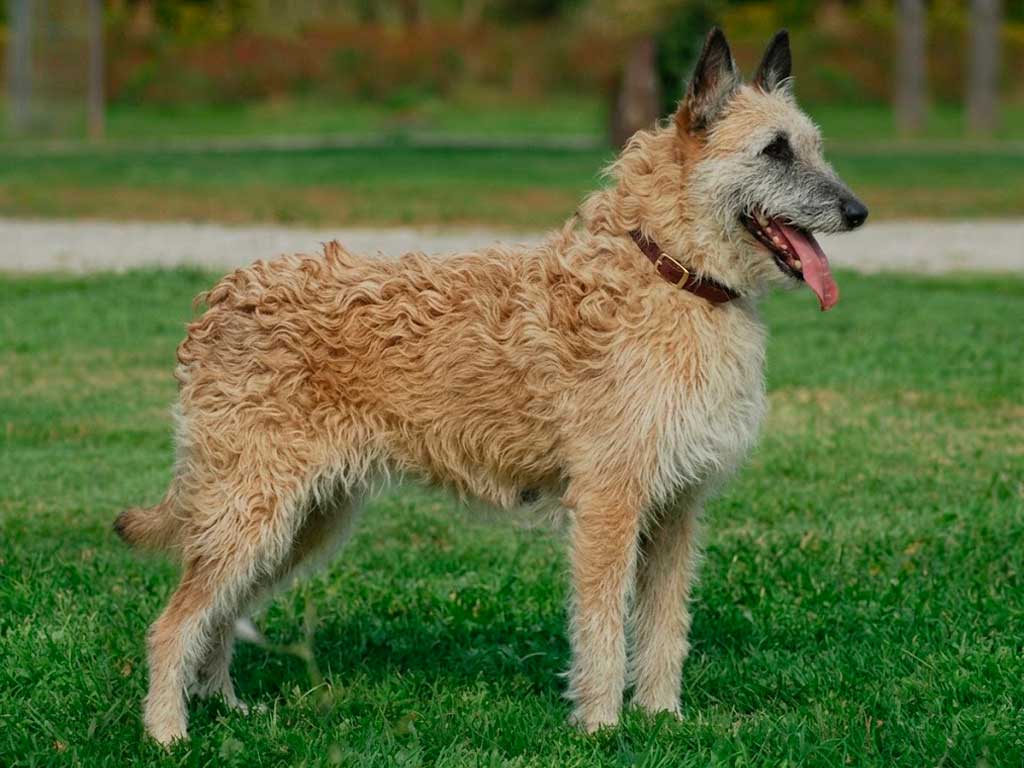
You’ll recognize this dog immediately by its tousled, no-nonsense look. Males stand 24–26 inches at the shoulder and weigh 55–65 pounds. Females run a bit smaller, at 22–24 inches and 45–55 pounds.
Their coat is the real signature: rough, dry, and distinctly wiry, in a fawn color with darker shading on the muzzle and tail. Dark almond eyes give them an alert, watchful expression, and the small triangular ears sit high and forward when something catches their attention.
Temperament and Personality
Loyalty runs deep in this breed, sometimes to the point of reserve with strangers. Early socialization matters here skip it, and that natural wariness can turn into fearfulness fast.
These dogs want a job. Agility, tracking, and obedience work all suit them well, and a bored Laekenois is a destructive one. High energy and a need for purpose define this breed more than almost anything else on this list. Give them structure, and they thrive. Leave them idle, and you’ll find out what “destructive” really means.
Belgian Laekenois vs. Its Sister Breeds
People confuse the four Belgian shepherds constantly, so here’s the short version. All four share the same build and temperament — the difference is entirely coat.
| Breed | Coat | Best known for |
|---|---|---|
| Laekenois | Rough, wiry, fawn | Rarest of the four; weather-resistant working coat |
| Malinois | Short, dense, fawn/mahogany | Police and military work worldwide |
| Tervuren | Long, fawn with black overlay | Show ring and herding trials |
| Groenendael | Long, solid black | Classic elegance, intense drive |
If you’ve fallen for the Laekenois but want to compare notes before deciding, our Belgian Malinois and Belgian Tervuren guides break down those two in the same depth. There’s also a full Groenendael guide if the all-black variety caught your eye instead.
Care Guide
Properly caring for a working-line dog like this takes a real daily time investment. Budget for their nutritional, physical, and grooming needs before you commit.
Diet and Nutrition
Feed a high-quality kibble built for active, medium-sized breeds, with real meat as the first ingredient. Watch their calorie intake closely joint stress from extra weight is a real problem in this athletic build.
Because they’re deep-chested, gastric torsion is a genuine risk. Split meals into two smaller portions a day, and skip hard exercise for an hour after eating.
Exercise Requirements
Plan on two hours of vigorous activity daily, minimum. Long walks help, but this breed also needs room to run. A securely fenced yard isn’t a nice-to-have here it’s close to a requirement.
Mental work matters just as much. Food puzzles and scent work give their brain something to chew on besides your furniture.
Grooming Needs
Brush the wiry coat weekly with a slicker brush. Hand-strip the dead coat about twice a year rather than over-bathing it frequent washing softens the texture and kills the weather resistance that makes this coat what it is.
Check ears weekly, brush teeth regularly, and trim nails monthly. None of this is complicated. It just needs to happen on schedule.
Training and Education
Positive reinforcement works beautifully here. Harsh corrections will only make this sensitive breed defensive, so skip them entirely.
Start basic commands early, and expect some ankle-nipping it’s the herding instinct talking, not bad behavior. Redirect it toward a toy instead of punishing it. Socialization needs to run through their entire first year, not just puppyhood, since strangers remain a soft spot for this breed longer than for most.
Health and Longevity
This information is for educational purposes only. Always check in with your own vet for anything specific to your dog.
Expect a lifespan of 10 to 14 years for a generally hardy breed. Hip and elbow dysplasia show up here like they do in most shepherd lines, so ask breeders for orthopedic screening results before you commit.
Progressive retinal atrophy is another known risk, along with epilepsy and hypothyroidism in some lines. None of these are guaranteed they’re just conditions worth screening for. Keep your dog lean, stay current on vaccinations, and catch problems early with regular checkups.
Is an Apartment Ever an Option?
Rarely, and only under specific conditions. A Laekenois can technically manage apartment life if you commit to serious daily exercise and mental stimulation on top of it. Realistically though, a house with a large yard suits this breed far better, and most owners who try the apartment route end up regretting it within a year.
Belgian Laekenois Pros and Cons
What works in this breed’s favor: a sharp mind that’s quick to learn and genuinely versatile at dog sports, loyalty that doesn’t tip into aggression when socialized properly, and a rugged, low-odor coat with real rustic charm.
What to think through before committing: this breed is genuinely hard to find from a reputable breeder, needs an experienced owner who won’t back down on structure, and stays reserved with strangers unless socialization starts early and stays consistent.
Cost: Puppy Price and What to Budget For
Because this breed is so rare in the US, prices vary more than they do for common breeds. Expect anywhere from $1,500 to $3,000 or more from a health-tested breeder, sometimes higher depending on lineage and working titles in the pedigree. Be wary of anything priced far below that range rare breeds attract more than their share of backyard breeders cutting corners on health testing.
Budget beyond the purchase price too. Between food, vet screenings, and the training this breed genuinely needs, first-year costs often run higher than the puppy price itself.
Is This the Right Dog for You?
If your days already involve hiking, dog sports, or long hours outdoors, this breed will match your pace. Novice owners, or anyone away from home most of the day, should look elsewhere this isn’t a dog that does well on autopilot.
Start with breeders who prioritize health clearances over quick sales. Put in the training time early, and you’ll get a level of loyalty back that’s hard to find in any other breed.