The Field Spaniel: Guide to This Elegant Hunting Breed
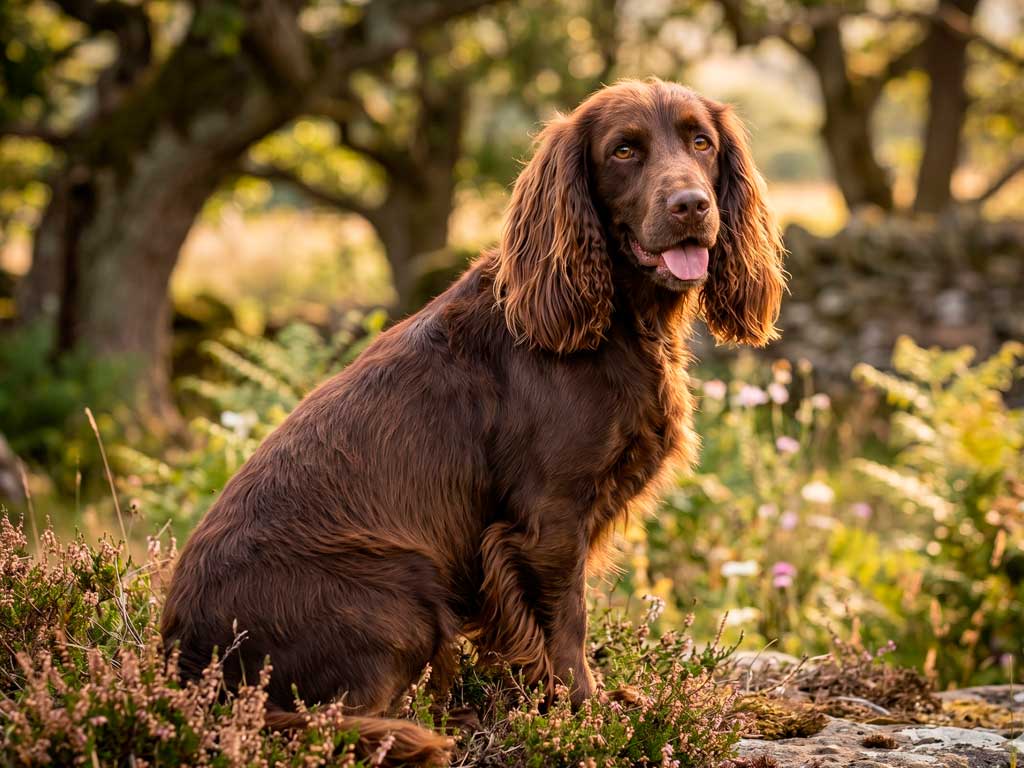
Field Spaniel is a breed caught between two worlds—and that’s precisely what makes it so special.
More active than a Cocker Spaniel but calmer than a Springer Spaniel, the Field Spaniel occupies a rarely-appreciated sweet spot in the spaniel family. It’s a dog that thrives in the field but doesn’t demand the neurotic activity levels of higher-strung spaniels. It bonds intensely with family but doesn’t have the separation anxiety of some breeds. It’s elegant enough to turn heads at a dog show but rugged enough for serious hunting work.
Yet the Field Spaniel remains a vulnerable, uncommon breed—far less popular than its spaniel cousins despite often being better suited for actual family life than the flashier English Cockers or Springers everyone else owns.
In this guide, we’ll cover everything you need to know about the Field Spaniel: its history as a British rarity, its practical care requirements, the genuine advantages it offers over more popular spaniels, and whether this underrated breed deserves a place in your home.
History and Origin
The Field Spaniel has a fascinating origin story—one that explains why this breed almost disappeared and why it remains relatively unknown today.
About 150 years ago, British breeders attempted to create a larger, more refined spaniel by crossing Cocker Spaniels with Sussex Spaniels. The goal was a dog capable of serious field work but with the elegance and trainability valued in Victorian dog showing. Later refinement introduced bloodlines from Irish Water Spaniels and possibly even Basset Hounds—accounts vary depending on the source.
Here’s the critical part: the Field Spaniel never achieved the popularity of the Cocker or Springer. Throughout its history, it experienced several booms and busts. Breeders sometimes overemphasized certain traits (like length) to create showier specimens, and occasionally the breed fell so far out of favor that it nearly disappeared entirely.
Today, the Field Spaniel is considered a vulnerable native breed in the United Kingdom. Registration numbers are shockingly low—in recent years, fewer than 100 puppies have been registered annually in their country of origin. This scarcity, however, means something important: if you find a well-bred Field Spaniel, you’re getting a dog from a breeding pool that genuinely cares about temperament and health, not commercial popularity.
The breed remains nearly invisible in mainstream dog culture, which is a genuine loss for families seeking a truly well-balanced spaniel.
Physical Characteristics
The Field Spaniel is a dog of understated elegance—not dramatic, but distinctly refined.
Size and Build: Field Spaniels are medium-sized dogs, standing approximately 18 inches (46 cm) at the shoulder and weighing 18-25 kg (40-55 pounds). The breed is slightly longer than tall, built for endurance rather than explosive power. The overall impression is of an athlete built for distance work, not sprinting.
Coat and Coloring: The coat is perhaps the breed’s most distinctive feature: medium to long length, silky texture, and genuinely waterproof due to the double coat’s density. The breed naturally sheds and requires consistent grooming, particularly the feathering (longer hair) on the chest, underside, and rear legs.
Color standards allow black, liver (brown), or roan, with or without tan markings. Unlike some spaniels, Field Spaniels maintain a more uniform color—you won’t see the dramatic color patterning of some breeds.
Head and Expression: The head is long and elegant with a gentle, intelligent expression. The eyes are dark and alert, conveying the breed’s thoughtful nature. The ears are moderately long, positioned below eye level, and covered in feathering—a feature that requires regular attention to prevent matting and ear infections.
Overall Presence: What strikes people most is the breed’s balanced elegance. It’s not a dramatic dog. It doesn’t have the extreme structure of some modern spaniels. Instead, it represents a functional hunting dog that happens to be genuinely beautiful—beauty as a byproduct of utility, not the other way around.
Temperament and Personality
This is where the Field Spaniel’s underrated nature becomes obvious.
The Field Spaniel is a genuinely happy, connected dog that bonds deeply with its family. Unlike the hyperactive reputation that plagues other spaniels, Field Spaniels are calmer in the home—they’re content to relax and observe family activity rather than demand constant stimulation.
Family Orientation: The breed is fundamentally family-focused. It thrives when included in daily life and becomes genuinely distressed by isolation. Unlike some independent breeds, Field Spaniels want to be with you—not hovering anxiously, but present and engaged.
Intelligence and Trainability: Field Spaniels are intelligent and eager to please. They respond well to consistent, positive training and genuinely enjoy learning. Unlike some stubborn hunting breeds, the Field Spaniel doesn’t argue with reasonable requests. This makes them excellent for first-time dog owners willing to invest in proper training.
Field Drive vs. Family Temperament: Here’s the paradox that defines the breed: Field Spaniels are serious hunting dogs with intact prey drive, yet they’re significantly calmer than most spaniels in the home environment. This isn’t a contradiction—it’s genetics. They were specifically bred to hold focus and work steadily in the field without the nervous energy that plagues modern show-line spaniels.
Social Nature: Field Spaniels are naturally social with people. Early socialization ensures they remain confident and appropriately reserved with strangers—interested but not overly friendly to everyone they meet. The breed doesn’t have strong guarding instincts, making it unsuitable as a watchdog but excellent as a family companion.
With Other Dogs: Field Spaniels can live happily with other dogs when properly socialized. The breed’s moderate prey drive is more manageable than many spaniels, though individual variation exists. Early socialization is essential.
Care Guide
Caring for a Field Spaniel requires understanding this breed’s specific needs—particularly around exercise, grooming, and mental engagement.
Diet and Nutrition
The Field Spaniel is an active, medium-sized dog with straightforward nutritional requirements.
What to Feed:
- High-quality commercial kibble formulated for active medium-sized dogs
- Protein levels between 18-22% (adequate for activity level)
- Balanced fat content (10-12%) to support coat and sustained energy
- Foods formulated with joint-support ingredients like glucosamine and chondroitin
The breed isn’t prone to food sensitivities, though individual dogs vary. Quality kibble from reputable manufacturers works well for most Field Spaniels.
How Much: A typical adult Field Spaniel eats 1.5-2.5 cups of quality kibble daily, split into two meals. Activity level significantly impacts caloric needs—working or highly active dogs may require more. Monitor your dog’s body condition regularly; you should see ribs slightly without applying pressure.
Avoid overfeeding; obesity accelerates joint problems and other health issues in all breeds.
Feeding Schedule: Split meals into morning and evening feedings. This supports better digestion and prevents the meal-time hyperactivity that sometimes develops when dogs eat one large meal.
Exercise Requirements
This is where Field Spaniels reveal their true nature: they’re serious working dogs that need genuine activity, but not the neurotic over-exercise some spaniels demand.
The breed requires more than two hours of daily exercise—this is a real requirement, not a suggestion. However, the quality of exercise matters as much as the quantity. The ideal Field Spaniel gets a long morning walk or run, a serious mid-day activity session (retrieves, swimming, or fieldwork), and an evening walk.
Ideal Exercise Options:
- Long walks through varied terrain (30-60 minutes)
- Swimming (excellent for conditioning, low-impact on joints)
- Retrieves and fetch games in open spaces
- Hunting or hunting-simulation work
- Hiking with moderate terrain
- Dock diving or water-based activities
What NOT to Do:
- Don’t ignore their need for serious activity expecting them to be calm
- Don’t rely exclusively on leashed walks; spaniels need off-leash running
- Don’t overly restrict puppies with repetitive, high-impact jumping (they need gradual conditioning)
- Don’t confine them to apartments without serious daily exercise commitment
Field Spaniels left without adequate exercise develop behavioral problems—destructive behavior, obsessive-compulsive tendencies, and anxiety. This is a genuine working breed that requires genuine work.
Grooming Needs
The Field Spaniel’s beautiful coat requires substantial grooming commitment—this isn’t a low-maintenance breed.
Brushing Schedule: Brush multiple times weekly (ideally 3-4 times) using a slicker brush and metal comb. Pay special attention to the feathering on the chest, underside, and rear legs—these areas mat easily and require careful maintenance.
After Field Work: After every outing, thoroughly check and brush the coat to remove grass, burrs, twigs, and other debris. This prevents matting and allows you to spot any skin issues or parasites early.
Bathing: Bathe every 4-6 weeks using dog-specific shampoo. The double coat takes time to dry properly—use a high-velocity dryer or towel dry thoroughly. Damp coats become matted coats.
Ear Care (Critical): Clean ears 2-3 times weekly using a veterinary-approved solution. The breed’s drooping ears trap moisture and are prone to infection—particularly important since Field Spaniels love water.
- Check for redness, discharge, or foul odor
- Gently clean the ear canal using appropriate solution
- Dry completely after cleaning
- Consider keeping hair around the ear canal trimmed short
Nail Care: Trim nails every 4-6 weeks or as needed. Active dogs often wear them down naturally, but regular checks are essential.
Dental Health: Brush teeth several times weekly. Spaniels aren’t particularly prone to dental disease, but preventive care matters.
Training and Education
Training a Field Spaniel is genuinely one of the easiest aspects of ownership—this breed was literally designed to be trainable.
The Field Spaniel is intelligent, eager to please, and responds enthusiastically to positive reinforcement. Unlike stubborn hunting breeds, Field Spaniels want to work with you, not against you.
Training Fundamentals:
- Start Early: Begin training before 16 weeks. Puppies this age are sponges—critical socialization and foundation training happen now.
- Use Positive Reinforcement: Treats, praise, and toys work far better than corrections. The Field Spaniel is sensitive and shuts down under harsh handling.
- Keep Sessions Short: 5-10 minute training sessions are more effective than long, tedious sessions. End on a positive note always.
- Consistency is Absolute: Everyone in the household must enforce the same rules and commands. Inconsistency teaches the dog that obedience is negotiable.
- Provide Mental Stimulation: Training isn’t just commands—it’s also puzzle toys, scent work, and problem-solving activities that exercise the brain alongside the body.
Essential Commands to Prioritize:
- Sit (foundation behavior)
- Down (critical for calm behavior and safety)
- Come (essential for off-leash safety; requires serious commitment)
- Leave It (prevents eating dangerous items or game)
- Heel (critical for safe walking alongside handlers)
Professional Training: Most first-time Field Spaniel owners benefit from at least basic obedience classes. A positive-reinforcement trainer familiar with sporting dogs can accelerate progress significantly.
Advanced Work: The Field Spaniel excels at hunting, retriever trials, and fieldwork. If you’re interested in exploring these activities, look for mentors and training clubs specific to spaniel work in your region.
Health and Longevity
The Field Spaniel is a generally healthy breed with a lifespan of 10-12 years—solid longevity for a dog of medium size.
However, several health concerns warrant awareness before committing to the breed.
Hip and Elbow Dysplasia: Joint malformation is common in many dog breeds, including spaniels. Responsible breeders screen parents using OFA or PennHIP certifications. Hip dysplasia ranges from subclinical (no symptoms) to severely limiting arthritis.
Symptoms include:
- Difficulty rising from rest
- Reluctance to jump or climb stairs
- Limping after exercise
- Reduced activity level
Early detection through hip scoring before breeding is essential for responsible breeding practices.
Hereditary Eye Diseases: Several eye conditions have been documented in Field Spaniels, including progressive retinal atrophy (PRA) and cataracts. Responsible breeders screen for these conditions through veterinary ophthalmology certification.
Ear Infections: The breed’s drooping ears and love of water create perfect conditions for chronic ear infections. Meticulous ear cleaning is preventive maintenance, not optional grooming.
Patellar Luxation: This knee condition (kneecap dislocation) can develop in smaller spaniel individuals. It ranges from mild subluxation to surgical-grade dislocation.
General Health Screening: Before purchasing a puppy from a breeder:
- Request hip and elbow OFA or PennHIP certifications for both parents
- Ask about eye certifications (CERF or Canine Eye Registration Foundation)
- Request health guarantees in writing
- Ask about health history in the breeding line
Preventive Care:
- Annual veterinary check-ups throughout life
- Consistent ear maintenance
- Maintaining optimal weight
- Early intervention at first signs of joint problems
- Regular dental care
Is This the Right Dog for You?
The Field Spaniel is an excellent choice for the right owner—but it requires specific commitments.
The Field Spaniel Is Right For You If:
- You can commit to 2+ hours of daily exercise
- You enjoy outdoor activities and don’t mind muddy dogs
- You’re willing to groom multiple times weekly
- You want a genuinely trainable dog without the anxiety of more hyperactive spaniels
- You have a fenced yard or access to safe open spaces for off-leash running
- You want a family-focused dog that’s calm in the home but active outside
- You appreciate a rare breed with genuine history and purpose
- You’re interested in hunting, field trials, or retriever work
The Field Spaniel Is NOT Right For You If:
- You live in an apartment without consistent access to open space
- You can’t commit to 2+ hours of daily exercise
- You’re unwilling to groom multiple times weekly
- You want a low-maintenance coat
- You need a dog suitable for busy professionals who work long hours
- You have large numbers of cats or small animals (prey drive matters)
- You want maximum breed popularity and easy puppy access
- You’re seeking a dog that’s primarily a house companion
Frequently Asked Questions
Q: How does the Field Spaniel compare to the Cocker Spaniel?
A: Field Spaniels are larger (18-25 kg vs. 12-14 kg), calmer in the home, and less prone to separation anxiety. Cockers are higher-strung and more demanding. For actual family life, Field Spaniels are often better suited than their more popular cousins.
Q: Are Field Spaniels good for first-time dog owners?
A: Yes, absolutely. The breed’s intelligence, eagerness to please, and moderate temperament make it excellent for first-time owners willing to invest in training and exercise.
Q: Why are Field Spaniels so rare?
A: Historical popularity fluctuations, lack of commercial breeding interest, and competition from more popular spaniel breeds have kept numbers low. This actually protects breed health—breeding is driven by genuine passion, not profit.
Q: Can a Field Spaniel live in a small space?
A: Not really. While the dog itself isn’t huge, the exercise requirement demands consistent access to open space. Apartments without nearby parks or training facilities aren’t appropriate.
Q: Do Field Spaniels have high prey drive?
A: Yes, they’re legitimate hunting dogs. They have prey drive, but it’s more controlled and trainable than many spaniels. Small animals are risky; early socialization with cats can help but isn’t guaranteed.
Field Spaniel is one of the best-kept secrets in the dog world—a breed that’s often better suited for actual family life than far more popular spaniels. It’s a dog that thrives in the field but doesn’t demand neurotic activity levels indoors. It’s intelligent and trainable without the stubbornness of some hunting breeds.
If you’re willing to commit to serious daily exercise, consistent grooming, and training with a breed that genuinely wants to please you, the Field Spaniel offers companionship that punches far above its current popularity level.
Choose one, and you’re joining a small community of dog lovers who’ve discovered what mainstream dog owners are still missing.
Exploring the Spaniel Family?
The Field Spaniel is one of several spaniel breeds developed in Britain, each with distinct characteristics, energy levels, and suitability for different lifestyles. We’ve created comprehensive guides comparing:
- The English Cocker Spaniel (more popular but higher-strung than the Field Spaniel)
- The American Cocker Spaniel (different breeding philosophy and energy profile)
- The Argentine Dogo (contrasting guardian breed heritage)
- The Bordeaux Dogue (different size class and health profile)
- Other Hunting Breed Guides (coming soon)
Each spaniel has evolved differently based on breeding choices and regional preferences. Check back for deeper comparative analysis to help you identify which spaniel breed—or perhaps this underrated Field Spaniel—truly matches your lifestyle and expectations.
For another devoted spaniel cousin, the Welsh Springer Spaniel is nicknamed the “Velcro dog” for how closely it sticks to its family throughout the day.