Cockapoo Dog: Complete Breed Profile, Care Tips & Temperament
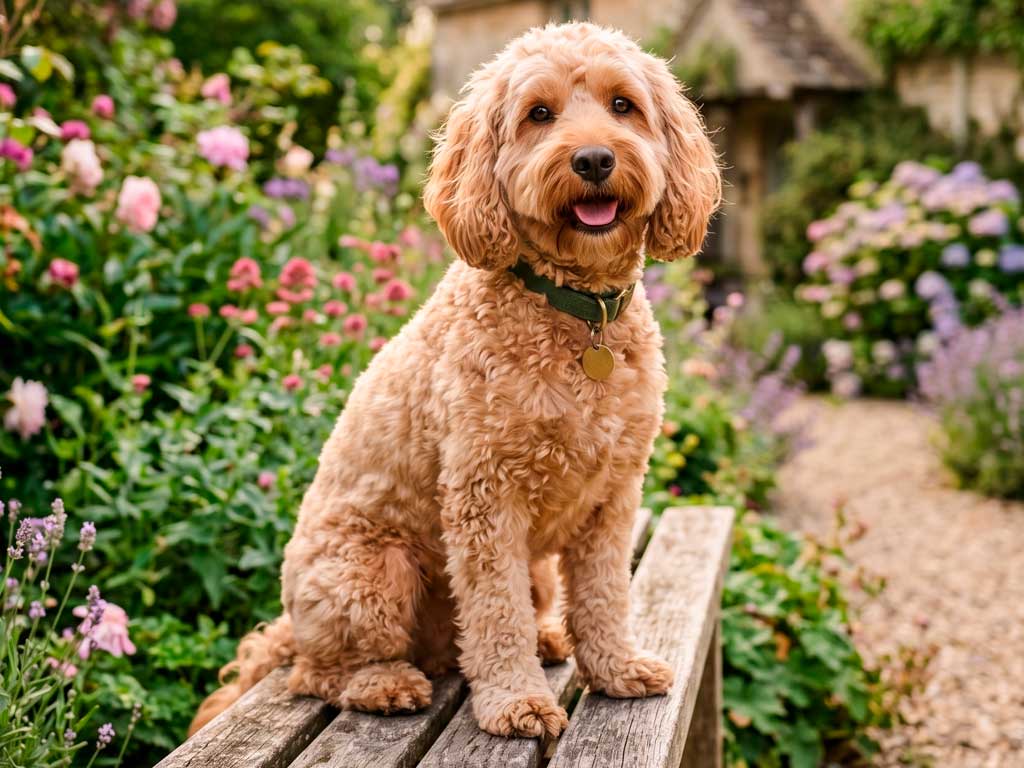
The Cockapoo is one of the most popular designer crossbreeds in the world — and for good reason. Sweet-natured, low-shedding, and remarkably adaptable, this Cocker Spaniel–Poodle mix has been winning over families since the 1960s.
But here’s what most articles won’t tell you: the Cockapoo is far more demanding than its adorable teddy-bear looks suggest. Its Poodle intelligence means it needs mental stimulation daily, and its Spaniel heart means it genuinely struggles when left alone for long periods.
In this article, you’ll get the full picture — Cockapoo history, coat types explained, temperament realities, grooming demands, health considerations, and a straight answer on whether this breed actually fits your lifestyle.
History and Origin of the Cockapoo
The Cockapoo holds a unique distinction in the world of designer dogs: it’s one of the oldest intentional crossbreeds on record.
The breed originated in the United States during the 1960s — a full decade before the Labradoodle, Goldendoodle, or any other “-doodle” mix became fashionable. The original goal was practical: create a companion dog with the Cocker Spaniel’s warm, affectionate character and the Poodle’s low-shedding, low-odour coat. The result was a small-to-medium dog that was friendly, intelligent, and — crucially — easier to live with for allergy sufferers.
To fully understand the Cockapoo, it helps to know both parent breeds.
The English Cocker Spaniel is one of Britain’s oldest land spaniels, originally used to flush woodcock from dense undergrowth. Before the 19th century, Cocker Spaniels and Springer Spaniels were classified together as “land spaniels,” separated only by size. Selective breeding eventually distinguished the two, with the Cocker formally recognised as a separate breed in 1893.
The Poodle, despite its French associations, actually originated in Germany as a water retrieval dog. The word “poodle” derives from the German Pudel, meaning to splash. Highly intelligent and work-driven, the standard Poodle was later refined into Miniature and Toy varieties to preserve its personality in a smaller frame — and it’s these smaller variants that are most commonly used in Cockapoo breeding.
Today, dedicated Cockapoo breed clubs exist across the UK and the US, championing responsible breeding standards. However, the breed is not yet recognised by the Kennel Club or the American Kennel Club as a formal pedigree — a distinction worth understanding if you’re interested in showing or formal registration.
Physical Characteristics
One of the most important things to understand about the Cockapoo is this: no two look exactly alike.
Because Cockapoos can result from a first-generation cross (F1), a backcross to one of the parent breeds, or a Cockapoo-to-Cockapoo pairing, physical appearance varies considerably even within the same litter.
Key physical stats:
- Height: 25–40 cm
- Weight: 3–8.5 kg
- Lifespan: 12–15 years
- Size classification: Small to medium
- Coat colors: Any combination of black, red, orange, brown, white, liver, blue roan, orange roan, particolor, or tricolor
The coat itself is where the real variation lies. Some Cockapoos inherit the Poodle’s tight, curly coat — soft, low-shedding, and requiring regular professional trimming. Others lean toward the Cocker Spaniel’s silkier, wavier coat — heavier-shedding and prone to tangles. Many fall somewhere in between.
Regardless of coat type, all Cockapoos share that characteristic rounded, soft-featured face that gives them their teddy-bear reputation. The eyes are expressive, the ears long and pendulous, and the overall build is compact and well-proportioned.
Temperament and Personality
Here’s the honest summary: the Cockapoo is one of the most socially oriented dogs you can own.
Bred from two people-focused working breeds, this dog lives to be part of the family. It bonds deeply with its household, thrives on human interaction, and generally gets along well with children, other dogs, and even cats when properly introduced.
What Cockapoo owners consistently report:
- Enthusiastic, joyful energy that’s infectious in a household setting
- Strong desire to be near family members at all times
- High trainability — picks up commands quickly and retains them well
- Sensitivity to household mood; this breed reads emotional cues acutely
- A tendency toward separation anxiety if left alone for extended periods
That last point deserves emphasis. The Cockapoo is sometimes marketed as an easy, low-maintenance dog — and in many ways it is. However, it is absolutely not a dog that tolerates long periods of solitude gracefully. Cockapoos left alone for hours regularly will often develop barking, destructive behavior, or anxiety. This is temperament, not a training failure.
The F1 (first-generation) Cockapoo typically shows the most consistent personality — inheriting a balanced blend of Spaniel warmth and Poodle intelligence. Later-generation crossings can tip more heavily toward one parent breed, making temperament less predictable.
Care
Diet and Nutrition
The Cockapoo’s nutritional needs depend significantly on its size, since the breed ranges from small (Toy Poodle cross) to medium (Miniature Poodle or working Cocker cross).
A high-quality commercial dog food appropriate for the dog’s size and life stage is the most reliable approach. Look for formulas with real meat as the first ingredient and a complete nutritional profile across all major food groups.
Feeding principles:
- Feed at least twice daily rather than one large meal
- Portion to body weight and activity level — Cockapoos can gain weight quickly if overfed
- Fresh water must be available at all times
- Check body condition monthly; ribs should be easy to feel but not visible
- Proper nutrition combined with regular dental care can support a lifespan reaching 15 years
Given the breed’s Spaniel and Poodle heritage, both of which carry some predisposition to joint issues, foods containing omega-3 fatty acids provide meaningful long-term benefit. Consult your vet before adding any supplements.
Exercise Requirements
The Cockapoo needs one to two hours of exercise daily — more than many first-time owners anticipate for a small-to-medium dog.
Both parent breeds are working dogs with real athletic drive. That heritage doesn’t disappear simply because the Cockapoo lives in a suburban home. An under-exercised Cockapoo quickly becomes a restless, destructive, or vocally demanding one.
What Cockapoos excel at:
- Brisk walks and off-lead runs in secured areas
- Fetch and retrieval games — the Spaniel instinct runs deep
- Dog sports: agility, flyball, and even scent detection
- Swimming — many Cockapoos inherit a natural love of water from both parent lines
Beyond physical exercise, mental stimulation is equally non-negotiable. Puzzle feeders, training sessions, and interactive play all count. A mentally tired Cockapoo is a calm, well-behaved companion. A bored one is something else entirely.
Grooming Needs
This is where many prospective Cockapoo owners get a genuine surprise.
Grooming requirements are high — often higher than expected — regardless of coat type.
For Poodle-type coats (curly, low-shedding):
- Professional grooming every 6–8 weeks to prevent matting
- Daily brushing at home to prevent knots forming between appointments
- Regular trimming around eyes, paws, and ears
For Spaniel-type coats (wavy or straight, more shedding):
- Brushing every other day minimum, daily during shedding periods
- Less frequent professional grooming, but tangles form faster in feathering areas
- Regular ear checks — essential for both coat types
Ear care is critical for all Cockapoos. Both parent breeds are prone to ear issues. The long, pendulous ears trap moisture and restrict airflow, creating ideal conditions for infection. Check ears weekly and clean gently as needed.
One genuine advantage: Cockapoos that inherit more Poodle coat produce significantly less dander than most breeds, making them a practical choice for households with mild dog allergies. However, no dog is truly hypoallergenic — manage expectations accordingly.
Training and Education
Training a Cockapoo is one of the most rewarding experiences in dog ownership — if you start early and stay consistent.
This breed inherits intelligence from both sides. The Poodle is consistently ranked among the world’s most trainable dogs. The Cocker Spaniel, while slightly more independent, was bred to work closely with handlers in the field. Together, they produce a dog that learns fast, retains commands reliably, and genuinely enjoys the training process.
What works:
- Reward-based training using food, toys, and praise — this breed responds brilliantly
- Short, varied sessions of 10–15 minutes starting from 8 weeks old
- Early socialisation with children, strangers, other dogs, and different environments
- Teaching the dog to accept grooming from puppyhood — a non-negotiable investment
What to avoid:
- Harsh corrections — the Cockapoo is sensitive, and punishment-based methods damage trust quickly
- Repetitive drills — boredom disengages this breed faster than most
- Skipping recall training — the Spaniel prey drive means off-lead safety requires solid groundwork
Here’s a useful framing: bad habits are learned as fast as good ones with a Cockapoo. Start training from the moment the puppy arrives home. Don’t wait for a formal class — establish rules, boundaries, and reward systems immediately.
Health and Longevity
The Cockapoo is generally considered a healthy crossbreed with a lifespan of 12 to 15 years, which is excellent for any dog.
As with all crossbreeds, health can be variable — individual puppies may lean more toward one parent’s genetic profile. The most relevant conditions to understand are those common in both parent lines.
Health conditions to be aware of:
- Progressive retinal atrophy (PRA) — an inherited eye condition found in both Cocker Spaniels and Poodles; DNA testing is available
- Hip dysplasia — more relevant in larger Cockapoo varieties; hip scoring of breeding dogs is advisable
- Ear infections — structural, not genetic, but a consistent management challenge due to ear anatomy
- Familial nephropathy — a kidney condition seen in English Cocker Spaniels that can appear in some Cockapoo lines
- Luxating patella — kneecap displacement, more common in smaller Toy or Miniature crosses
Always source puppies from breeders who health-test both parent dogs. Responsible Cockapoo breed club members carry out DNA and hip testing as standard. Breeders who can’t or won’t provide health certificates should be avoided entirely.
Is the Cockapoo the Right Dog for You?
The Cockapoo is frequently described as “practically the perfect dog” — and for the right owner, that’s not far off the mark.
This breed is an excellent match if you:
- Want a sociable, affectionate, people-focused companion
- Can commit to one to two hours of daily exercise and mental stimulation
- Are home regularly and won’t leave the dog alone for long stretches
- Are prepared for consistent, ongoing grooming — either at home or with a professional
- Have children or other pets and want a dog that integrates easily
This breed may not suit you if:
- You work long hours away from home and can’t arrange company or doggy daycare
- You want a low-maintenance coat that requires minimal attention
- You’re looking for a guard dog or a highly independent, self-sufficient companion
- You expect a small dog to automatically have small exercise requirements
Get the foundation right — a health-tested puppy, early training, consistent grooming, and daily exercise — and you’ll have one of the most joyful, versatile, and deeply loving companions available in the dog world today.
Frequently Asked Questions About the Cockapoo
1. What is the difference between F1, F1b, and F2 Cockapoos? These terms describe the generation of the cross. An F1 Cockapoo is a direct first-generation cross between a purebred Cocker Spaniel and a purebred Poodle — the most predictable in terms of temperament and coat type. An F1b is a backcross, where an F1 Cockapoo is bred back to a Poodle, producing a higher proportion of Poodle traits (often more curl and less shedding). An F2 is a Cockapoo-to-Cockapoo pairing, which produces more variation in both appearance and personality.
2. Are Cockapoos truly hypoallergenic? Not technically, but they’re among the most allergy-friendly dogs available. Cockapoos with Poodle-dominant coats shed very little and produce reduced dander, which is the primary allergen trigger for most people. However, all dogs produce some level of allergen through saliva and skin secretions. If allergies are a serious concern, spend time with adult Cockapoos before committing to a puppy.
3. How much do Cockapoos shed? It depends on which parent’s coat they inherit. Poodle-type coats shed minimally — almost nothing — but require regular professional grooming. Spaniel-type coats shed moderately and need frequent brushing to manage loose hair. There’s no way to guarantee coat type in a puppy, even from the same litter, though experienced breeders can often make educated assessments.
4. Do Cockapoos bark a lot? They’re vocal but not excessively so by nature. Cockapoos communicate freely and will alert you to visitors or unusual sounds, but they’re not chronic barkers. The most common trigger for excessive barking in this breed is boredom or separation anxiety — both of which are manageable with adequate exercise, stimulation, and training.
5. Can a Cockapoo be left alone during the day? For short periods, yes. For a full working day, it’s genuinely challenging for this breed. Cockapoos are deeply social dogs that thrive on human company. Prolonged daily solitude often leads to separation anxiety, destructive behavior, or persistent barking. If you work full-time, plan for a dog walker, doggy daycare, or a companion pet to keep the Cockapoo company.
Now you know exactly what living with a Cockapoo looks like — the joys and the genuine commitments.
The single most important first step? Find a breeder affiliated with a recognised Cockapoo breed club who health-tests both parent dogs. A well-bred, properly raised Cockapoo is an extraordinary companion. Start there, and everything else follows naturally.