Cairn Terrier Dog Breed: Temperament, Care, and What to Expect
The Cairn Terrier is one of the oldest and most spirited small dog breeds in the world — and yes, you already know one. Toto from The Wizard of Oz was a Cairn Terrier.
But beyond the Hollywood fame, this is a breed with centuries of real working history, a personality that’s far bigger than its compact body, and a set of care needs that every potential owner should understand before bringing one home.
In this article, you’ll get everything you need to know about the Cairn Terrier — from its Scottish Highland roots to its daily exercise requirements, health concerns, and whether it’s the right fit for your lifestyle.
History and Origin
The Cairn Terrier comes from the western islands of Scotland, with the Isle of Skye being its most celebrated birthplace. Written records of this breed date back to the early 16th century, making it one of the oldest terrier types still recognized today.
The name itself tells you everything about the job. Cairns are the piles of stones used across Scotland to mark boundaries, graves, and paths. Over time, those rocky mounds became ideal hiding spots for foxes, rats, and other vermin. Estate owners needed a dog small enough to squeeze between the stones, bold enough to face whatever was inside, and tenacious enough to finish the job.
The Cairn Terrier was that dog.
From the broader family of Scottish terrier-type dogs, four distinct breeds eventually emerged: the Cairn Terrier, the Scottish Terrier, the Skye Terrier, and the West Highland White Terrier. They share a common ancestry but developed their own distinct appearances and temperaments over generations of selective breeding.
The Cairn was officially recognized by The Kennel Club (UK) and classified in the Terrier Group — exactly where it belongs.
Physical Characteristics
Don’t let the small size fool you. The Cairn Terrier is built for work, not decoration.
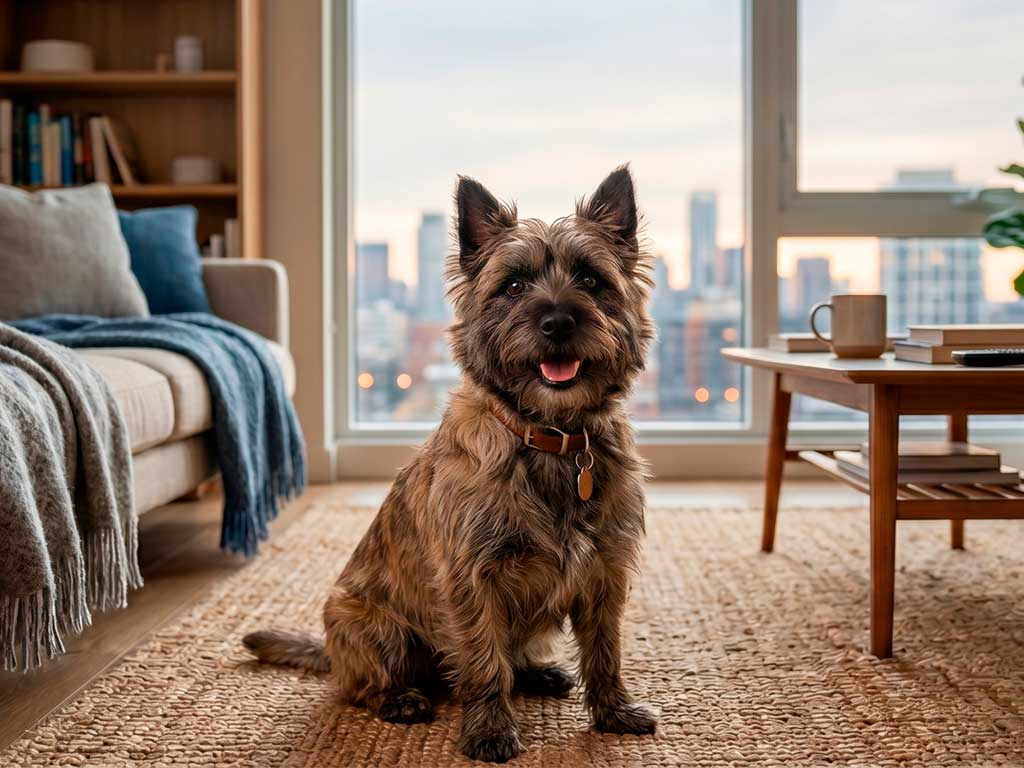
This is a compact, sturdy, short-legged dog with a foxy, alert expression and small pointed ears that stand erect. Their overall appearance conveys confidence and readiness — like a dog that’s always expecting the next adventure.
Key physical stats:
- Height: 28–31 cm at the shoulder
- Weight: 6–7.5 kg
- Coat: Double-layered — a hard, abundant outer coat over a short, soft undercoat
- Colors: Cream, wheaten, red, grey, or nearly black; brindle markings appear across all colors
- Drooling: Minimal
- Shedding: Moderate, with two seasonal sheds per year
One of the Cairn’s most practical features is its weather-resistant double coat — a direct inheritance from its work on the rugged Scottish coastline. That coat kept the dog dry and warm while hunting in cold, wet Highland conditions. Today, it still does a fine job in all kinds of weather.
Note that the coat color can actually change over the course of a Cairn’s lifetime. Puppies that start out dark sometimes lighten with age, and brindle markings may become more or less prominent over time.
Temperament and Personality
Here’s the best one-sentence description of a Cairn Terrier: a big dog personality packed into a small, fearless body.
These dogs are cheerful, alert, and intensely curious about the world around them. They’re expressive — you’ll know exactly how a Cairn is feeling at any given moment. They bark, they dig, they investigate every corner of your garden, and they do all of it with an irresistible sense of enthusiasm.
Key personality traits to know:
- Affectionate with family — deeply loyal and love being involved in everything you do
- Good with children — with proper training and socialization, they make wonderful family dogs
- Independent thinkers — bred to make decisions alone in the field, they haven’t lost that trait
- Stubborn — genuinely, impressively stubborn; this is a breed that negotiates
- Vocal — they bark readily and alert you to everything; good watchdogs, though not guard dogs
- Strong prey drive — centuries of hunting instinct don’t disappear; small animals will trigger the chase response
With other dogs, Cairns generally do well, although some males can be territorial. Cats and smaller pets are a different story — a Cairn that isn’t raised alongside them will likely see them as prey. Early socialization is the key, and it should start young.
Care
Diet and Nutrition
Small dogs have fast metabolisms. The Cairn Terrier burns through energy quickly, which means frequent, appropriately sized meals work better than one large daily serving.
Look for a high-quality small breed formula — these are specifically designed with the right nutrient ratios and smaller kibble sizes that suit smaller mouths and support better chewing and digestion. Avoid free-feeding, as Cairns can be prone to weight gain if food is always available.
Practical feeding tips:
- Puppies: 3–4 small meals per day; transition to 2 meals as adults
- Adults: 2 meals per day, sized appropriately to their activity level
- Watch the treats: Cairns are highly food-motivated, which is great for training — but easy to overdo
- Fresh water: Always available, especially after exercise
One thing to monitor is weight creep. A Cairn that’s even slightly overweight puts additional stress on its joints, which can accelerate orthopedic issues. Keep them lean.
Exercise Requirements
The Cairn Terrier needs at least one hour of exercise per day — and it should be genuinely active exercise, not just a slow stroll around the block.
These are energetic, purpose-bred working dogs. They need to run, sniff, explore, and burn off mental as well as physical energy. A bored Cairn will find its own entertainment, and you probably won’t enjoy the results.
Important exercise considerations:
- Off-leash play only in secure, fenced areas. The prey drive is strong and fast. A squirrel, a rabbit, or even a blowing leaf can trigger a chase that overrides all recall training in an instant.
- Digging is natural — if you have a garden, designate a specific area where digging is allowed. This channels the instinct productively rather than fighting it constantly.
- Mental stimulation matters — puzzle feeders, scent games, and basic training sessions all count as exercise for this intelligent breed.
Rain, cold, or wind won’t slow a Cairn down. Their double coat handles most weather conditions comfortably, so there’s no excuse to skip the daily walk.
Grooming Needs
The Cairn’s double coat is surprisingly low-maintenance — but it does require a specific approach.
Weekly brushing with a good-quality slicker brush or pin brush keeps the coat tangle-free and healthy. During the two annual shedding seasons, hand-stripping (gently pulling out the dead outer coat with fingers or a stripping tool) is the traditional method to remove loose fur and encourage healthy new coat growth. Clipping is an option but can soften the coat texture over time.
Full grooming routine:
- Brushing: Once per week minimum
- Hand-stripping: Twice a year during seasonal shedding
- Bathing: Every 4–6 weeks, or when needed
- Ears: Check weekly for wax build-up or signs of infection
- Nails: Trim every 3–4 weeks
- Teeth: Brush 2–3 times per week; small breeds are more prone to dental disease
The good news: Cairns don’t have the elaborate grooming demands of many other small breeds. A consistent weekly routine is genuinely sufficient for a well-kept, healthy coat.
Training and Education
Training a Cairn Terrier is entertaining, occasionally maddening, and ultimately very rewarding.
These dogs are intelligent and quick to learn — the problem is that they’re equally quick to decide whether they feel like cooperating. They were bred for independence. That’s an asset in a hunting dog and a challenge in a family pet. The approach that works is calm, consistent positive reinforcement from day one.
Key training principles:
Start early. The socialization window between 8–16 weeks is critical. Expose your Cairn puppy to different people, children, other dogs, cats, sounds, and environments during this period. A well-socialized Cairn grows into a confident, adaptable adult. A poorly socialized one becomes anxious, reactive, or difficult.
Keep sessions short and positive. Cairns get bored with repetition. Five to ten minutes of focused, reward-based training twice a day beats one long session that loses their attention. End every session on a success.
Never use harsh methods. Punishment-based training backfires badly with this breed. They’ll shut down, become avoidant, or simply decide you’re not worth listening to. Food rewards and enthusiastic praise work far better.
Recall training is non-negotiable. Given the prey drive, a reliable recall could literally save your dog’s life. Practice this consistently, always in a safe area, and never assume the training is “done.”
Health and Longevity
Here’s one of the Cairn Terrier’s most appealing qualities: it’s a long-lived breed.
With a life expectancy of 12 to 15 years, a healthy Cairn will be your companion for well over a decade. That said, like all breeds, they have specific health vulnerabilities to be aware of.
Common health conditions:
- Patellar luxation — temporary dislocation of the kneecap, common in small breeds; ranges from mild to requiring surgical correction
- Hip and elbow dysplasia — abnormal joint development that can cause mobility issues; health-tested parents significantly reduce risk
- Hereditary eye disorders — several ocular conditions have been identified in the breed; breeding dogs should undergo regular eye examinations
- Skin allergies — Cairns can be sensitive to certain foods and environmental allergens; watch for excessive scratching or recurrent skin issues
- Hypothyroidism — an underactive thyroid, which can cause weight gain, lethargy, and coat changes in middle-aged to older dogs
When sourcing a Cairn Terrier puppy, always ask the breeder for hip scores and current eye test certificates for both parents. Reputable breeders will have these without hesitation. Walk away from anyone who can’t provide health documentation.
Is This the Right Dog for You?
The Cairn Terrier fits beautifully into the right home — but it’s worth being honest about what that home looks like.
This dog is a great match if:
- You want an active, cheerful companion with a huge personality
- You have children who are old enough to interact respectfully with a small dog
- You can commit to consistent daily exercise and genuine mental stimulation
- You have a securely fenced outdoor space
- You’re ready to train patiently and consistently from puppyhood
- You enjoy a dog that’s a true character — opinionated, expressive, and entertaining
Think carefully if:
- You have cats or small pets and can’t commit to a thorough, long-term socialization process
- You want a calm, quiet dog — Cairns bark, dig, and explore constantly
- You don’t have time for daily active exercise
- You’d prefer a dog that’s consistently obedient without much training effort
- You’re very house-proud about your garden — digging is in the DNA
Done right, a Cairn Terrier is one of the most rewarding small dogs you’ll ever own. They’re fearless, funny, deeply loyal, and pack more personality per kilogram than almost any other breed. For an active owner who appreciates a dog with an independent spirit, life with a Cairn is genuinely joyful.
Frequently Asked Questions
1. Are Cairn Terriers good for first-time dog owners? They can be, but with an important caveat. Cairns are intelligent and adaptable, but their stubbornness and strong prey drive require consistent, patient training. First-time owners who are willing to invest time in training and socialization from day one can absolutely thrive with this breed. Those expecting a naturally compliant dog may find them challenging.
2. Do Cairn Terriers bark a lot? Yes — this is an honest answer. Cairns are alert, expressive dogs that bark readily. They’ll announce visitors, react to sounds, and occasionally just communicate their feelings. Training can reduce nuisance barking significantly, but it won’t eliminate it entirely. If you need a very quiet dog, this may not be the right breed.
3. Can Cairn Terriers live in apartments? Yes, provided their exercise needs are fully met. A Cairn in an apartment that gets one or more solid daily walks and regular active playtime can thrive. The challenge is the digging instinct and energy levels — an under-exercised Cairn in a small space will find destructive ways to entertain itself.
4. How long do Cairn Terriers live? The Cairn Terrier is one of the longer-lived dog breeds, with a typical lifespan of 12 to 15 years. Well-cared-for individuals from health-tested lines often reach the upper end of that range. Their longevity is one of the breed’s most celebrated qualities.
5. Do Cairn Terriers get along with cats? It depends entirely on socialization. A Cairn raised alongside cats from puppyhood typically learns to coexist peacefully. However, an adult Cairn introduced to a cat — or a puppy with strong prey drive — may instinctively give chase. Introductions should always be done carefully, gradually, and with full supervision until trust is firmly established.
Looking to compare other feisty small working breeds? Explore our in-depth articles on the Scottish Terrier and the West Highland White Terrier — close relatives of the Cairn with their own fascinating stories.
The Australian Silky Terrier is another small terrier-type worth a look, trading the rough Cairn coat for a long, glamorous one, but keeping that same feisty personality.
For a fellow small terrier with a genuinely famous past, the Scottish Terrier is the most popular Monopoly game piece and was once a beloved presidential pet.
For another small Scottish terrier with a striking coat, the West Highland White Terrier owes its bright white color to a genuinely tragic hunting accident generations ago.