Basenji Dog Breed: Owner’s Guide
If you’re searching for a dog unlike any other, the Basenji dog breed might be exactly what you need.
This ancient African hound doesn’t bark. It’s fastidiously clean. It’s cat-like in independence — and it’s one of the most fascinating breeds on the planet. In this guide, you’ll get everything: history, temperament, care needs, health risks, and an honest answer to the big question — is a Basenji right for you?
Let’s get into it.
History and Origin of the Basenji
The Basenji is almost certainly the oldest domesticated dog breed in existence.
Ancient Egyptian carvings found inside pyramids depict dogs with unmistakable Basenji features — erect ears, tightly curled tails, and a slender, athletic frame. These dogs were likely bred as companions for the pharaohs, a role that speaks to how valued they were thousands of years ago.
Over time, the breed migrated south into Central Africa, where tribes in the Congo region put them to work as hunting dogs. Their job was critical: eliminating the large, aggressive rats that threatened local livestock. A Basenji was not a luxury there — it was a survival tool.
Here’s something interesting: their name comes directly from that history. The Ituri Forest peoples called them “basenchi,” meaning “small thing of the forest.”
The Western world remained unaware of the breed until the Victorian era, when British explorers in Africa encountered what they described as “a dog that doesn’t bark.” That phrase alone secured the Basenji’s legend. The breed was officially recognized by the Kennel Club and the AKC in the 20th century, classified within the Hound Group.
Today, the Basenji remains a rare and prized breed — one that still carries the DNA of those ancient Egyptian palace dogs.
Physical Characteristics
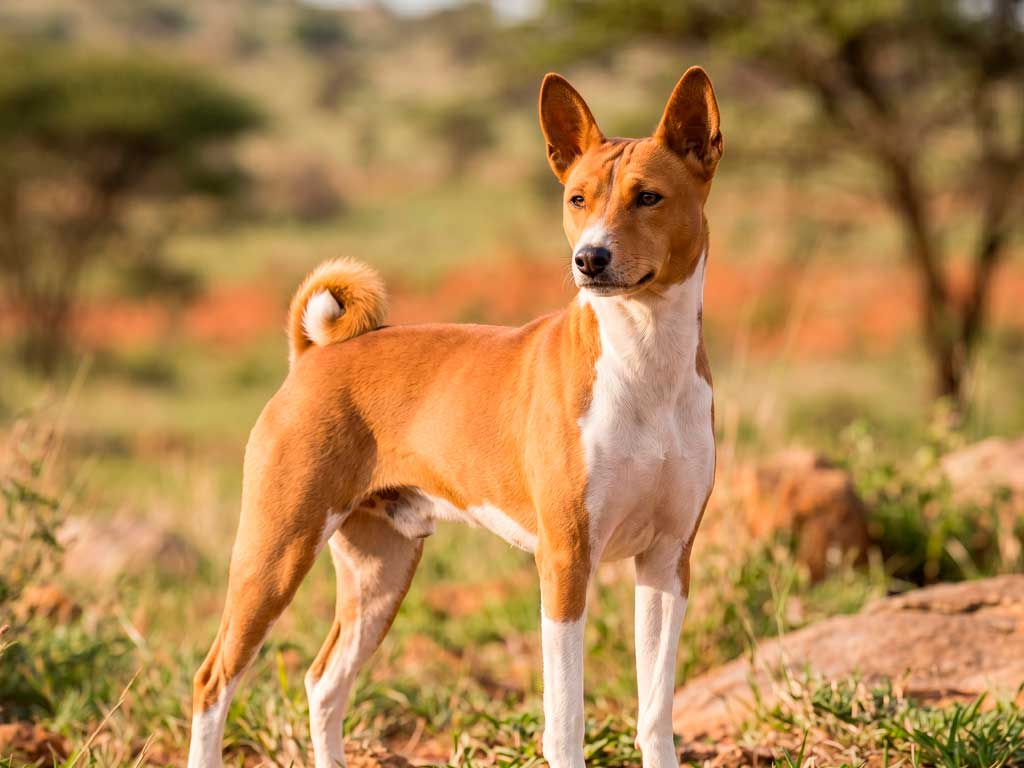
The Basenji is a medium-sized dog with a compact, athletic build that radiates both elegance and power.
Key measurements:
- Height: 17 inches (43 cm) at the shoulder for males; 16 inches (40 cm) for females
- Weight: 24 lbs (11 kg) for males; 21 lbs (9.5 kg) for females
The coat is short, fine, and brilliantly glossy — almost silk-like to the touch. Accepted color patterns include:
- Red and white
- Black and white
- Black, tan, and white (tricolor)
- Brindle and white
One of the Basenji’s most distinctive physical features is its deeply wrinkled forehead, which gives the dog a perpetually curious or quizzical expression. The tail curls tightly over the back — sometimes in a double curl — and the ears stand tall and forward-facing, like a radar dish always scanning for signals.
The overall impression is one of lightness and precision. There’s nothing bulky or lumbering about a Basenji. Every inch of this dog looks engineered for speed and agility.
Temperament and Personality
This is where the Basenji truly earns its reputation as “the dog that thinks it’s a cat.”
Basenjis are alert, independent, and deeply intelligent. They form strong bonds with their families but often choose when and how they want to show affection — on their own terms, not yours. Don’t be offended. That’s just who they are.
They tend to be reserved or aloof with strangers, which makes early socialization absolutely essential. A well-socialized Basenji can learn to accept new people graciously. Without that foundation, they can become unnecessarily wary.
The famous “no bark” trait is real — but don’t mistake silence for quietness. Basenjis communicate through a unique vocalization called a yodel or baroo, a haunting, almost human-sounding sound they produce when excited or emotional. Some owners find it charming. Others are caught completely off guard.
Regarding other animals: Basenjis can coexist peacefully with other dogs and pets, but it often requires careful training and early introduction. Their strong prey drive means small animals like rabbits or hamsters may trigger the hunter within.
With children, they can be wonderful — playful and energetic. However, because of their independent streak, supervision with younger kids is always wise.
Basenji Personality Ratings (Veterinary Assessment):
- Family dog: ★★★★★
- Energy level: ★★★★★
- Trainability: ★☆☆☆☆
- Tolerance for being alone: ★★★★☆
- Grooming needs: ★★☆☆☆
Care Guide
Diet and Nutrition
The Basenji has a fast metabolism typical of smaller, high-energy breeds. This means they burn through calories quickly — and their nutritional needs reflect that.
Feed your Basenji a high-quality food formulated for small-to-medium active breeds. Look for a formula where a named animal protein (chicken, beef, fish) is the first ingredient. Avoid foods packed with fillers like corn syrup or artificial preservatives.
Key feeding guidelines:
- Puppies (under 12 months): 3 meals per day to sustain their rapid growth
- Adults: 2 measured meals daily — morning and evening
- Seniors (7+ years): Adjust portions and consider a senior-specific formula
Avoid free-feeding. Basenjis are not prone to obesity, but maintaining a consistent feeding schedule supports digestive health and reinforces routine — both of which matter for training.
Always provide fresh water, and monitor their weight regularly. A healthy Basenji should have a visible waist when viewed from above and ribs that can be felt (but not prominently seen) when touched.
Exercise Requirements
Make no mistake: the Basenji was built to run.
Bred to hunt across demanding terrain in Central Africa, this breed needs a minimum of one hour of vigorous exercise per day. And if you can offer more, they’ll take it gratefully.
Here’s the critical safety point: Basenjis have absolutely no road awareness. Unlike some breeds that will hesitate at a curb, a Basenji will bolt into traffic without a second thought. Always exercise them in:
- Securely fenced areas
- On a leash in open environments
- Designated off-leash dog parks with double-gated entry
Mental stimulation matters as much as physical exercise. Bored Basenjis become destructive. Consider canine sports like lure coursing, agility, or scent work — activities that tap into their natural instincts and keep both body and mind engaged.
Grooming Needs
This is where the Basenji genuinely earns low-maintenance status.
Much like a cat, the Basenji self-grooms extensively. They’re fastidiously clean, virtually odorless, and shed minimally. A weekly wipe-down with a grooming glove or soft brush is usually all that’s needed to remove loose hair and keep the coat gleaming.
Routine care checklist:
- Coat: Brush once a week with a rubber grooming mitt
- Ears: Check weekly for wax buildup or signs of infection
- Nails: Trim every 3–4 weeks, or when you hear clicking on hard floors
- Teeth: Brush 2–3 times per week to prevent tartar buildup
That’s it. Compared to most breeds, Basenji grooming is refreshingly simple.
Training and Education
Here’s the honest truth about training a Basenji: it’s challenging, but not impossible.
These dogs score a 1 out of 5 on standard trainability scales — and that score is earned. Basenjis are not biddable dogs. They don’t have the eager-to-please mentality of a Labrador or Golden Retriever. Instead, they’re thinkers. They’ll evaluate whether following your instruction is worth their effort.
That doesn’t mean they can’t be trained. It means you need to be smarter, more consistent, and more creative than you might expect.
What works:
- Positive reinforcement only — Basenjis shut down completely under harsh correction
- Short, varied training sessions (5–10 minutes max) to prevent boredom
- High-value treats as motivation
- Patience, patience, and more patience
What doesn’t work:
- Repetitive drills — they’ll disengage fast
- Punishment-based methods — you’ll break trust irreparably
- Expecting immediate compliance — it may never come
Start socialization and basic obedience training as early as 8 weeks. Puppy classes are highly recommended for Basenjis not just for skill-building, but for the critical exposure to other dogs, people, and environments that shapes their character.
Crate training also works well with this breed — Basenjis are naturally den-oriented and often appreciate a safe, enclosed space of their own.
Health and Longevity
The Basenji is generally a healthy, long-lived breed with an average lifespan of 12 to 16 years.
However, like all purebred dogs, they carry a predisposition to certain hereditary conditions. Responsible breeders test for these before breeding.
Known health concerns in the Basenji:
- Fanconi Syndrome — A hereditary kidney disorder that impairs the kidneys’ ability to reabsorb nutrients. Genetic testing is available and strongly recommended.
- Pyruvate Kinase Deficiency / Hemolytic Anemia — A congenital disorder affecting red blood cells. Also testable via genetic screening.
- Progressive Retinal Atrophy (PRA) — A degenerative eye disease that can progress to blindness. Eye exams before breeding are essential.
- Patellar Luxation — A displacement of the kneecap, common in medium and small breeds.
- Urolithiasis — Formation of urinary tract stones, which can cause significant pain and require veterinary treatment.
Action steps for Basenji owners:
- Always buy from a breeder who conducts genetic health testing
- Schedule annual vet check-ups, including eye exams
- Watch for early signs of kidney issues (excessive thirst, frequent urination)
- Keep your Basenji at a healthy weight to reduce joint stress
The good news is that with proper care and regular veterinary oversight, most Basenjis live full, active, healthy lives well into their teens.
Is This the Right Dog for You?
The Basenji is a remarkable dog — but it’s not for everyone.
A Basenji is an excellent match if you:
- Live an active lifestyle and can commit to daily vigorous exercise
- Have experience with independent or primitive breeds
- Value a low-shedding, low-odor, low-maintenance coat
- Find the challenge of training a highly intelligent but stubborn dog rewarding
- Can provide a securely fenced yard or safe exercise environment
A Basenji may not be the right fit if you:
- Want a highly obedient, easy-to-train dog
- Have very young children who need constant supervision
- Live in an apartment without access to outdoor exercise space
- Have small pets like rabbits, guinea pigs, or birds
- Travel frequently and need a dog that adapts well to strangers
Bottom line: if you’re ready to meet this breed on its own terms — with respect for its independence, patience for its learning curve, and enthusiasm for its energy — the Basenji will reward you with a bond unlike anything you’ve experienced with a dog.
It’s not the easiest breed. But it might just be the most unforgettable.
FAQs
Do Basenjis really not bark? Technically, yes — Basenjis lack the typical vocal structure that produces a standard bark. However, they are far from silent. They communicate through a distinctive yodel-like sound called a “baroo,” as well as whines, growls, and high-pitched screams when excited or distressed. If you want a completely quiet dog, the Basenji is not it.
Are Basenjis good for first-time dog owners? Generally, no. Their independent nature, high exercise requirements, and resistance to standard training methods make them better suited to experienced dog owners who understand primitive breeds. First-time owners willing to invest in professional training and extensive research can succeed, but it requires real commitment.
How much exercise does a Basenji need per day? A minimum of one hour of vigorous exercise is required daily. This should include off-leash running in a safe, enclosed area. Mental stimulation through puzzle toys, scent work, or canine sports is equally important to prevent destructive behaviors caused by boredom.
Are Basenjis hypoallergenic? No — Basenjis are not officially hypoallergenic. However, their short coat sheds very minimally and they produce little dander, which means many allergy sufferers tolerate them better than other breeds. If you have dog allergies, spend time with a Basenji before committing to one.
What is Fanconi Syndrome and should I be worried? Fanconi Syndrome is a hereditary kidney disease that affects Basenjis more than any other breed. It impairs the kidneys’ ability to retain important nutrients, leading to wasting and progressive health decline if untreated. The good news: there is a reliable genetic test available. Always ask your breeder for proof of Fanconi DNA testing before purchasing a puppy.