Symptoms of Worms in Cats: The Complete Guide
Your cat is eating normally. Maybe even more than usual.
But they’re losing weight. Their coat looks dull. And something just feels… off.
Here’s the hard truth: your cat probably has worms.
Internal parasites affect an estimated 45% of cats at some point in their lives — including strictly indoor cats. And the scary part is that most owners don’t catch it until the infestation is severe.
In this guide, you’ll learn the exact symptoms to look for, how each type of worm affects your cat differently, and what to do the moment you suspect a problem.
The 7 Warning Signs Your Cat Has Worms
These are the symptoms that appear across ALL types of internal parasites. If your cat is showing 2 or more of these, schedule a vet visit this week.
1. Eating More But Losing Weight
This is the single most telling sign.
The worms are consuming the nutrients from your cat’s food before the body can absorb them. So your cat eats more, feels hungrier, yet continues to drop weight.
If you can feel your cat’s ribs and spine more easily than before, that’s a red flag.
2. Distended or Bloated Belly
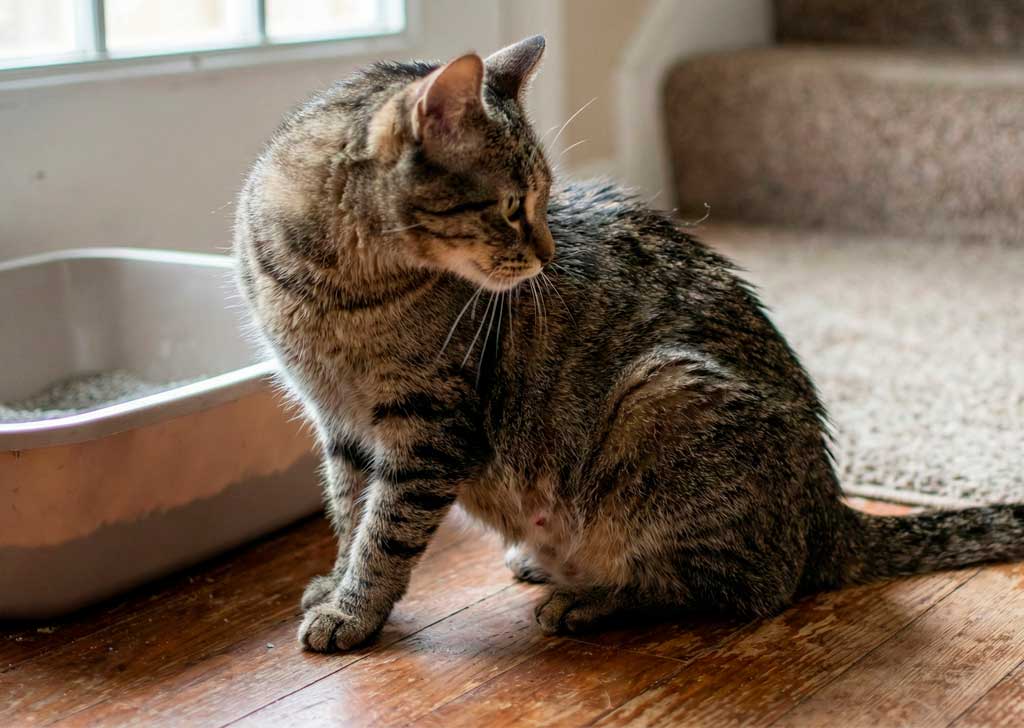
Look at your cat’s abdomen from the side.
A “potbelly” appearance — where the stomach looks rounded and swollen while the rest of the body looks thin — is a classic sign of heavy worm burden. This is especially common in kittens.
The bloating is caused by the physical mass of parasites in the intestines, combined with inflammation and fluid buildup.
3. Vomiting (Without Hairballs)
Cats vomit for lots of reasons. Hairballs are normal.
But here’s the key difference: if your cat is vomiting and there’s no fur in it, parasites should immediately be on your radar.
In severe infestations, you may even see live worms in the vomit — roundworms look like spaghetti. That’s a sign of very high worm burden and requires same-day veterinary attention.
4. Diarrhea or Unusual Stool
Check the litter box. Seriously.
Look for these three specific markers:
- Mucus coating on the stool (slimy, glistening appearance)
- Streaks of blood — even small threads of red matter
- Visible segments that look like grains of rice near the anus or in the stool (tapeworm segments)
Interestingly, some cats with worms experience constipation instead of diarrhea. If your cat is straining in the litter box, parasites can be the cause.
5. Pale or White Gums
This one is easy to check at home and tells you a lot.
Gently lift your cat’s lip and look at the gums. Healthy gums are a vibrant pink — like the inside of your own cheek.
Pale, white, or grayish gums indicate anemia. This happens when blood-feeding parasites like hookworms consume enough blood over time to deplete your cat’s red blood cell count. In kittens, this can become life-threatening quickly.
6. Dull, Brittle Coat and Excessive Shedding
A parasitized cat is essentially malnourished, even if they’re eating plenty.
The first place that nutritional deficiency shows up is the coat. Watch for:
- Fur that looks lackluster or “staring” (individual hairs stand up instead of lying flat)
- Excessive shedding beyond normal seasonal changes
- Dry, flaky skin underneath the fur
7. Scooting or Excessive Licking Around the Tail
If your cat drags their backside across the floor, most people assume it’s anal glands.
But here’s what many owners miss: tapeworm segments exiting the anus cause intense itching. The scooting is your cat trying to relieve that irritation.
You may also see your cat obsessively licking or biting near their tail base for the same reason.
The 5 Types of Worms in Cats (And Their Specific Symptoms)
Different parasites cause different problems. Here’s what you need to know about each one.
Roundworms (Toxocara cati)
The most common cat parasite. Almost every kitten is born with them or contracts them within the first few weeks of life.
How cats get them: From infected mother’s milk, from eating infected rodents, or from contact with contaminated soil.
Specific symptoms:
- Potbelly appearance (especially in kittens)
- Spaghetti-like worms visible in vomit or stool
- Failure to thrive in kittens despite adequate feeding
- Dull coat and gradual weight loss in adult cats
Important note: Roundworms are zoonotic — they can transfer to humans, especially children. Always wash hands after handling litter.
Tapeworms (Dipylidium caninum)
The one most owners actually see. Tapeworms shed segments that look exactly like grains of rice near your cat’s rear end.
How cats get them: Almost exclusively through swallowing an infected flea during grooming. This means a tapeworm infestation usually means your cat also has fleas.
Specific symptoms:
- Rice-grain segments on fur near the tail or in bedding
- Scooting and tail-base licking
- Mild weight loss (less dramatic than roundworms)
- Visible worm segments in fresh stool
The key insight here: Treating tapeworms without treating fleas is pointless. The cat will be reinfected within weeks.
Hookworms (Ancylostoma tubaeforme)
The most dangerous type — particularly for kittens and immunocompromised cats.
Hookworms attach to the intestinal wall and actively feed on blood. A heavy infestation can drain enough blood to cause life-threatening anemia.
How cats get them: Through skin contact with contaminated soil, ingestion of infected prey, or from infected mother’s milk.
Specific symptoms:
- Pale or white gums (primary indicator)
- Dark, tarry, or bloody stool
- Rapid weight loss and weakness
- Lethargy so severe the cat barely moves
- In kittens: sudden collapse
If your cat has pale gums AND lethargy, get to a vet immediately — don’t wait for a scheduled appointment.
Whipworms (Trichuris serrata)
Less common than the others, but still worth knowing.
Whipworms live in the large intestine and cecum. They’re relatively rare in cats (more common in dogs) but do occur.
Specific symptoms:
- Chronic, mucus-heavy diarrhea
- Intermittent bloody stool
- Weight loss over weeks or months
- General unthriftiness (the cat just never looks or feels quite right)
Lungworms (Aelurostrongylus abstrusus)
The sneaky one. Most owners never think of this because the symptoms don’t look like a typical worm infestation.
Lungworms live in the lung tissue, not the intestines. Cats get them from eating infected snails, slugs, or birds that have eaten infected slugs.
Specific symptoms:
- Chronic cough (often mistaken for asthma)
- Wheezing or labored breathing
- Exercise intolerance
- Occasional nasal discharge
If your cat has a persistent cough that doesn’t respond to asthma treatment, request a specific lungworm test from your vet.
How to Confirm Your Cat Has Worms
Symptoms tell you something is wrong. A vet test tells you exactly what it is.
The Fecal Float Test (Coprological Analysis)
This is the gold standard for diagnosing intestinal parasites.
Your vet will give you a small container. You collect a fresh stool sample at home and bring it in. Under a microscope, the lab identifies the specific type of parasite eggs present and their approximate count.
Pro tip: Collect the sample the morning of the appointment. Fresh samples are more accurate. If you can’t get to the vet same day, store it in the refrigerator (not freezer) for up to 24 hours.
What to Tell Your Vet
Come prepared with this information:
- When symptoms started
- Whether your cat goes outdoors or hunts
- Whether you’ve seen fleas recently
- Any changes in eating or drinking habits
- The cat’s approximate age and weight
This helps the vet choose the most targeted dewormer immediately, rather than prescribing a broad-spectrum treatment and waiting.
Treatment Options
Here’s the part most people want to skip to.
Prescription Dewormers
These are always the most effective option. Common active ingredients include:
- Pyrantel pamoate — for roundworms and hookworms
- Praziquantel — specifically for tapeworms
- Fenbendazole — broad-spectrum, effective against multiple types
- Selamectin (Revolution) — a topical “spot-on” that covers roundworms, hookworms, and also prevents fleas and heartworm
Why prescription over OTC? Dosage matters enormously in cats. Under-dosing doesn’t eliminate the infestation — it just reduces it temporarily. Over-dosing can cause neurological symptoms. A vet calculates the exact dose for your cat’s weight and age.
A Note on Natural Remedies
Many sites recommend pumpkin seeds, coconut oil, or diatomaceous earth.
Here’s the truth: there is zero peer-reviewed evidence that any of these eliminate a functioning parasitic infestation. They are not harmful in most cases, but they are not effective treatments.
If your cat has worms, use medication.
Treating Tapeworms: The Flea Problem
If your cat has tapeworms, you must also treat for fleas — in the same treatment window.
Without eliminating the flea source, the tapeworms will return within 3-6 weeks regardless of the dewormer used.
Prevention — Keep Worms Away for Good
| Action | Protects Against | Frequency |
|---|---|---|
| Regular deworming | All types | Every 3-6 months for indoor; every 1-3 months for outdoor cats |
| Monthly flea prevention | Tapeworms | Monthly, year-round |
| Keep indoors | Hookworms, lungworms, roundworms via prey | Ongoing |
| Clean litter box daily | Reduces egg load in environment | Daily |
| Don’t feed raw meat | Reduces Toxoplasma and roundworm risk | Ongoing |
| Annual fecal exam | Catches subclinical infections early | Annually |
Frequently Asked Questions
Can indoor cats get worms? Yes. Indoor cats can contract tapeworms from fleas (which can enter the home on clothing or other pets), roundworms from microscopic eggs tracked in on shoes, and occasionally from hunting household insects. No cat is completely zero-risk.
How quickly can I expect treatment to work? Most prescription dewormers start killing parasites within 24 hours. You may see dead worms or increased worm activity in the stool for 2-3 days after treatment — that’s the medication working. Full clearance typically takes 1-2 weeks, and a follow-up fecal test is recommended 3-4 weeks later to confirm.
Can my kids catch worms from our cat? Roundworms and hookworms are zoonotic and can infect humans, particularly children who play on the ground. Maintain good hygiene: wash hands after handling litter, keep the sandbox covered, and deworm your cat on schedule.
My cat is scooting — is it definitely worms? Scooting is most commonly caused by tapeworm segments exiting the anus, but it can also be from impacted anal glands. If you see rice-grain segments near your cat’s tail or in bedding, it’s tapeworms. If you don’t see those, have a vet check the anal glands.
Can a kitten die from worms? Yes. A heavy hookworm infestation can cause fatal anemia in kittens in a matter of days. Roundworm infestations can cause intestinal blockage. Any kitten showing lethargy, pale gums, or failure to gain weight needs same-day veterinary care.
What do cat worms actually look like? Roundworms: white or tan, spaghetti-like, 3-6 inches long. Tapeworm segments: flat, rice-grain-sized, cream colored, often still moving when fresh. Hookworms and whipworms are microscopic and not visible to the naked eye.
Now you know exactly what symptoms to watch for — and more importantly, you know which ones are urgent.
If your cat has pale gums, is vomiting live worms, or a kitten is suddenly lethargic, that’s a same-day emergency.
For everything else: collect a stool sample, call your vet, and get a fecal test run. Don’t guess at the type — let the lab confirm it so your vet can prescribe the right treatment on the first try.
Ready to go deeper? Read our guide on How to Prevent Fleas in Cats Year-Round — because as you now know, fleas and tapeworms are directly connected.