Komondor Dog Breed: The Corded Coat Guardian Comprehensive Care Guide
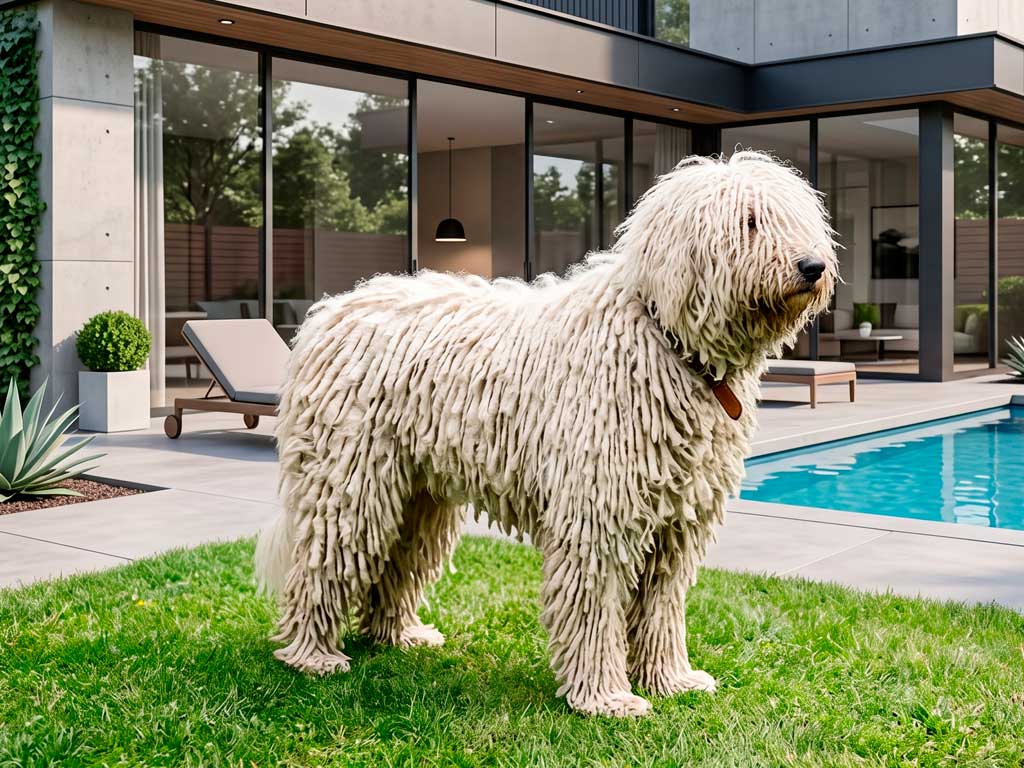
The Komondor is a large, powerful Hungarian dog with one of the most distinctive coats in the dog world: long white cords that hang to the ground. These aren’t styled for looks but rather form naturally from the outer and inner coats combining. Stop right here. This guide focuses heavily on coat care because new owners dramatically underestimate what owning a Komondor truly demands.
In this guide, I’ll cover the Komondor dog breed comprehensively, but especially the reality of their specialized grooming needs. These magnificent dogs require specific coat maintenance routines that many first-time owners abandon within months of bringing one home.
History and Origin of the Komondor
The Komondor dog breed is ancient, known in its native Hungary for thousands of years. It arrived in Hungary with nomadic Magyar tribes who used them as livestock guardians. The breed likely descends from the South Russian Ovcharka, another livestock protection dog from Russia’s Caucasus region.
The distinctive corded coat served practical purposes. The cords protected the dog from harsh Hungarian weather and from fierce predators including wolves. When you understand the coat’s working heritage, you begin appreciating why maintaining it requires such serious commitment.
During medieval times, Komondors protected flocks of sheep and cattle across Hungarian plains. Their large size, guarding instincts, and camouflage-like white coat made them ideal for this work. That protective heritage shaped their temperament permanently.
Physical Characteristics of the Komondor
The Komondor is large and heavily built. Males typically stand 31 inches tall and weigh 110 to 135 pounds. Females are slightly smaller, standing 28 inches tall and weighing 80 to 110 pounds.
The coat is entirely white and consists of two layers that combine to form cords. The outer coat is coarse while the inner coat is soft. When combined, they create the characteristic long, thick cords that define the breed’s appearance.
Those cords can reach the ground. Many owners allow them to grow to full length, which creates the breed’s most recognizable appearance. However, this creates exponentially more grooming work.
Understanding the Komondor’s Corded Coat
Stop and read this carefully. The Komondor’s coat is not like other dog coats. You cannot brush it like a typical long-haired dog. Brushing actually destroys the cords. Instead, the cords must be manually separated and maintained.
Here’s the reality: Komondor coat care is genuinely demanding. If you’re unwilling to commit serious time regularly, reconsider this breed. This is not hyperbole. Many Komondor owners struggle with the commitment and many rescue Komondors exist because owners didn’t understand what coat care actually required.
The cords naturally form as the puppy matures. However, without proper separation and maintenance, they mat together into one solid clump of tangled fur covering the entire dog. At that point, the coat becomes genuinely problematic.
Coat Maintenance: The Critical Reality
The Komondor’s coat requires manual separation approximately every two months. You’re dividing the new hair growth from the roots, essentially separating cords that are naturally trying to bond together.
This process is time-consuming and labor-intensive. First-time Komondor owners must receive training from the breeder or a breed expert before taking the dog home. Attempting this without guidance typically fails.
Each separation session requires patience and can take several hours depending on the coat’s current condition. You must work through the entire dog’s coat, section by section. Skipping areas or rushing the process results in matting and tangles.
After bathing, drying time becomes another commitment. A fully-corded Komondor can require 24 hours to dry completely after bathing. Many owners use fans and hair dryers to speed the process, but this still demands significant time investment.
Beyond formal separation, Komondors attract debris constantly. Leaves, twigs, dirt, and seeds embed themselves in the cords during outdoor activities. You must inspect and remove these items regularly or they accumulate and cause problems.
The Honest Assessment
Let’s be direct: Komondor coat maintenance is not for casual dog owners. This breed demands owners willing to invest substantial time and effort repeatedly throughout the dog’s life. If you enjoy grooming and find the process meditative, you’ll appreciate a Komondor. If grooming feels like a chore, don’t get this breed.
Many people see photos of beautiful, fully-corded Komondors and fall in love with the appearance. Then reality hits. The coat that looks magnificent requires relentless maintenance. Some owners shave their Komondors, which defeats the breed’s entire purpose visually.
Veterinarians sometimes recommend shorter coats due to health concerns. Dirt and moisture can accumulate in cords, potentially causing skin issues. Balancing aesthetic and health sometimes means shorter maintenance-friendly coats.
Be honest about your commitment level before bringing a Komondor home. This breed is not suitable for people with limited time or patience for grooming-intensive care.
Temperament and Personality
The Komondor is a guardian dog by nature. These dogs are naturally suspicious of strangers and fiercely devoted to their families. They’ll protect what they consider theirs against perceived threats.
This breed requires experienced owners who understand guarding dog temperament. Early socialization is absolutely essential and must continue throughout the dog’s life. Without it, behavioral problems develop.
Komondors are intelligent, independent thinkers. They were bred to make decisions independently while protecting livestock. This heritage means they don’t blindly follow commands. Consistent leadership and training are necessary.
Care Guide Beyond Grooming
Diet and Nutrition
Large breed dogs require different nutrient balances than smaller dogs. Komondors are prone to gastric dilatation and other stomach problems. More frequent, smaller meals can minimize these risks.
Provide high-quality large-breed dog food formulated for their nutritional needs. Monitor their weight and adjust portions based on activity level.
Exercise Requirements
Komondors need approximately one hour of daily exercise. They naturally patrol their territory boundaries, so ensure fencing is secure and escape-proof. These dogs won’t leave their perceived territory willingly.
Health and Longevity
The Komondor is generally a healthy breed with no specific recognized health problems. Their lifespan typically ranges from 10 to 12 years.
Is the Komondor Right for You?
The Komondor suits experienced dog owners who understand guarding dog temperament. These are not suitable for first-time dog owners.
Critically, prospective owners must genuinely commit to coat maintenance. Without this commitment, don’t get a Komondor. The dog’s quality of life depends on proper coat care.
They’re ideal for people with rural properties where they can patrol and guard. Urban apartment living is inappropriate for this breed.
Frequently Asked Questions About Komondor
How long does a Komondor’s coat take to fully form? The cords take approximately five years to reach their full length. Until then, maintenance is ongoing.
Can you brush a Komondor’s coat? No. Brushing destroys the cords. Never brush a Komondor. Manual separation is the only proper technique.
How often do Komondors need bathing? Traditional bathing is challenging with fully-corded coats. Many owners bathe infrequently, perhaps quarterly or semi-annually, due to drying time demands.
What if my Komondor’s coat gets matted? Severe matting requires professional intervention. Prevention through regular maintenance is far better than dealing with mats after they form.
Are Komondors good family dogs? With experienced ownership and proper training, yes. However, their size and guarding nature mean careful supervision around children is necessary.
The Komondor dog breed represents thousands of years of Hungarian livestock protection heritage. These magnificent dogs possess striking appearance and genuine protective capability.
However, that distinctive white corded coat is not decorative. It’s a living feature requiring serious, ongoing commitment. The coat demands specific maintenance routines that many owners find overwhelming.
Before committing to a Komondor, honestly assess your willingness to invest significant time in coat care repeatedly throughout the dog’s life. This breed is genuinely unsuitable for people who underestimate or minimize this requirement.
If you genuinely enjoy grooming and commit to the demanding maintenance routine, a Komondor becomes a loyal, powerful companion. If you view coat care as a chore, a different breed better suits you.
The Komondor’s corded coat is the breed’s defining characteristic. Proper care of that coat is your fundamental responsibility as an owner. Don’t get this breed unless you embrace this commitment completely.