
The Hovawart is one of those breeds that captures attention immediately. These large, loyal dogs with their striking dark coats and noble bearing make a powerful impression. If you’re considering adding a Hovawart to your family, understanding what this breed demands is essential.
In this guide, I’ll cover everything you need to know about the Hovawart dog breed: their fascinating medieval history, what makes them unique, and whether their guarding instincts and energy level match your lifestyle.
History and Origin of the Hovawart
The Hovawart dog breed is German in origin, developed to protect livestock, farms, and even castles during medieval times. The name itself derives from “Hofwart,” meaning “farm guardian” or “estate warden.”
Unfortunately, the original Hovawart breed became extinct. However, after World War I, a zoologist named Dr. Konig sought to recreate the breed. He discovered dogs similar to historical Hovawarts in the Harz Mountains and Black Forest regions of Germany.
Dr. Konig crossed these dogs with German Shepherds, Hungarian Kuvasz, Newfoundlands, Leonbergers, and other similar breeds. His goal was to recreate the powerful guardian dog depicted in medieval artwork.
The breed’s importance is reflected in the Sachsenspiegel, a medieval German legal code written between 1220 and 1235. This legendary dog was so valued that killing or stealing a Hovawart required either restitution of the dog or significant financial compensation.
Physical Characteristics of the Hovawart
The Hovawart is a large, strong dog with a distinctly gender-specific appearance. Males project obvious masculine features, while females display pronounced feminine characteristics.
Males typically stand 25 to 28 inches tall and weigh 65 to 90 pounds. Females are slightly smaller, ranging from 23 to 26 inches tall and weighing 55 to 77 pounds.
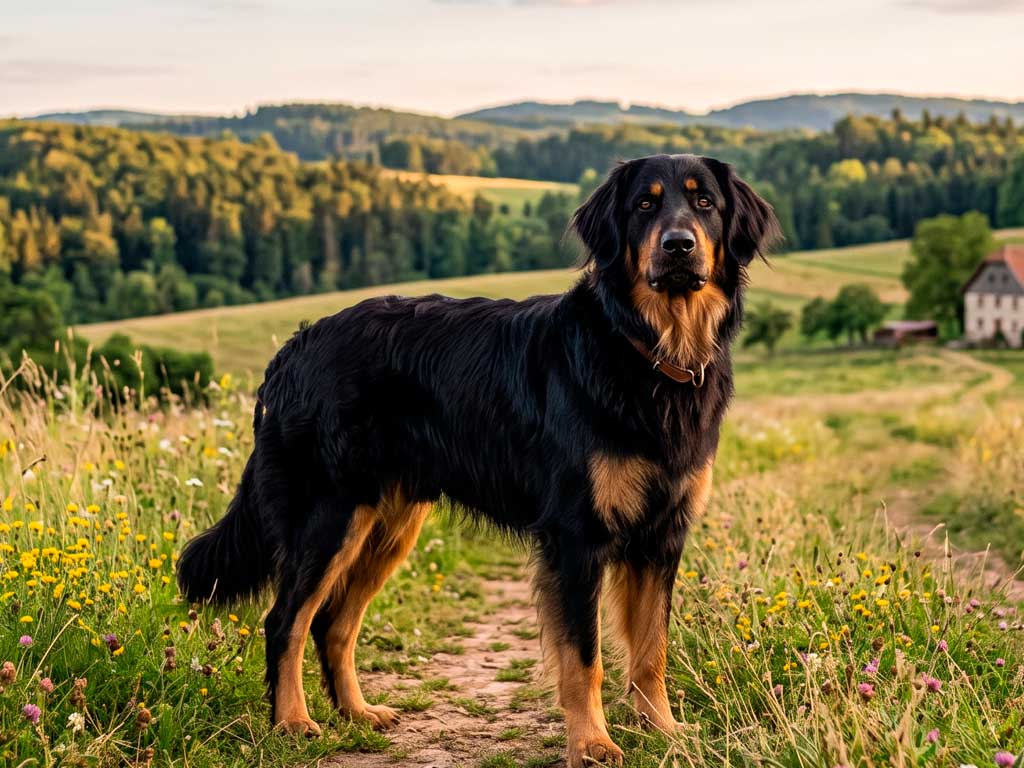
The coat is medium to long and weather-resistant, coming in three colors: black, blond, or black and gold. The undercoat is sparse, while the upper coat is moderately long and thick. Hair is particularly dense on the chest, abdomen, rear legs, and tail.
Hovawarts have strong, noble features with dark, expressive eyes. Their ears are medium-sized and drop naturally. Their overall appearance conveys strength, intelligence, and purpose. They’re built slightly longer than tall, creating a balanced, athletic frame.
Temperament and Personality
The Hovawart dog breed is confident, brave, and versatile. These dogs are faithful companions completely devoted to their families.
They possess a strong guarding instinct and are highly protective of their homes and families. This protective nature requires early and thorough socialization. Without proper exposure to different people and environments, they can become overly suspicious.
Despite their protective instincts, Hovawarts are generally tolerant and peaceful in temperament. They’re not aggressive without reason. Rather, they’re discerning guardians who assess situations before reacting.
These dogs are vocal and will bark to alert you to anything unusual. They’re working dogs at heart, finding purpose in protecting what matters to them.
Training with other pets requires attention. Their size and strength mean they need proper socialization with cats and smaller dogs. With appropriate early introduction, they coexist peacefully.
Care Guide for Hovawart
Diet and Nutrition
Large breed dogs have different nutritional requirements than smaller dogs. They need balanced nutrition including specific ratios of minerals and vitamins formulated for their size.
Feed your Hovawart high-quality large-breed dog food designed for their life stage. Portion control matters significantly because obesity puts stress on their joints and cardiovascular system.
Maintain consistent feeding schedules twice daily. Adjust portions based on activity level and body condition. Always provide fresh water.
Exercise Requirements
The Hovawart is a large, energetic dog requiring at least two hours of daily exercise. These aren’t couch potatoes that enjoy occasional walks.
They excel at long walks, scent tracking, and working tasks. Many Hovawarts do remarkably well in working and obedience trials where they can channel their intelligence and instincts productively.
Without adequate exercise, Hovawarts become destructive and frustrated. They need both physical activity and mental stimulation to remain balanced, confident household members.
Grooming Needs
The Hovawart’s medium-to-long coat requires regular attention. Brush their coat two or three times weekly to prevent matting and tangles.
Pay special attention to areas where hair is naturally thicker: the chest, abdomen, rear legs, and tail. These spots mat most easily.
Regular nail trimming, ear cleaning, and dental care remain important. Check their ears weekly for any signs of moisture or infection. Brush their teeth several times weekly to prevent dental disease.
Training and Education
The Hovawart dog breed is intelligent and responds well to training when handled by experienced owners. Their working heritage means they appreciate having a job to do.
Early socialization is non-negotiable. Expose puppies to different people, environments, and experiences. This prevents the development of excessive guarding behaviors.
Basic obedience training establishes you as a confident leader. Hovawarts respect owners who project calm, consistent authority. They don’t respond well to harsh corrections or aggressive training methods.
These dogs need an owner who understands and respects their protective nature while channeling it appropriately. They’re not suitable for first-time dog owners.
Health and Longevity
The Hovawart dog breed can suffer hip dysplasia, a condition affecting mobility. Have breeding dogs screened for hip dysplasia before reproduction.
Hypothyroidism, or slow thyroid function, occurs in the breed. Regular veterinary check-ups can identify this condition early, and it’s manageable with medication.
Their lifespan typically ranges from 10 to 14 years. Maintain regular veterinary care, provide appropriate nutrition, and ensure consistent exercise.
Is the Hovawart Right for You?
The Hovawart suits experienced dog owners with the time and commitment for serious training. These aren’t dogs for casual pet owners.
They’re ideal for active families with older children who understand how to interact with large dogs. Their size and protective nature mean they need owners who can manage them confidently.
Hovawarts thrive with owners who have land and can provide secure areas where these dogs can move freely. Urban apartments aren’t suitable for their needs.
They’re not right for owners who want independent, aloof dogs. Hovawarts need ongoing leadership and engagement from their owners.
If you want a dog with genuine purpose, intelligence, and loyalty, the Hovawart is rewarding. But only if you’re prepared for the responsibility.
Frequently Asked Questions About Hovawart
Are Hovawarts good family dogs? Hovawarts can be excellent family companions for experienced owners with older children. Their protective nature and large size require proper training and socialization. Young children need supervision.
How much exercise do Hovawarts need daily? These energetic dogs need at least two hours of daily exercise. They excel at long walks, running, and working tasks like obedience trials.
Do Hovawarts get along with other pets? With proper early socialization, Hovawarts coexist peacefully with other dogs and cats. Training and introduction are essential.
What is hip dysplasia in Hovawarts? Hip dysplasia is a joint condition affecting mobility. Responsible breeders screen for this condition before breeding.
Are Hovawarts easy to train? Hovawarts are intelligent and respond well to training by experienced owners. They’re not suitable for first-time dog owners due to their size and protective instincts.
The Hovawart dog breed represents authentic German guardian heritage. These are intelligent, loyal, powerful dogs designed for serious work.
They’re not casual family pets. They’re purposeful companions requiring experienced ownership, serious training, and meaningful engagement.
A well-trained Hovawart becomes a devoted family member, protective guardian, and loyal friend. They thrive when given clear leadership, consistent training, and outlets for their working instincts.
Before committing to this breed, honestly assess your experience level. Have you owned large dogs before? Can you commit to daily exercise and ongoing training? Do you have a secure yard and the confidence to manage a protective large breed?
If you answer yes and understand the responsibility involved, the Hovawart dog breed can be one of the most rewarding breed choices possible.
![How to Prevent Fleas on Dogs Year-Round [2026 Guide]](https://happypetzone.com/wp-content/uploads/2026/06/How-to-Preven-Fleas-on-Dogs-Year-Round-Guide.jpg)