Norwegian Buhund: The Viking Farm Dog That Makes a Perfect Family Companion
The Norwegian Buhund is one of the most versatile and underrated dog breeds you’ll ever meet. Loyal, energetic, and remarkably intelligent, this ancient Spitz-type breed has been working alongside humans for over a thousand years — and it shows.
In this article, you’ll learn everything you need to know about the Norwegian Buhund: its Viking roots, physical traits, temperament, care needs, and whether this active, vocal breed is the right match for your lifestyle.
History and Origin of the Norwegian Buhund
The Norwegian Buhund is one of the oldest dog breeds in the world — and its history is genuinely fascinating.
Archaeologists have found images of Spitz-type dogs resembling the Buhund in Viking burial sites dating back to the 10th century AD. Skeletons of similar dogs were discovered alongside the legendary Viking ships Gokstad, Tune, and Oseberg, now preserved at the Viking Ship Museum in Oslo. Vikings believed their dogs would accompany them into the afterlife — which tells you just how deeply bonded they were.
The breed is even mentioned in the Icelandic Sagas of Snorri Sturluson (1179–1241), the historian and writer who recorded Norse mythology and history.
The name itself says a lot. Bu means “farm” or “homestead” in Norwegian, and hund means “dog.” So a Buhund is, literally, a farm dog — and that’s exactly what it was bred to be. Norwegian Buhunds were all-purpose working animals: herding cattle, guarding the homestead, and keeping their owners company through brutal Scandinavian winters.
Today, the breed continues to serve in working roles. It’s been used successfully as a hearing assistance dog for the deaf, and it consistently excels in agility and obedience trials. That’s a pretty impressive résumé for any breed.
Physical Characteristics of the Norwegian Buhund
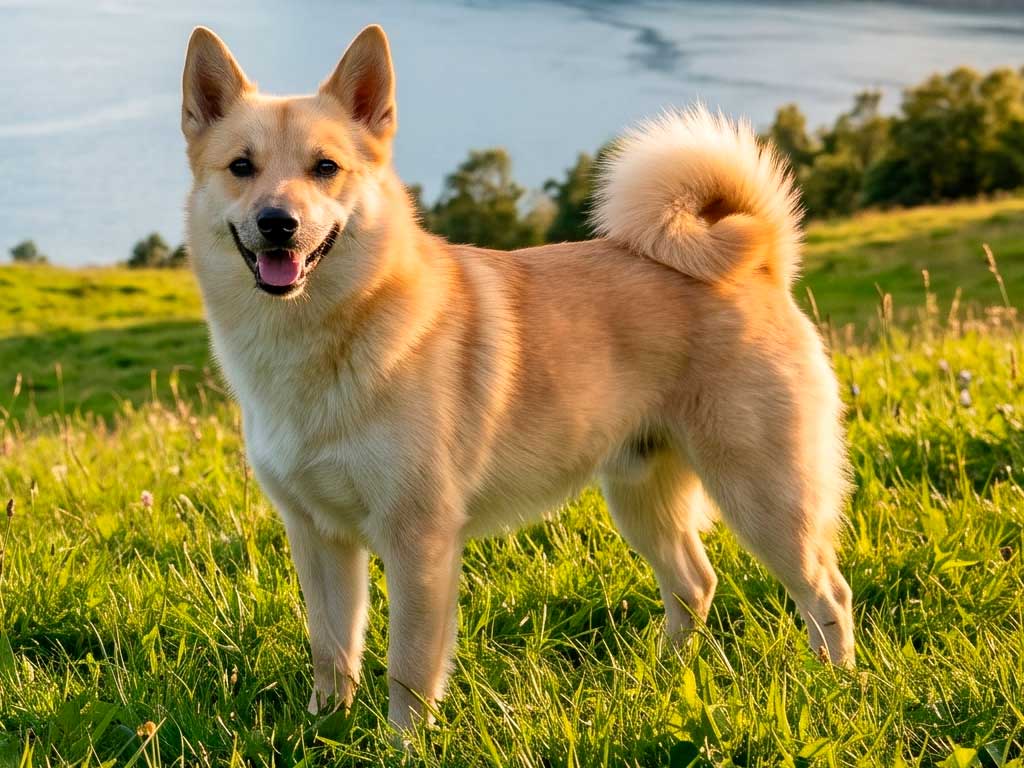
The Norwegian Buhund is a medium-sized, compact dog with a light but sturdy build — clearly designed for work, not just looks.
Key physical traits include:
- Height: 41–47 cm at the shoulder (males typically reach 45 cm; females are slightly smaller)
- Weight: 14–18 kg for both sexes
- Body: Short, square, and well-balanced — built for agility and endurance
- Ears: Erect, pointed, and alert — classic Spitz style
- Tail: Tightly curled over the back, another hallmark of the Spitz family
- Eyes: Dark, oval-shaped, and full of expression
The double coat is one of the Buhund’s most defining features. A dense, woolly undercoat provides insulation, while the outer coat is thick, smooth, and slightly harsh to the touch. This combination was essential for surviving Norway’s freezing climate.
Coat colors include:
- Wheaten (biscuit): The most common and recognizable shade, ranging from pale cream to golden
- Black: A rich, solid black without markings
- Red: A warm, reddish-brown tone
- Wolf-sable (grayish): A striking grey with darker overlay
Some individuals show small white markings, though the breed standard has specific guidelines on acceptable patterns.
Temperament and Personality of the Norwegian Buhund
Here’s what most people fall in love with: the Norwegian Buhund has an enormous personality packed into a medium-sized body.
This breed is:
- Active and energetic — it genuinely loves to move and needs a job to do
- Brave and alert — it’s a natural watchdog, always aware of its surroundings
- Affectionate and loyal — deeply bonded to its family
- Curious and playful — it thrives on mental stimulation and new challenges
- Independent but eager to please — which makes training both rewarding and occasionally challenging
One thing you should know upfront: the Norwegian Buhund is a vocal breed. It barks — sometimes a lot. This trait comes directly from its history as a guardian and herder. With proper training, barking can be managed, but it’s an important factor to consider before bringing one home.
This breed generally does well with active families, including those with children. However, as with any dog, supervised interactions between children and dogs are always essential. It can also live with other pets, though some individuals may need a careful introduction period.
Care
Diet and Nutrition
The Norwegian Buhund thrives on a balanced, high-quality diet that covers all major nutrient groups: protein, healthy fats, complex carbohydrates, vitamins, and minerals.
Practical feeding tips:
- Feed your adult Buhund twice daily rather than one large meal, following the portion guidelines on your chosen food
- Always provide access to fresh, clean water, especially after exercise
- Monitor body condition regularly — this active breed burns significant energy, but overfeeding can still lead to weight gain over time
- Choose a food appropriate for your dog’s life stage: puppy formulas for young Buhunds, adult formulas for dogs aged 1–7, and senior formulas for older dogs
Because this breed is highly active, working-dog or performance formulas with higher protein content can be a good fit for very active individuals.
Exercise Requirements
This is not a couch potato breed. The Norwegian Buhund needs a minimum of two hours of exercise per day — and that exercise should be varied and engaging.
Great activities for Buhunds include:
- Long walks or hikes in nature
- Off-leash play in a secure area
- Agility and obedience training
- Fetch, frisbee, or other interactive games
- Canicross (running with your dog)
One critical note: thanks to its thick double coat and Nordic origins, the Buhund does not handle heat well. During warm months, schedule exercise in the early morning or late evening to avoid the hottest part of the day. Always ensure access to shade and water.
Mental stimulation is just as important as physical exercise. Puzzle toys, training sessions, and new environments all help keep this intelligent breed from getting bored — and a bored Buhund is a noisy, potentially destructive one.
Grooming Needs
The Norwegian Buhund’s double coat requires consistent attention, but it’s manageable with the right routine.
Grooming schedule:
- During shedding seasons (once or twice a year): daily brushing is strongly recommended. This breed sheds heavily during these periods, so a slicker brush and undercoat rake are your best friends.
- Outside shedding periods: brush thoroughly two to three times per week to keep the coat clean and tangle-free
The good news is that Buhunds are relatively clean dogs and rarely need frequent bathing. A bath every 6–8 weeks, or when visibly dirty, is usually sufficient. Also remember to check and trim nails regularly, clean ears, and maintain dental hygiene.
Training and Education
The Norwegian Buhund is highly trainable — but it does best with owners who have some prior experience with dogs.
This breed is intelligent, which means it learns quickly. However, that same intelligence means it can also figure out how to get around rules if training is inconsistent. The key is to be clear, consistent, and positive.
Training tips that work well for Buhunds:
- Start early. Socialization and basic obedience should begin in puppyhood
- Use positive reinforcement — treats, praise, and play motivate this breed effectively
- Keep sessions short and varied — Buhunds can lose interest in repetitive drills
- Address barking early — teach a “quiet” command as one of the first behaviors
- Enroll in structured classes — this breed excels in formal training environments
Because Buhunds have historically worked alongside humans, they genuinely enjoy collaborative activities. Agility courses, rally obedience, and nose work are all excellent channels for this breed’s energy and brains.
Health and Longevity
The Norwegian Buhund is generally a robust, healthy breed with a life expectancy of 13 to 15 years — impressive for any dog.
That said, like all breeds, it has some genetic predispositions worth knowing about:
- Hereditary eye disorders: Several inherited eye conditions have been documented in the breed. Reputable breeders should provide eye health clearances for breeding stock.
- Hip dysplasia: A developmental condition where the hip joint doesn’t form correctly, potentially leading to mobility issues over time. Hip evaluations before breeding are strongly recommended.
To keep your Buhund healthy long-term:
- Schedule regular veterinary check-ups (at least once a year)
- Stay current on vaccinations and parasite prevention
- Monitor for signs of joint stiffness, especially as your dog ages
- Maintain a healthy weight — excess weight puts additional stress on joints
Buying from a responsible breeder who screens for hereditary conditions is the most effective way to reduce health risks from the start.
Is the Norwegian Buhund the Right Dog for You?
The Norwegian Buhund is a wonderful breed — but it’s not the right fit for everyone.
This breed is ideal for you if:
- You lead an active lifestyle and can commit to two or more hours of exercise daily
- You have some experience with dog ownership and training
- You enjoy interactive, intelligent dogs that want to participate in your life
- You’re prepared to manage seasonal heavy shedding
- You live in a temperate or cool climate (or have a well-air-conditioned home)
This breed may not be the best fit if:
- You live in a hot climate without climate control
- You’re a first-time dog owner looking for an easy, low-maintenance breed
- You need a quiet dog (neighbors or noise-sensitive environments)
- You have very young children without experience supervising dog interactions
The bottom line: give a Norwegian Buhund the exercise, training, and mental stimulation it needs, and you’ll have one of the most loyal, fun, and capable companions you’ve ever known.
Frequently Asked Questions About the Norwegian Buhund
1. How much exercise does a Norwegian Buhund need each day?
The Norwegian Buhund needs at least two hours of physical activity per day. This should include a combination of walks, off-leash play, and mentally stimulating activities like training or puzzle games. This is not a breed suited to apartment life without significant daily outdoor time.
2. Is the Norwegian Buhund good with children?
Yes, Buhunds can be excellent family dogs for active households. However, they benefit from early socialization, and all interactions between dogs and young children should always be supervised by an adult, regardless of breed.
3. Do Norwegian Buhunds shed a lot?
They do — especially during their one or two annual shedding seasons, when daily brushing becomes necessary. Outside of these periods, brushing two to three times per week keeps shedding manageable. This breed is not hypoallergenic.
4. Are Norwegian Buhunds easy to train?
They’re intelligent and responsive to positive reinforcement, which makes them very trainable. However, they work best with owners who are consistent and have some experience with dogs. Their independent streak means that a patient, firm approach delivers the best results.
5. What health problems are common in Norwegian Buhunds?
The breed is generally healthy and long-lived (13–15 years). The most documented concerns are hereditary eye disorders and hip dysplasia. Always request health screening certificates from breeders, and schedule regular veterinary check-ups throughout your dog’s life.
Ready to learn about similar breeds? Explore the Norwegian Elkhound and the Swedish Vallhund — two more Scandinavian working dogs with equally rich histories and outstanding personalities.