Beyond the Tuxedo: An Insider’s Look at Living with a Boston Terrier
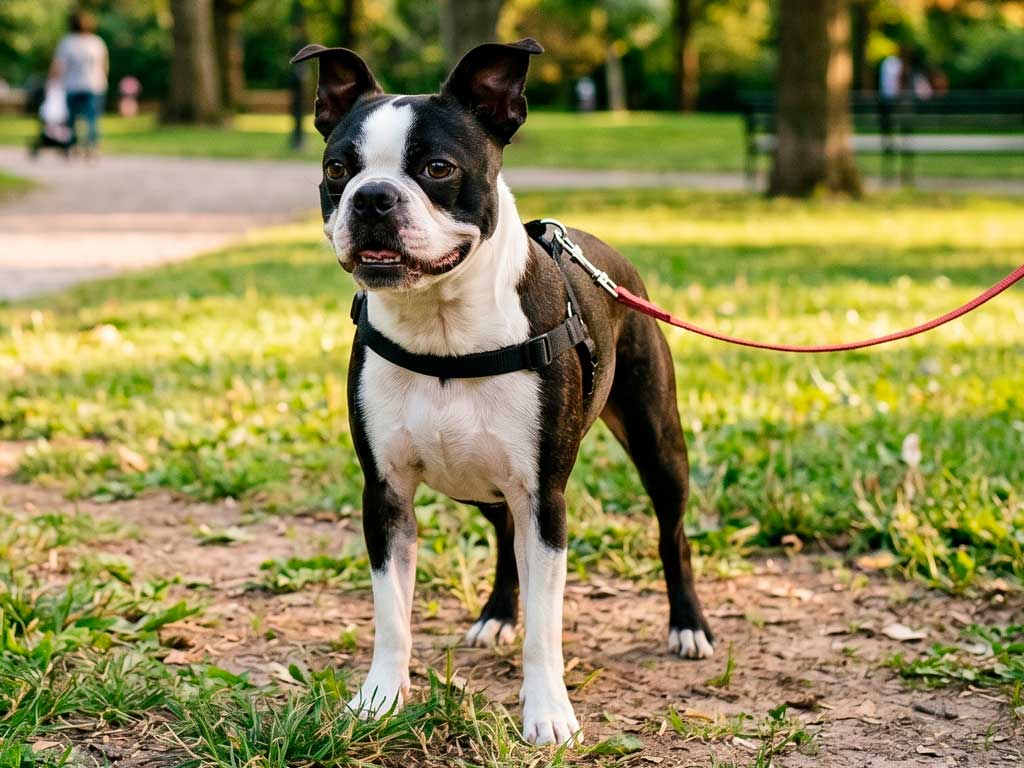
The Boston Terrier dog breed has earned its nickname “The American Gentleman” — and after spending five minutes with one, you’ll understand exactly why. Compact, charming, and dressed in a natural tuxedo coat, the Boston Terrier is one of the most beloved small breeds in the US and UK alike.
In this guide, you’ll get everything you need to know: history, temperament, health risks, care requirements, and an honest assessment of whether this spirited little dog belongs in your home.
History and Origin
The Boston Terrier is one of the few dog breeds that is genuinely made in America.
Its story begins in 19th-century Boston, Massachusetts. Around 1870, a dog named Judge — a cross between an English Bulldog and a now-extinct White English Terrier — was imported from England. Judge is considered the founding ancestor of the entire breed.
From there, Boston-area breeders got to work. Over the following decades, they introduced additional crosses with breeds including the Bull Terrier, Boxer, English Bull Terrier, and Pit Bull Terrier. The goal was to refine the size and temperament of the original cross into something distinctly companionable.
Originally, these dogs weighed over 20 kg (44 lbs). Through careful selective breeding, that figure came down dramatically to the compact companion we know today — weighing no more than 11.5 kg (25 lbs).
By 1893, the breed was formally recognized. The Boston Terrier became the first non-sporting breed developed in the United States, and it remains a point of national pride. Today, the UK Kennel Club classifies it within the Utility group.
Fun fact: The Boston Terrier earned its “American Gentleman” nickname because its distinctive black-and-white markings naturally resemble a tuxedo. Helen Keller owned one named Phiz — fitting for such a dignified breed.
Physical Characteristics
The Boston Terrier is small, sturdy, and unmistakable.
Everything about its appearance reflects its history as a refined companion breed: a square, flat face; large, round, wide-set eyes; and neat, erect ears that give it a perpetually alert expression.
Key stats at a glance:
- Height: 38–43 cm (15–17 in)
- Weight: Up to 11.5 kg (25 lbs), divided into three classes:
- Lightweight: under 6.8 kg (15 lbs)
- Middleweight: 6.8–9.1 kg (15–20 lbs)
- Heavyweight: 9.1–11.5 kg (20–25 lbs)
- Coat: Short, smooth, and low-maintenance
- Colors: Brindle and white, or black with white markings; the classic “tuxedo” pattern
- Size classification: Small
The short muzzle — a defining feature of the breed — is also the source of its most serious health considerations. This is a brachycephalic breed, meaning the skull is compressed and the face is flat. That adorable squashed face comes with real respiratory implications that every prospective owner needs to understand before committing.
The large, prominent eyes are another standout feature — and, unfortunately, another vulnerability. More on both of these in the health section below.
Temperament and Personality
Here’s what makes the Boston Terrier so popular: it has the personality of a much larger dog packed into a very small body.
Bostons are cheerful, affectionate, and genuinely fun to be around. They bond closely with their families and love being involved in whatever’s happening. Left alone for too long, they can become anxious — this breed scores just 3 out of 5 on the “tolerates being alone” scale.
With children, the Boston does well — they enjoy play and have good energy levels. However, because of their protruding eyes and relatively delicate build, rough play needs to be managed carefully. Eye injuries are a real risk during boisterous games.
With other pets, the Boston Terrier is notably sociable. It scores a perfect 5 out of 5 for getting along with other animals, making it a strong choice for multi-pet households.
One trait that surprises many new owners: the Boston is an alert watchdog. Despite its small size, it will bark to signal strangers or unusual activity. It’s not excessive — just attentive and vocal when it matters.
The flip side of all that personality? A streak of stubbornness. Bostons can be determined when they’ve made up their minds. Fortunately, this is easily managed with consistent training from puppyhood.
Care Guide
Diet and Nutrition
Small dogs have fast metabolisms — they burn through energy quickly and need meals calibrated to their size.
Choose a high-quality food formulated specifically for small breeds. These foods offer the right balance of nutrients in smaller kibble pieces, which makes chewing easier and digestion more efficient. Because a Boston’s stomach is small relative to its energy needs, feeding two to three smaller meals per day is preferable to one large serving.
Watch for weight gain. Bostons love food and can become overweight if portions aren’t controlled. Obesity puts additional stress on their already-compromised airways — a particularly serious concern for a brachycephalic breed.
Avoid feeding immediately before or after exercise to minimize digestive discomfort.
Exercise Requirements
The Boston Terrier needs around one hour of exercise per day — but the nature of that exercise matters enormously.
This is not a breed that thrives on long, demanding runs. Bostons enjoy moderate activity: walks, play sessions in the garden, interactive games indoors. They’re enthusiastic companions who love going wherever their owners go — but they’re not distance runners.
The most important consideration here is heat and humidity. Because of their shortened airways, Boston Terriers are highly susceptible to overheating. Exercise should always happen during cooler parts of the day — early morning or evening — and should be kept gentle in warm weather.
Watch for signs of respiratory distress during exercise: excessive panting, labored breathing, blue-tinged gums, or collapse. These are emergencies.
Grooming Needs
This is where the Boston genuinely earns low-maintenance status.
The short, smooth coat needs just one weekly brush with a grooming mitt to remove dead hair and keep the coat looking tidy. Bathing every four to six weeks is generally sufficient.
Additional grooming tasks include:
- Facial folds: Clean the skin folds around the muzzle and nose regularly to prevent moisture buildup and bacterial infection
- Eyes: Wipe gently with a damp cloth to remove discharge; check frequently given the breed’s eye vulnerability
- Ears: Clean weekly; the upright ears can collect debris
- Nails: Trim every two to three weeks
- Teeth: Brush several times a week — small breeds are more prone to dental disease
One more bonus: the Boston Terrier has virtually no doggy odor. It’s an exceptionally clean breed that many owners find significantly less demanding than expected.
Training and Education
Good news for first-time dog owners: the Boston Terrier is well-suited to beginners.
It’s intelligent, eager to please, and responds well to positive reinforcement. Short, consistent training sessions work best — Bostons have a good attention span but can switch to stubborn mode if they find something boring or overly repetitive.
Key training priorities:
- Basic obedience (sit, stay, come) — achievable within weeks with a consistent approach
- Socialization — expose puppies early to a variety of people, sounds, and environments to build confidence
- Bark management — because Bostons are natural watchdogs, teaching a “quiet” cue early prevents nuisance barking
- Leash manners — important for a breed that loves accompanying its owner everywhere
Harsh corrections or punishment-based methods are counterproductive. Bostons are sensitive dogs and respond far better to encouragement and reward. Keep sessions fun, positive, and brief — 10 to 15 minutes is ideal.
The breed scores 4 out of 5 for trainability, which puts it well above average among small breeds.
Health and Longevity
The Boston Terrier enjoys a lifespan of 13 to 15 years — excellent for any breed, and exceptional for a small dog.
However, this is a breed that comes with a significant health checklist. Prospective owners owe it to themselves — and the dog — to understand these risks clearly.
Brachycephalic Obstructive Airway Syndrome (BOAS): The flat face that defines the Boston’s look also narrows its airways. Mild cases cause snoring and snorting. Severe cases cause genuine breathing difficulty that limits exercise capacity and requires surgical intervention. Always source a Boston from a breeder who prioritizes breathing health over extreme facial features.
Eye conditions: Those large, prominent eyes are beautiful — and vulnerable. Corneal ulcers (painful erosions on the eye’s surface) are common. Hereditary cataracts can cause vision loss. Dry eye (keratoconjunctivitis sicca) affects tear production. Cherry eye — where a gland in the third eyelid prolapses — is another concern. Regular eye exams are essential.
Skin fold infections: Excess skin around the muzzle creates folds where moisture accumulates, leading to sores and bacterial infections if not cleaned regularly.
Patellar luxation: Temporary dislocation of the kneecap is common in small breeds, including the Boston.
Hemivertebra: A congenital spinal malformation that can range from asymptomatic to causing serious neurological issues.
Cushing’s syndrome: Overproduction of cortisol, causing excessive thirst, fatigue, and other symptoms.
DNA testing for hereditary cataracts and ophthalmologist screening are recommended health programs for breeding dogs. Always ask breeders for health documentation on both parents.
Is This the Right Dog for You?
The Boston Terrier is one of the most versatile small breeds available — but it’s not perfect for everyone.
A Boston Terrier is an excellent fit if you:
- Live in an apartment or a home without a large yard
- Are a first-time dog owner looking for a manageable, trainable companion
- Want a sociable, affectionate dog that does well with other pets
- Can commit to moderate daily exercise without intense outdoor activity
- Are prepared to monitor and manage a brachycephalic dog’s health proactively
- Want a low-grooming, low-odor dog
You should look at another breed if you:
- Live in a hot climate and can’t control your dog’s environment adequately
- Want a jogging or hiking companion that can keep up with demanding exercise
- Aren’t prepared to manage potential respiratory, eye, or skin health issues
- Travel frequently and can’t make arrangements for separation-sensitive dogs
For the right owner, the Boston Terrier is an absolute joy — funny, loving, adaptable, and endlessly entertaining. There’s a reason this breed has been adored across America and beyond for well over a century.
FAQs
Do Boston Terriers bark a lot?
Boston Terriers are moderate barkers. They’re alert dogs that will vocalize to signal strangers or unusual sounds, making them decent watchdogs. However, they’re not excessive or nuisance barkers by nature. With consistent training, bark levels are easy to manage.
Are Boston Terriers good for apartments?
Yes — the Boston Terrier is one of the best small breeds for apartment living. They’re compact, relatively quiet, don’t require a garden, and adapt well to smaller spaces. The key is ensuring they get their daily hour of exercise through walks and play.
Do Boston Terriers have breathing problems?
Many do, to varying degrees. As a brachycephalic breed, Boston Terriers are prone to narrowed airways. Snoring, snorting, and reduced exercise tolerance are common. Severe cases may require surgery. Sourcing from a responsible breeder who selects for healthier conformation significantly reduces — but doesn’t eliminate — this risk.
How long do Boston Terriers live?
Boston Terriers have an impressive lifespan of 13 to 15 years, making them one of the longer-lived small breeds. Good nutrition, regular veterinary care, weight management, and proactive health monitoring all contribute to a full, healthy life.
Are Boston Terriers easy to train?
Yes — Boston Terriers are among the more trainable small breeds. They’re intelligent, people-oriented, and motivated by praise and treats. Short, positive training sessions work best. Occasional stubbornness is manageable with consistency. They’re a great choice for first-time owners.