
As cat owners, we often marvel at our pets’ mysterious behaviors, but we sometimes forget that their world is experienced primarily through their noses. A cat’s sense of smell is roughly 14 times stronger than a human’s, meaning that a scent you find “refreshing” might feel like an olfactory assault to your feline companion.
Understanding which smells cats hate isn’t just about avoiding a turned-up nose; it’s about creating a stress-free environment and, in some cases, protecting them from actual toxicity.
Veterinary Note: While using natural scents can be a helpful way to set boundaries (like keeping a cat out of a garden), always prioritize your cat’s safety. Never force a cat to endure a concentrated scent, and consult your vet if you notice signs of respiratory distress or skin irritation.
1. The Sharp Sting of Citrus (Lemon and Orange)
While we might love the “clean” scent of lemon or orange, most cats find it utterly repulsive. This isn’t just a matter of preference; it’s a survival instinct.
Citrus peels, particularly from lemons, contain limonene and linalool. These compounds are highly hepatotoxic to cats, meaning they can cause significant liver damage if ingested or absorbed in large quantities. Nature has gifted cats the ability to detect these “poisonous” signals from a distance, which is why a simple lemon zest is often enough to send a cat running from the room.
2. Vinegar: The Natural Irritant
Vinegar is a staple in eco-friendly cleaning, but its high concentration of acetic acid makes it a nightmare for feline nasal passages. For a cat, the sharp, pungent aroma of vinegar acts as a potent mucosal irritant. If you’ve ever noticed your cat squinting or backing away when you clean the windows, it’s because that scent is physically uncomfortable for their sensitive respiratory system.
3. Eucalyptus and Menthol
Many “calming” products for humans rely on eucalyptus, but for cats, it’s quite the opposite. Eucalyptus contains terpenes and cineole, substances that the feline metabolism is unable to process efficiently.
Because they cannot break down these compounds, exposure to high concentrations can lead to malaise and extreme discomfort. If you use essential oil diffusers, ensure they are kept in well-ventilated areas where your cat can easily leave the room.
4. Lavender: The “False” Relaxant
There is a common misconception that lavender is universally relaxing. While some cats may tolerate it, many are highly sensitive to linalyl acetate.
In my experience, what we perceive as a “calmed” cat might actually be a cat that is feeling slightly overwhelmed by the scent. If you are using lavender as a stress-reliever and your cat seems to avoid their favorite bed or becomes lethargic, they likely fall into the category of felines who find this floral scent offensive.
5. Pepper and Spicy Aromas
Anything that packs a “heat” punch usually contains capsaicin. Cats have specialized nasoreceptors that are incredibly sensitive to this compound.
When a cat sniffs black pepper, chili powder, or mustard, they don’t just smell it—they feel a burning sensation in their nose.
- Pro-tip: Sprinkling a bit of pepper-infused water can be an effective, non-toxic way to keep cats out of specific garden patches, provided they have plenty of other “safe” areas to explore.
6. Coffee and Caffeine
The rich aroma of your morning brew is another scent on the feline “no” list. The chemical profile of coffee, specifically the caffeine, is something cats instinctively avoid.
Many gardeners use dried coffee grounds as an olfactory barrier to keep neighborhood cats from using their flower beds as a litter box. It’s a powerful, bitter scent that signals “stay away” to a roaming feline.
7. The Strange Case of Bananas
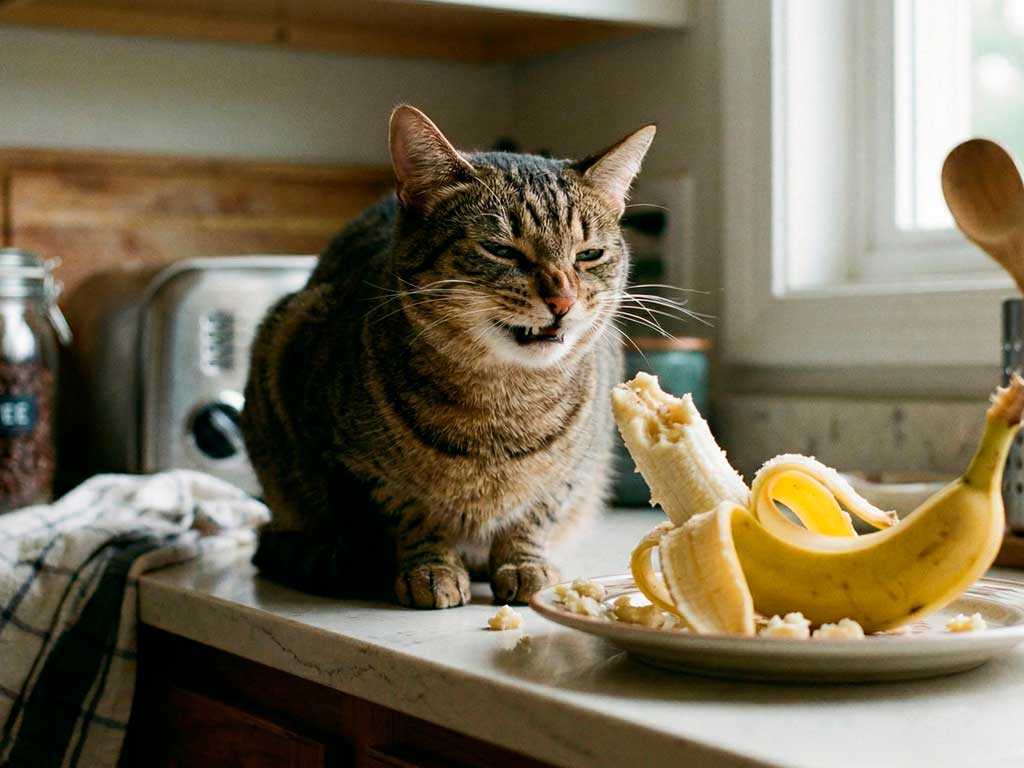
This is often the most surprising one for pet parents. Why would a cat hate a banana? It comes down to isopentyl acetate.
As a banana ripens and the skin begins to darken, it releases this chemical compound. To a cat—an obligate carnivore—this smell is the polar opposite of “food.” It smells synthetic, chemical, and entirely unappealing. If you’ve ever seen a “cat vs. banana” video online, the dramatic reaction is usually a response to this specific chemical maturing in the fruit’s peel.
Creating a “Scent-Safe” Home
Living with a cat means being mindful of the invisible world they inhabit. If you notice your cat suddenly avoiding certain rooms or acting out, take a quick “sniff test” of your environment.
- Are you using a new floor cleaner?
- Did you leave a fruit bowl full of ripe bananas on the counter?
- Is your new scented candle causing them stress?
By respecting their superior sense of smell, you can ensure your home remains a sanctuary for your feline friend.
To round out your blog post and provide even more value to your readers, I’ve put together 10 frequently asked questions. These are designed to capture “long-tail” search queries and address the common curiosities cat owners have about their pets’ powerful noses.
Feline Olfactory Secrets: Frequently Asked Questions
Can I use these smells to keep cats off my furniture?
Yes, you can use smells cats hate like citrus or vinegar as natural deterrents. However, it is better to lightly mist the area rather than soak it. Always provide an alternative “scent-safe” space for your cat to ensure they don’t feel stressed or unwelcome in their own home.
Why do cats have such a strong reaction to citrus?
Cats have a biological aversion to citrus because it contains limonene and linalool. These compounds are toxic to their liver. Their intense reaction is a survival mechanism; their nose warns them of danger long before they can ingest something harmful.
Is the smell of essential oils dangerous for cats?
Many essential oils that humans love are actually part of the smells cats hate and can be toxic. Oils like tea tree, peppermint, and eucalyptus can cause respiratory irritation or even organ failure if diffused in high concentrations near your pet.
Why does my cat make a “grimace” when smelling something strong?
This is known as the Flehmen response. Your cat isn’t necessarily disgusted; they are using a specialized organ in the roof of their mouth to “analyze” the scent. It allows them to process complex chemical information that a human nose simply can’t detect.
Do cats hate the smell of their own litter box?
Absolutely. Because a cat’s sense of smell is 14 times stronger than ours, a box that smells slightly “off” to you is unbearable for them. A dirty litter box is the most common reason for behavioral issues and “accidents” around the house.