How to Remove Filamentous Algae from Aquariums
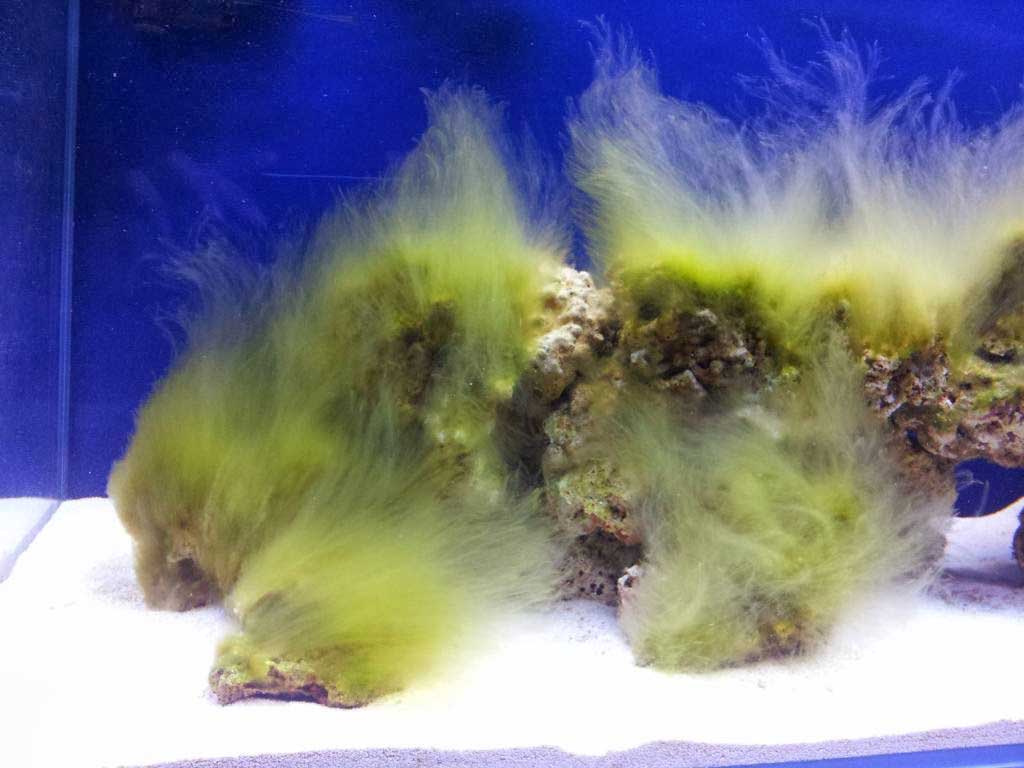
Filamentous algae are among the most common—and for many, the most frustrating—types of algae found in aquariums. Recognizable by their bright green color and fibrous, thread-like appearance, these algae often grow on surfaces like plants, driftwood, rocks, and decorations but struggle to develop on smooth surfaces like glass.
Despite their bad reputation, filamentous algae shouldn’t be seen solely as a problem but as a warning sign of imbalances in the aquarium’s ecosystem.
Why Do Filamentous Algae Appear?
The presence of this algae is often linked to unbalanced nutrient levels in the water. Key factors include:
- High phosphate levels: Typically caused by overfeeding, fish waste, or decomposing organic matter.
- Low nitrate levels: In planted aquariums, plants quickly consume nitrates, leaving excess phosphates.
- Excess light: Overly strong or prolonged lighting, especially natural sunlight, can encourage algae growth.
Filamentous algae act as indicators of these imbalances. Instead of treating them as an enemy, it’s essential to address the underlying causes and restore the aquarium’s balance.
Algae on Plants vs. Algae on Hardscape: Not the Same Trigger
Here is a distinction most guides skip, and it matters for getting the fix right. When filamentous algae attaches to living plant leaves specifically, the primary driver is usually plant stress, not excess nutrients. Healthy plants produce defensive compounds on their leaf surfaces that deter algae. A stressed plant, thrown off by a CO2 crash, a sudden nutrient swing, or a heat spike, stops producing those defenses and leaks organic waste that algae latches onto.
This means cutting fertilizer to ‘starve’ the algae can backfire in a planted tank. Underfed plants weaken further, lose their natural defenses, and the algae problem gets worse instead of better. If your algae is growing mainly on hardscape, filter intakes, or glass rather than on living leaves, the classic nutrient and organic waste explanation still applies, and the fixes below work as expected.
A clogged CO2 diffuser is a sneaky trigger worth ruling out in planted tanks: it can cut CO2 delivery by half while still releasing visible bubbles, so a visual check alone will not catch it. Reduced filter flow from a dirty filter has a similar slow, invisible effect on plant vigor. If your algae keeps returning despite consistent water changes, check both before assuming a nutrient problem. Our complete filtration guide covers how to keep flow consistent.
Is It Actually Cladophora?
If you have tried manual removal, water changes, and light reduction with no improvement, you may be dealing with Cladophora rather than typical hair or fuzz algae. True filamentous algae snaps cleanly and pulls off in soft clumps. Cladophora feels rubbery, resists breaking with your fingernail, and largely ignores the plant-health and nutrient fixes that work on other filamentous algae. It usually needs direct spot-dosed algicide treatment rather than the environmental approach covered here.
Nutrient Balance
Maintaining a healthy aquarium requires careful nutrient management. In planted tanks, recommended levels are:
- Nitrate (N): 10 mg/L
- Phosphate (P): 1 mg/L
- Potassium (K): 15 mg/L
- Iron (Fe): Between 0.5 and 1 mg/L
When these values are out of balance, algae thrive. The solution lies in regularly testing the water and adjusting feeding, fertilization, and water changes as needed.
How to Remove Filamentous Algae
- Manual Removal:
- Carefully remove all visible algae. Use tools like tweezers or brushes to clean decorations, driftwood, and plants.
- Trim affected leaves if they cannot be cleaned to encourage healthy new growth.
- Large Water Changes:
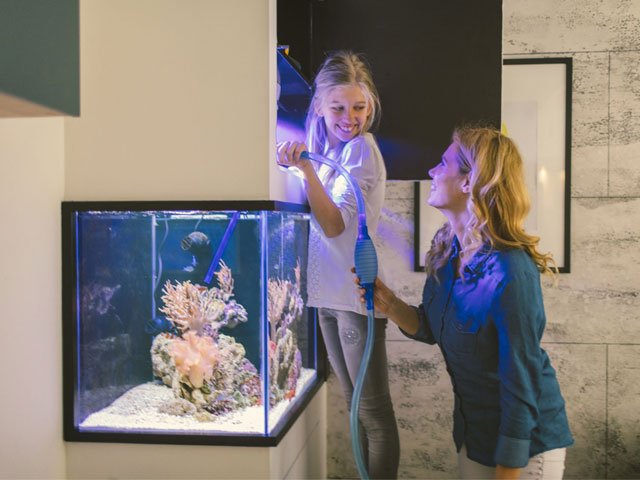
- Perform a 30-50% water change to reduce phosphate levels and other accumulated compounds. For severe outbreaks, some aquarists go as high as 50-70%, two to three times a week, until the algae is under control.
- Siphon the substrate to remove organic debris that feeds algae.
- Test and Adjust Parameters:
- Use test kits to measure nitrate, phosphate, and other nutrient levels.
- Maintain a nitrate-to-phosphate ratio of 10:1 to prevent algae from outcompeting plants.
- Anti-Phosphate Resins:
- In non-planted tanks, anti-phosphate resins are a quick and effective solution. They absorb excess phosphate, making it harder for algae to grow.
- Fertilizers and Glutaraldehyde:
- In planted tanks, regulate fertilizers to maintain nutrient balance. If necessary, use glutaraldehyde in controlled doses to eliminate algae. Be cautious, as it can harm sensitive plants like mosses and ferns.
- Light Deprivation:
- If the problem persists, turn off the aquarium lights for 5-7 days. This weakens the algae by preventing photosynthesis.
Algae Eaters
Introducing algae-eating organisms can help control filamentous algae:
- Amano shrimp: The most effective invertebrate for filamentous algae specifically. Add 2 to 5 per 10 gallons for a noticeable impact. Other shrimp and snails help too, but need trimmed algae to consume effectively.
- Fish like Siamese algae eaters: While helpful, they may not completely remove long algae strands.
Filamentous Algae in Saltwater and Reef Aquariums
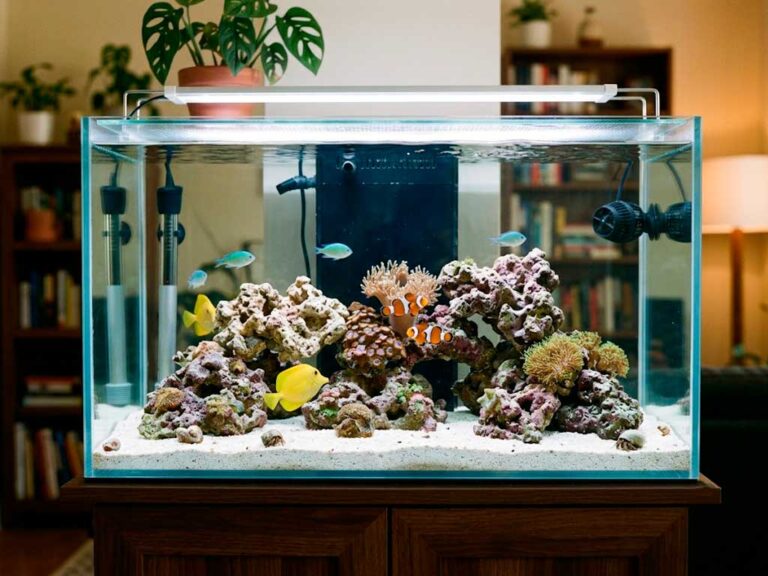
The root causes shift again once you move to saltwater, and circulation plays a much bigger role than it does in most freshwater tanks. Whether a marine tank needs strong, tank-wide water movement depends heavily on what you are keeping. A fish-only marine tank without corals has flow needs reasonably close to a freshwater setup. A reef tank with corals is a different story entirely.
Corals and other sessile invertebrates cannot swim away from stagnant water, and neither can the detritus and uneaten food that settles into low-flow corners. Weak or uneven circulation creates exactly the dead spots where organic waste accumulates and feeds nuisance algae. Strong, varied flow from powerheads or wave makers keeps that waste in suspension long enough for your filtration and protein skimmer to export it, instead of letting it settle and rot. Our water pump and circulation guide covers the flow targets reef tanks typically need.
Beyond flow, the usual triggers still apply: overfeeding, excess phosphate and nitrate from insufficient export, and lighting left on too long or too intense for the tank’s nutrient level. One extra complication in reef tanks: what looks like filamentous hair algae is sometimes cyanobacteria instead, which forms slimy sheets rather than true thread-like strands and responds to a different set of fixes, including improved flow and reduced nutrient export bottlenecks rather than manual removal alone.
Manual removal, phosphate-absorbing media (GFO), and nutrient control from the freshwater sections above all translate reasonably well to saltwater. The addition that matters most is auditing your flow pattern for dead zones, particularly behind rockwork and coral colonies where algae most often gets a foothold.
Prevention
The best way to prevent filamentous algae from returning is to maintain a balanced and well-kept aquarium:
- Weekly water changes: Replace 20-30% of the water regularly to avoid nutrient buildup.
- Controlled feeding: Feed only the necessary amount to prevent leftovers.
- Lighting management: Use moderate lighting and adjust its duration according to the aquarium’s needs.
Chemical Solutions
If all else fails, algicides may be an option. However, they should be a last resort, as they can harm snails, shrimp, and other aquarium inhabitants.
With patience and care, filamentous algae can be eliminated. The key is addressing the underlying causes and maintaining a healthy, balanced aquarium ecosystem. Since ammonia spikes are a common trigger, pairing this guide with our cycling troubleshooting guide and our water chemistry guide will help you catch the root cause faster next time.
Frequently Asked Questions
Why does hair algae keep coming back after I remove it?
Manual removal only clears existing growth. If the underlying trigger, whether plant stress, a nutrient spike, or poor flow, is not resolved, new algae regrows from spores that survive removal.
Should I cut my fertilizer dosing to get rid of algae on my plants?
Not usually. Algae on living leaves is more often a sign of stressed, underperforming plants than excess nutrients. Cutting fertilizer can weaken plants further and make the problem worse.
Why won’t my algae respond to any treatment I try?
If manual removal, water changes, and light reduction all fail, check whether you are actually dealing with Cladophora, a tougher, rubbery algae that needs direct algicide treatment rather than the usual environmental fixes.
Do reef tanks need stronger water flow to prevent algae?
Yes, especially with corals in the tank. Weak circulation creates dead spots where waste settles and feeds algae, so strong, varied flow is one of the most effective preventive tools in a reef system.
How many Amano shrimp do I need to control hair algae?
Around 2 to 5 per 10 gallons makes a noticeable dent in filamentous algae, though they work best as maintenance support alongside fixing the root cause, not as a standalone solution.